How to replace a Shimano bike chain
Step-by-step guide to replacing the chain on a Shimano-geared bike: when to change it, how to measure wear, how to shorten and refit it.
By the Velunite editorial team
~30 min · Difficulty: medium · Brands: Shimano · Published on 22 November 2026

The chain is the first part of the bike to wear out. A worn chain stretches and, over time, ruins the cassette and chainrings. Changing it on time costs little; waiting costs a new cassette. This guide covers Shimano drivetrains with 9, 10, 11 and 12 speeds, found on most road, gravel and mountain bikes.
Tools you need
- Chain wear gauge (checker) or ruler
- Chain breaker tool
- New chain with the same number of speeds as the cassette
- Shimano quick-link (if your chain uses one)
- Rag and degreaser
Step by step
Check whether the chain really needs replacing
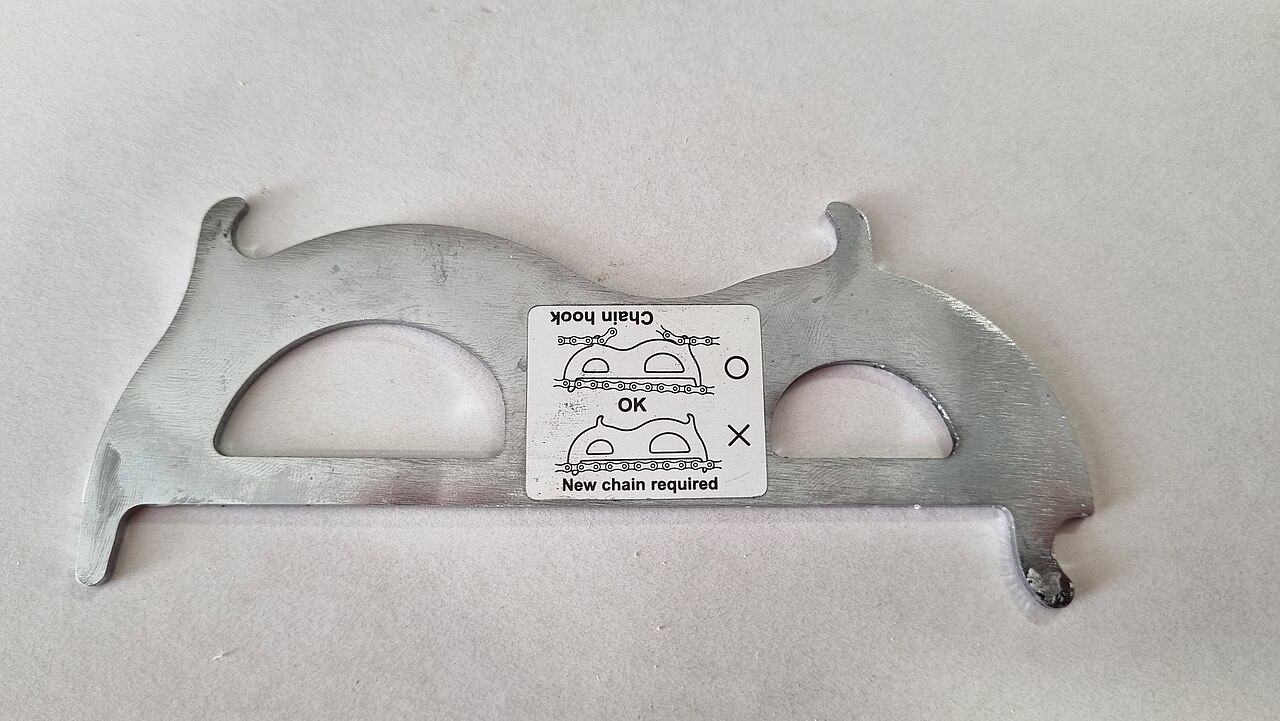
Insert the gauge into the chain rollers, on a section that is not under tension. If the reading goes above about 0.5% on 11 and 12-speed chains, or 0.75% on 9 and 10-speed chains, it is time to replace it. Always follow the manufacturer's guidance for the chain you are fitting. A gauge measures stretch, not tooth wear: a stretched chain wears the cassette teeth faster.
Hook-type chain wear gauge: the label reads 'New chain required' when the chain is worn. Photo: Sam Wilson, CC BY-SA 4.0, Wikimedia Commons Clean the drivetrain
Before removing anything, clean dirt and old grease off the chain with degreaser and a rag. A clean chain is easier to work with and shows any stiff or broken links. Do not soak the bike in harsh degreaser: the bottom bracket bearings lose grease.
Measure the new chain
Lay the new chain next to the old one, in a straight line. The safest method is to run the new chain over the cassette and chainrings, in the longest position, and count the links needed. The correct length is usually the one that lets the chain run with the front derailleur in line, without excess tension.
Open the old chain
Place the pin of the chain breaker on the link pin and turn the screw until it pushes the pin out. Remove the chain from the bike as soon as it is free. If the chain is a Shimano one with a quick-link, you can open it by hand by pulling off the quick-link clip: it is faster and can be repeated without tools.
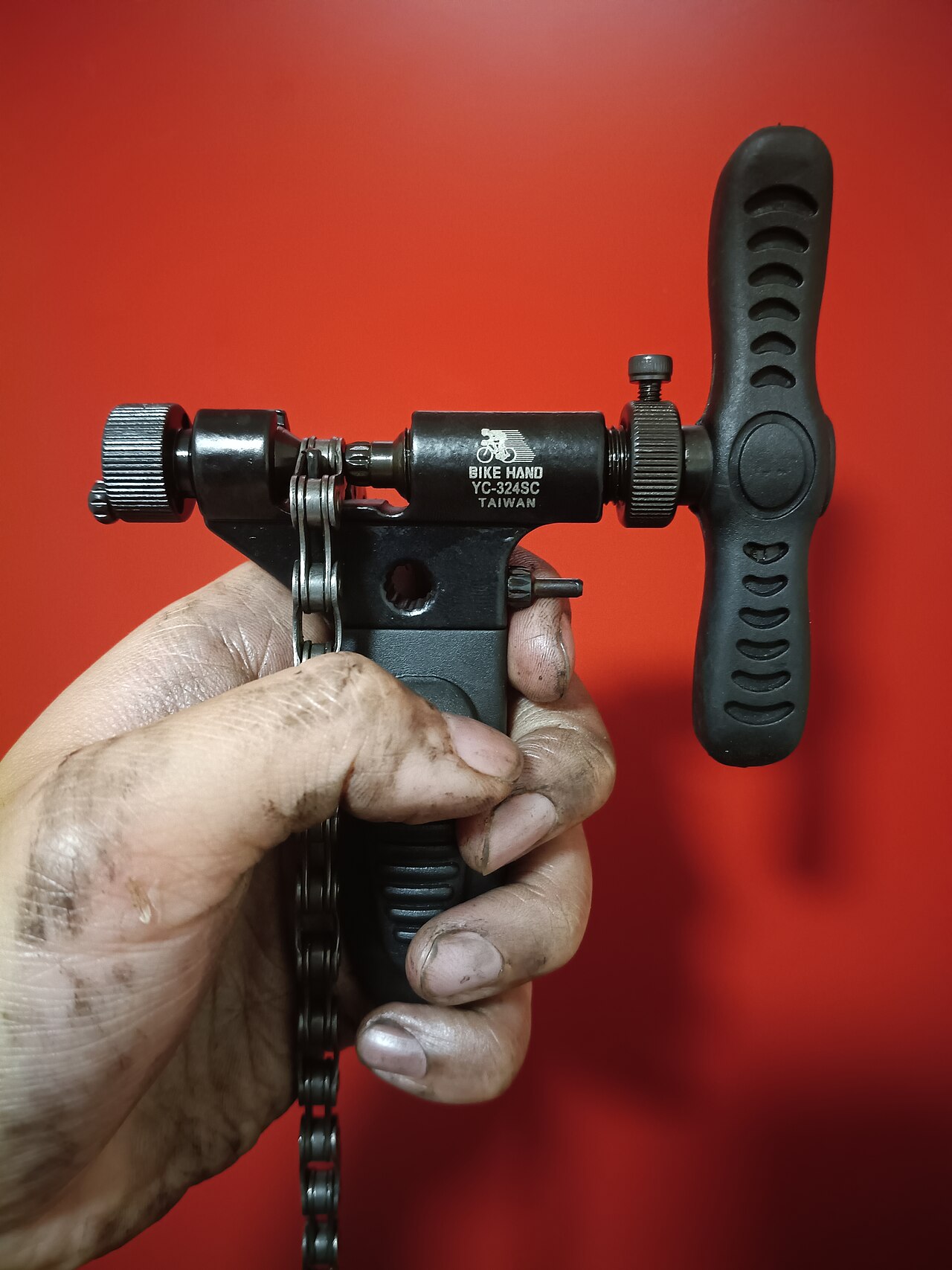
Screw-type chain breaker: the screw pushes the link pin out. Photo: JaredMcKenzie, CC0, Wikimedia Commons Shorten and fit the new chain
Pass the new chain over the chainrings and cassette, thread the end through the rear derailleur, and bring the chain into the gears. Join the two ends with the Shimano quick-link or with the chain breaker, depending on the link type. With the chain breaker, insert the pin from the correct side and tighten gradually, until the link moves freely with one finger but has no play.
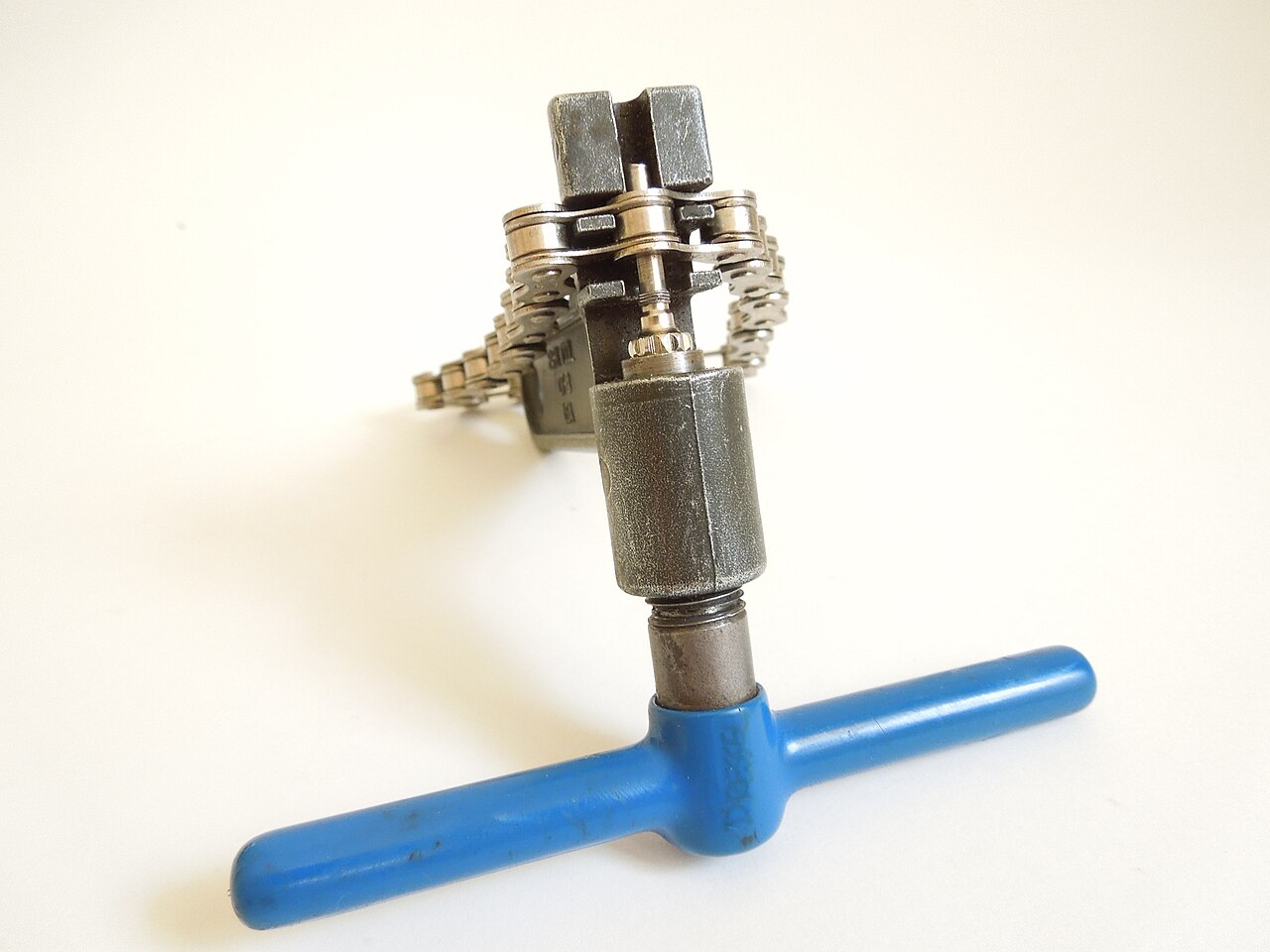
Chain tool in use on a bicycle chain. Photo: AndrewDressel, CC BY-SA 3.0, Wikimedia Commons Check the operation
Turn the pedals by hand and go through all the gears. The chain must run without skipping and without jerky noises. If a link is stiff, redo the pass with the chain breaker: a stuck link ruins the chain in a few rides. Take a test ride on flat ground and check the shifts both uphill and downhill.


Mistakes to avoid
- Not measuring wear and changing the chain too late: the cassette wears along with the chain, and the replacement costs more.
- Shortening the chain too much: the derailleur can no longer keep tension and the chain can drop.
- Riveting a crooked link: if the pin comes out at an angle, the link gets stuck.
- Reusing a quick-link that has been opened several times, if the manufacturer does not allow it.
Frequently asked questions
How long does a Shimano chain last?
It depends on how you ride. On the road in dry weather a chain often lasts more than 4,000 km; in mud, sand and water it can last only a few hundred km. Measure it with a gauge rather than relying on kilometres.
Can I change only the chain and keep the cassette?
Yes, if the cassette is not worn and the new chain has the same number of speeds. If the old chain has been stretched for a long time, the cassette teeth are already worn and a new chain may skip. In that case, replace the cassette too.
Do I need a special tool for the Shimano quick-link?
For the standard quick-link, pliers or your fingers are enough: it opens and closes by hand. The chain breaker is needed for the traditional pin link.
Track chain wear, pads and tyres for every bike in Velunite: see when chain and pads need checking.
Open My bikes