When to replace chain, cassette and chainrings: how to measure wear
How to tell if your drivetrain needs replacing: chain wear measurement, cassette teeth, chainrings and pulley wheels. What to replace together and what happens if you wait.
By the Velunite editorial team
~20 min · Difficulty: easy · Brands: Shimano, SRAM, Campagnolo · Published on 26 November 2026
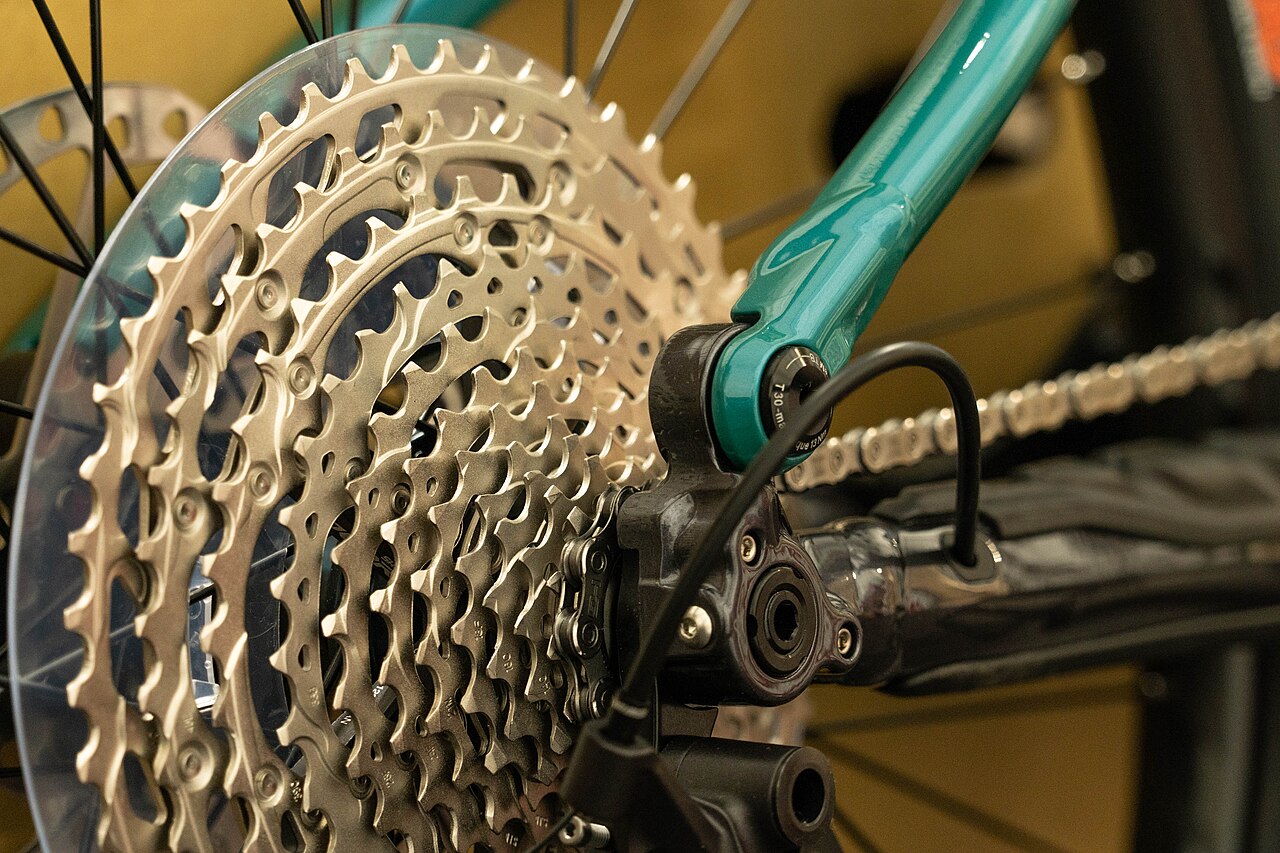

The drivetrain ages as a group: chain, cassette, chainrings and pulley wheels. Replace the chain too late and the new one skips on worn teeth and wears out within a few rides. Replace it too early and you throw away parts that still work. The difference comes down to two measurements and a visual check you can do in ten minutes without removing anything. This guide helps you decide what to replace and in what order, with the numbers that actually matter: elongation percentage, tooth profile, and matching speed count to chain type.
Tools you need
- Chain wear checker or a 30 cm ruler
- Torch or head light
- Rag and degreaser
- Chain breaker and quick link (if you need to remove the chain)
- Torque wrench for refitting
Step by step
Recognise the three symptoms that matter
The first is skipping: under acceleration or load the chain climbs over a tooth and you feel a sharp jolt. The second is noise: the drivetrain whines or grinds even after lubing. The third is precision: the derailleur no longer holds a gear and jumps between two sprockets. One of these does not mean everything must be replaced: often it is just a badly stretched chain, or a derailleur that needs adjusting. But if skipping continues with a new chain, the cassette is done.
Measure chain elongation
Insert the checker into the rollers on a taut section and read the percentage. The threshold depends on speed count: on 11- and 12-speed drivetrains the chain is narrower and should be replaced around 0.5% elongation; on 9- and 10-speed you can go to about 0.75%. Always follow the chain manufacturer's figure, as values vary slightly. Without a checker, use a ruler: measure 30 cm on a new chain and compare the same length on the fitted chain; more than 2-3 mm difference means you are close to the limit.
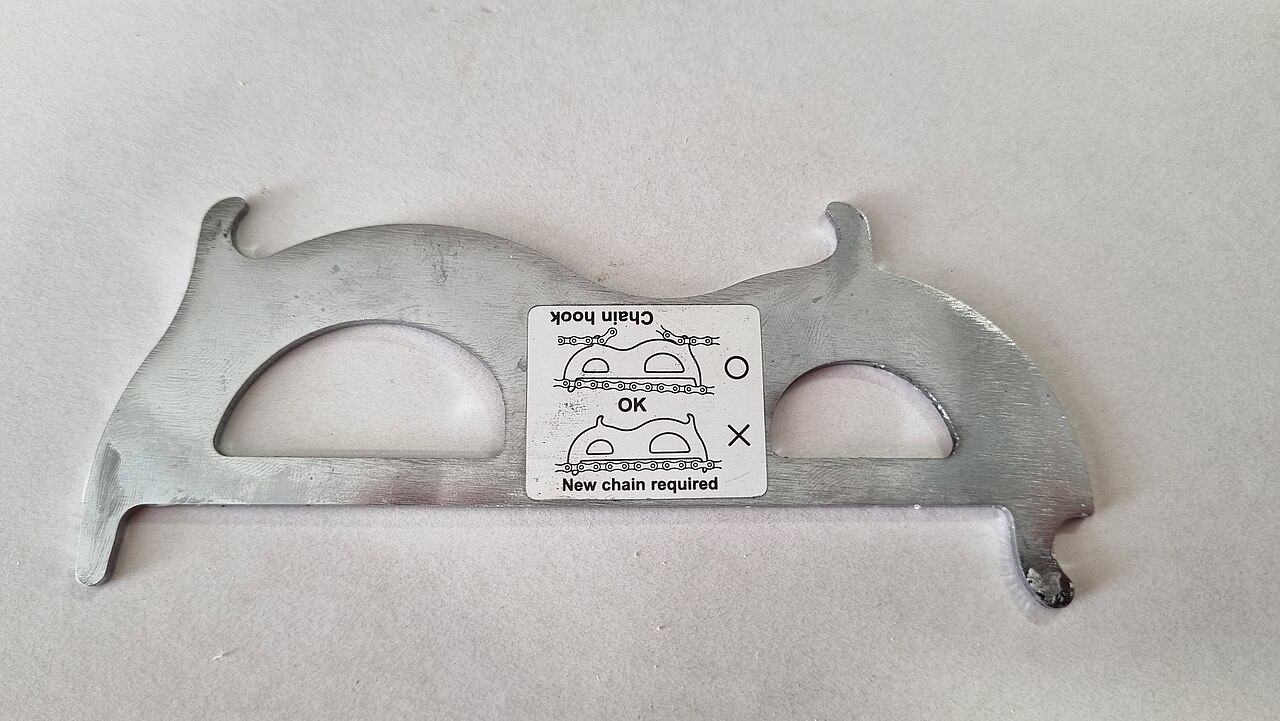
Chain wear gauge. Photo: Sam Wilson, CC BY-SA 4.0, Wikimedia Commons Check the cassette teeth
With raking light, look at the teeth on the drive side. A worn sprocket has shark-fin teeth: asymmetric, with the tip hooked toward the pushing side. Another sign is light: if you see a crescent-shaped gap between chain and tooth, the tooth is scooped out. Compare the most-used sprockets with the ones you rarely use: the difference in shape tells the story. If the small sprockets are worn but the big ones are fine, the cassette still needs replacing: it is one part.
Check the chainrings
Chainrings wear more slowly than the cassette, but with many kilometres and dirty chains they become pointed. Look at the teeth from above: if the tip is sharp and the profile is no longer square, the ring is done. A typical sign is a rhythmic noise once per pedal revolution, or the chain trying to climb onto the big ring under load. On a 1x drivetrain the ring is the only one and deserves closer attention.
Check pulley wheels and derailleur
Derailleur pulleys are small teeth doing a lot of work: if they are hooked, the chain runs badly and shifting loses precision. Check play in the derailleur body too: hold the cage and move it sideways, there should be no obvious play. If the cage is bent after a crash, no adjustment will fix it: straighten or replace. Pulleys are cheap and change shift feel more than you would expect.
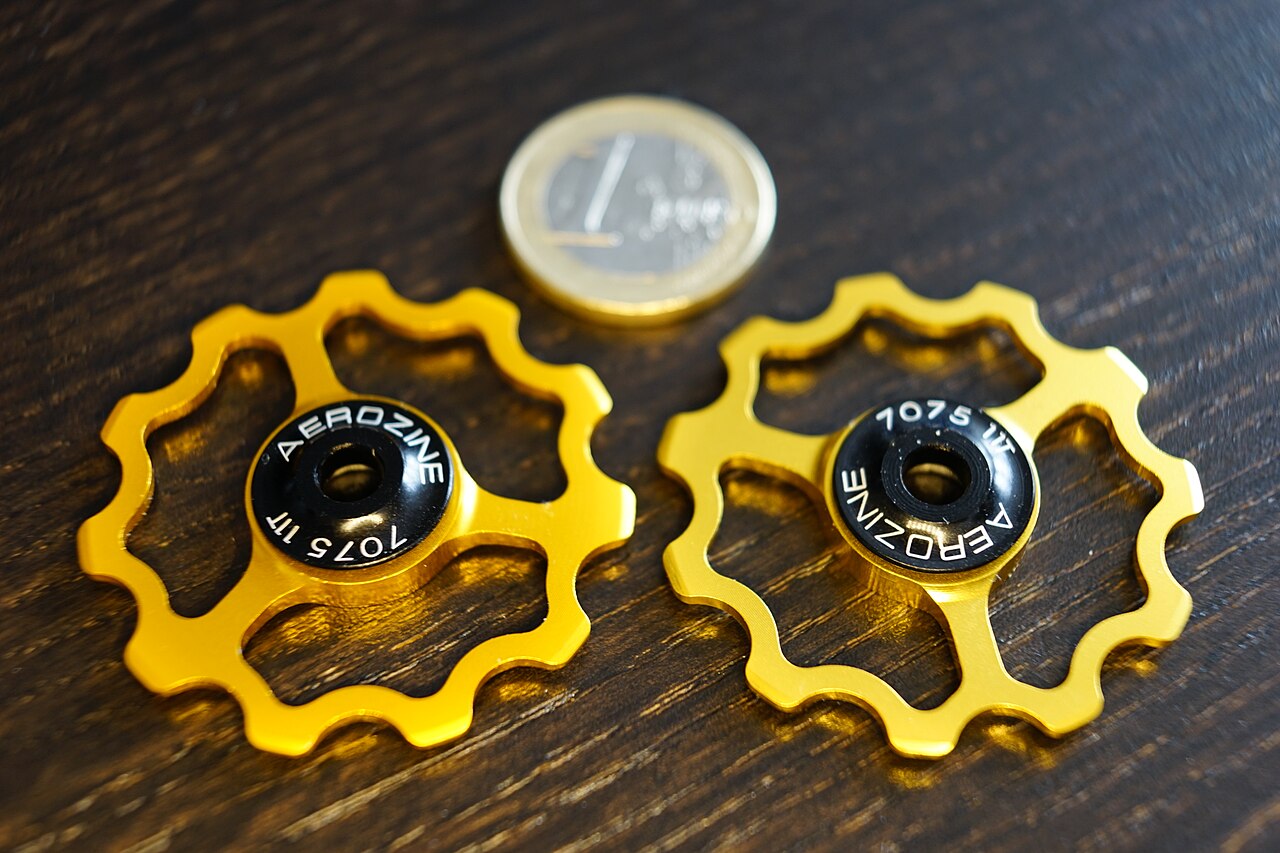
Rear derailleur pulley wheels. Photo: Sam Sailor, CC BY-SA 4.0, Wikimedia Commons Decide what to replace, and in what order
Rule of thumb: chain below the wear threshold and a healthy cassette means chain only. Badly stretched chain and visibly worn sprockets means chain and cassette together. Pointed chainrings mean adding the ring. If the cassette is new and the chain skips, the problem is elsewhere: derailleur adjustment, bent hanger or pulleys. Never fit a new chain without checking the rest: you risk ruining a new part with an old one.
Choose the right parts
Speed count must match: an 11-speed chain does not work on a 12-speed cassette, or vice versa. Chain length is set on the longest gear combination and the derailleur: too short and the derailleur cannot keep tension; too long and the chain slaps and drops. The cassette needs the same speed count and the same mounting standard (for example the freehub type). If you switch to very different gearing, check the derailleur capacity.
After fitting: adjustment and settling in
After fitting chain and cassette, set the derailleur starting from the high limit, then the low limit, then cable tension. Run through every gear on the stand and then on the road, without hard efforts at first. A new drivetrain settles: after 100-200 km recheck cable tension and alignment. If you feel a tooth skip, stop immediately: ten minutes now beat ruining a freshly fitted cassette.


Mistakes to avoid
- Replacing the chain without measuring: you either swap a part that still works or wait too long.
- Fitting a new chain on a worn cassette: it skips on the teeth and wears out within a few rides.
- Buying the wrong chain for your speed count: it runs poorly and damages sprockets and rings.
- Over-shortening the chain: the derailleur cannot handle the longest gear combination.
- Ignoring a bent derailleur hanger: no adjustment holds precision if the hanger is out of line.
Frequently asked questions
How many kilometres does a chain last?
It depends on maintenance and conditions: on the road with a clean, lubed chain it can last 4,000-6,000 km; in mud and rain, a few hundred. The checker matters more than mileage: check every 500-1,000 km.
Can I replace only the chain and keep the cassette?
Yes, if the cassette is not worn and the new chain has the same speed count. If the chain has been stretched for a long time, the teeth are already worn and the new chain will skip: in that case replace the cassette too.
How do I spot a worn cassette without tools?
Look at the teeth against the light: shark-fin shapes or a crescent-shaped scoop on the drive side mean wear. Compare a heavily used sprocket with an almost new one: the difference is visible.
How much does a drivetrain replacement cost?
A mid-range chain costs roughly 20-40 euros, a cassette 40-100 euros depending on level, a chainring 20-60 euros. Mechanic labour is extra. Replacing the chain in time is the cheapest option.
Should I replace the pulley wheels too?
If they are hooked or have play, yes: they are cheap and improve precision. If they are sound, no need. Check them every time you change the chain.
Track chain wear, pads and tyres for every bike in Velunite: see when chain and pads need checking.
Open My bikes