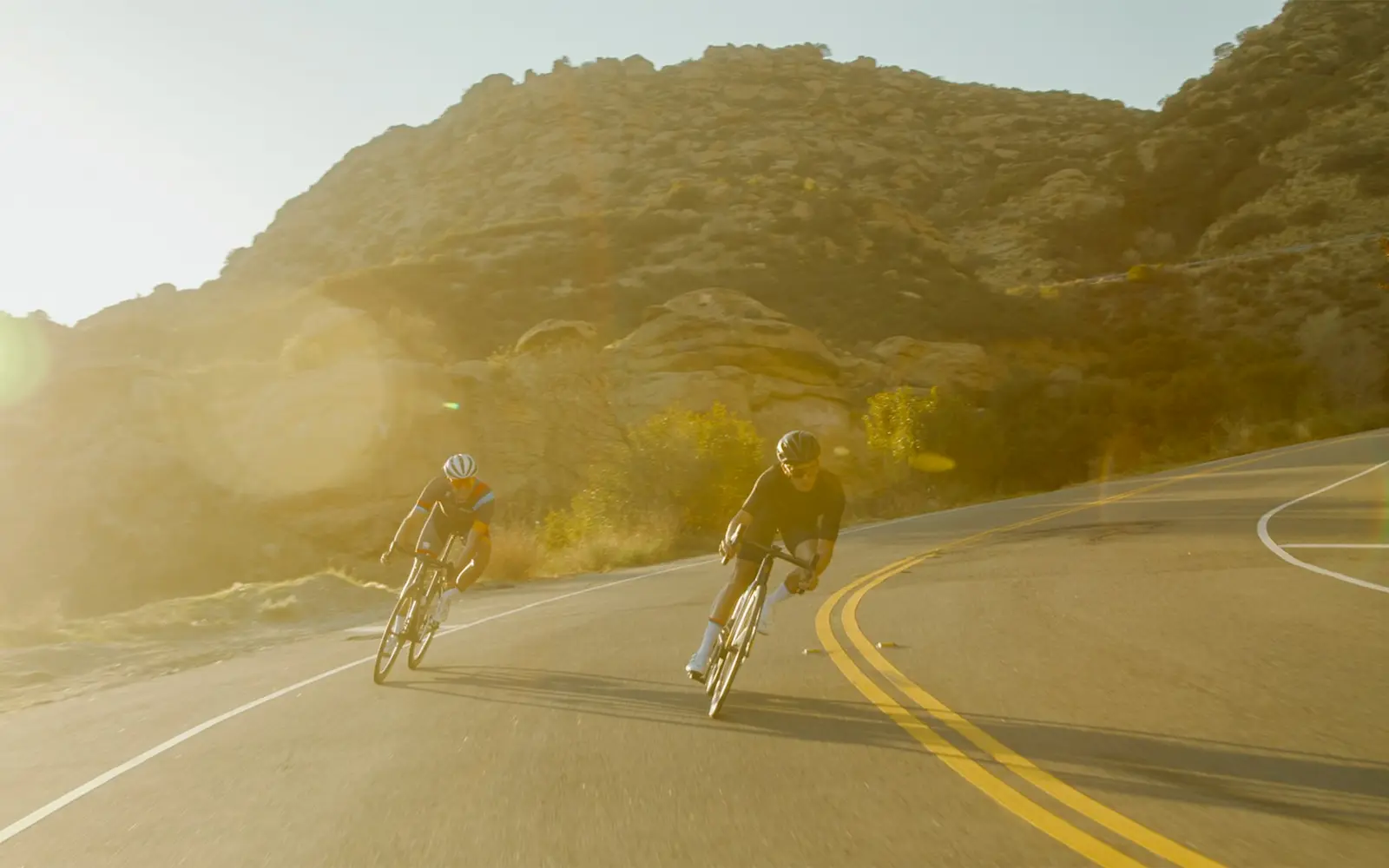
Legendäre Anstiege in Spanien
3 Anstiege, die Radsportgeschichte schrieben in Spanien, 36 km legendärer Asphalt: Steigungen, Storys und Tipps für deine Auffahrt.
The Vuelta's classic stages in Asturias and the Balearics
Spain offers some of Europe's hardest climbs: Alto de l'Angliru and Lagos de Covadonga, in Asturias, are the most famous, while Sa Calobra is Mallorca's jewel. Every summer the Vuelta a España turns these roads into open-air amphitheatres.
Spanish climbs have a different character from the French Alps: steeper gradients, warmer climate and landscapes ranging from coast to northern mountains.
When to go and what to bring
The best window is July to September, when weather is more stable. Always check road conditions before leaving: rain can make the steepest ramps dangerous.
For gearing you need genuinely easy ratios: a 34x32 is the minimum for the Angliru, while Sa Calobra calls for standard ratios. Carry at least a litre of water and a spare gel.
Getting there and where to stay
Asturias is reachable by plane from Madrid or Barcelona, while Mallorca is linked to major European airports. The towns of Cangas de Onís and La Vega-Riosa are ideal starting points.
Summer is the busiest season: booking ahead is advisable, especially during race weeks. Many properties offer cyclist services: bike storage, workshop and energy breakfast.
Alto de l'Angliru
12.5 km · 1266 m D+ · 10.1%
Lagos de Covadonga
14 km · 1040 m D+ · 7.4%
Sa Calobra
9.5 km · 668 m D+ · 7%
FAQ
Welches sind die berühmtesten Anstiege in Spanien?
Die bekanntesten stehen unten mit Distanz, Höhenmetern und Steigung — jeder mit seiner Geschichte zwischen Tour-, Giro- und Vuelta-Legende.
Wann fährt man sie am besten?
Juni bis September ist das sichere Fenster für hohe Alpenpässe, die bis spät ins Frühjahr verschneit sein können. Prüfe immer die saisonalen Öffnungen.
Was ist der härteste Anstieg in Spanien?
Nach Durchschnittssteigung führt „Alto de l'Angliru" die Liste mit 10.1% an. Das volle Höhenprofil und Übersetzungstipps stehen auf seiner Seite.