Bike maintenance: the yearly check-up calendar, from every ride to once a year
What to check on your bike before every ride, every month and every season: tyre pressure, chain, brakes, wheels and bearings, with the signs that tell you when to act.
By the Velunite editorial team
~60 min · Difficulty: easy · Brands: Tutte le bici · Published on 24 November 2026
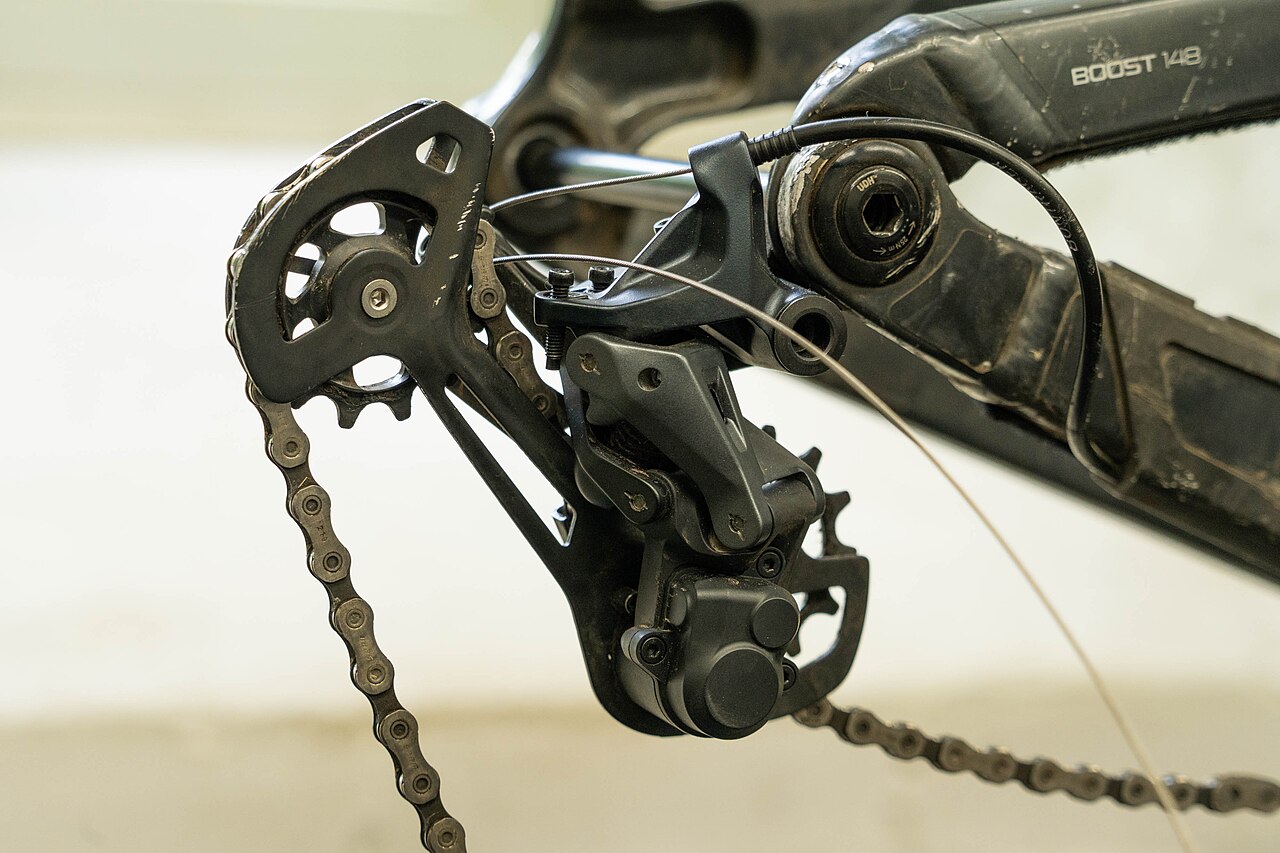

Most expensive repairs start with a two-minute check that never happened. A dry chain wears out cassettes and rings quickly, a pad worn to the metal scores a rotor, a noisy headset bearing eats the frame seat. This calendar puts checks in order by frequency: before every ride, monthly, seasonal and the yearly service. You do not need a workshop: you need a gauge, a chain checker, a torque wrench and twenty minutes a month. When a job needs tools you do not have, the guide says so and points you to the specific page.
Tools you need
- Track pump with a pressure gauge
- Chain wear checker
- Torque wrench, 2 to 15 Nm
- Hex and torx key set
- Chain degreaser and a rag
- Chain lube suited to the season
- Assembly paste for bolts and seatposts
- Torch or head light
Step by step
Before every ride: the one-minute check
Tyres: check pressure with the gauge, not with your thumb. A tyre that feels hard can be at 2 bar when it needs 5, and pressure must be measured cold, before you leave. Brakes: pull the lever firmly, it must not reach the bar and must not feel spongy; check that the pads touch the rotor evenly. Wheels and closures: make sure quick releases are closed and tyres have no cuts showing the casing. If you ride in low light, switch lights on before leaving, not after.
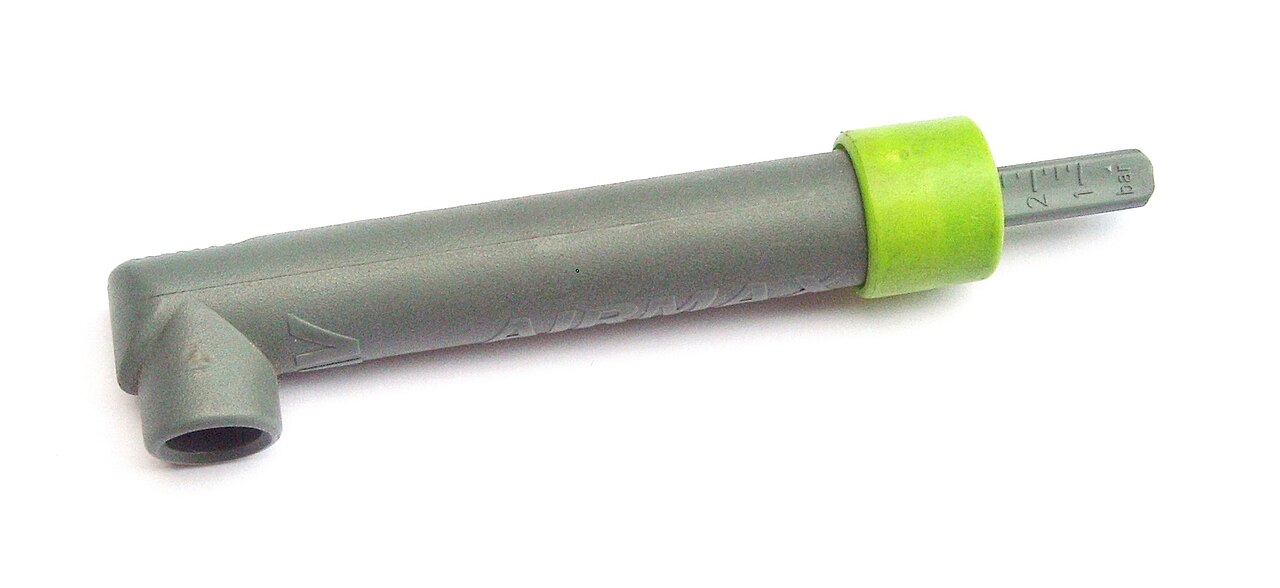
Tyre pressure gauge. Photo: Simon Speed, CC0, Wikimedia Commons After every ride: targeted cleaning, not a full wash
Clean the chain with a rag and, if needed, a specific degreaser applied to the cloth, never sprayed near bearings. Avoid pressure washers: pressurised water gets into wheel, bottom bracket and headset bearings and washes the grease out. If you rode in the rain, dry the chain and rotors with a clean cloth: water left on rotors causes noise and surface rust. Never touch rotors and pads with bare fingers: skin grease reduces braking.
Every 200-300 km: clean and lubed chain
Clean the chain, dry it and apply a few drops of lube while turning the pedals backwards. Let it settle for a few minutes and wipe the excess: leftover lube collects dust and turns into an abrasive paste. A light lube is fine in dry weather; for rain and mud use a more water-resistant product and reapply after every wet ride. At the same time, check wear with the gauge: past 0.5% on an 11- or 12-speed drivetrain, or 0.75% on 9- and 10-speed, the chain needs replacing.
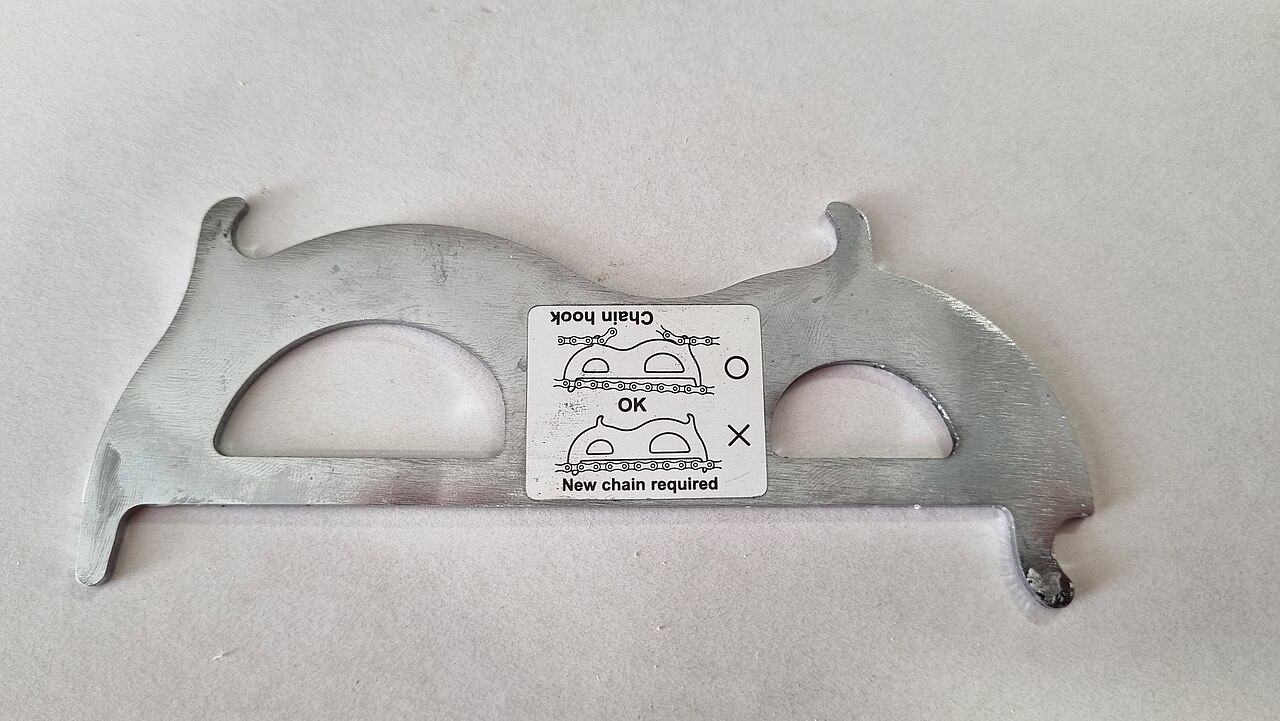
Chain wear gauge. Photo: Sam Wilson, CC BY-SA 4.0, Wikimedia Commons Every month: bolts, play and noises
Hold the bike and look for play: front and rear wheel (push sideways with the brake on), headset (hold the front brake and rock the bike), bottom bracket (push the crank arms sideways), pedals and saddle. Small play gets worse fast: tighten to the torque stated by the manufacturer, usually stamped on the part or in the manual. Check spokes too: flick them with a fingernail, they should all sound similar; if one is loose, the wheel needs truing. Go through any new noises: they almost always come from a dry chain, rubbing pads or a cable rattling.
Every three months: drivetrain, pads, tubeless
Do a deep clean of the drivetrain: chain, cassette, chainrings and pulley wheels. Check pad thickness: when about 0.5 mm of friction material remains above the metal backing, replace them, and replace before they reach metal. If you run tubeless, check the sealant: shake the wheel, you should hear it sloshing; if you hear nothing, it has dried out. Topping up every two or three months is normal, but heat and dry conditions can require it more often. Check tyres as well: cuts, tread wear and bulges on the sidewall.
Every six months: fluids, cables and grease
With hydraulic brakes, check fluid colour in the reservoir or with the bleed syringe: if it is dark or the lever feel has changed, it is time to bleed. Mineral oil systems (Shimano; for Magura and Tektro check the manual) and DOT systems (SRAM, Avid, Formula) are never mixed: use only the fluid specified by the manufacturer. On mechanical brakes and gears, if the cable drags or is rusty, replace cable and housing: it is cheap and transforms the lever feel. On threaded bottom brackets, check the grease on the threads, especially after a wet winter.
Once a year: the real service
Once a year a full service is worth it: inspect the frame for cracks, especially around the bottom bracket shell, head tube and rack mounts; check spoke tension; check wheel and headset bearings; assess the drivetrain. If you have a suspension fork or shock, servicing depends on the manufacturer and use: mountain bikes often call for service every 50-100 riding hours, while road and light gravel use stretches those intervals a lot. If you lack suspension tools, this is the job to give to a mechanic.
Before the season and after winter: two checklists
Before the season: tyres with enough tread and correct pressure, brakes checked with pad thickness, chain measured and lubed, gears shifting through every sprocket, lights working, full repair kit (spare tube, levers, pump or CO2, multi-tool). After winter: hand wash, degrease the drivetrain, check rust on chain and cables, inspect bearings, top up or replace tubeless sealant. Two hours that save you from discovering a problem 80 km from home.


Mistakes to avoid
- Checking pressure with your thumb: a tyre feels hard even at 2 bar, and the wrong pressure pinches tubes or wears the tyre unevenly.
- Pressure-washing the bike: pressurised water gets into bearings and washes out grease, and the damage shows up months later.
- Tightening by feel, without a torque wrench: on carbon frames and handlebar clamps an overtight bolt cracks the part, an undertight one lets it move.
- Lubing a dirty chain: lube mixes with dust and sand into a paste that wears the drivetrain faster.
- Putting off pad replacement: once the material is gone, the metal backing scores the rotor and the repair costs much more.
Frequently asked questions
How often should I lube the chain?
After every wet ride, immediately. In dry weather, roughly every 200-300 km or when the chain becomes noisy and the rollers look shiny. Condition matters more than mileage: a dirty chain should be cleaned before adding lube.
Do I need a mechanic once a year?
If you do the basic checks yourself, it is not mandatory. It is worth it for suspension service, for wheel tension and truing if you lack a stand, and for a frame check after a crash. A yearly service on a bike used all year is a good investment anyway.
How do I know a bearing needs replacing?
Three signs: play (the part moves sideways), noise (creaking or gravel when it spins) and drag (the wheel does not spin freely). If you have two of them together, the bearing needs to be opened or replaced.
How much does it cost to set up for DIY maintenance?
A basic kit with hex keys, a torque wrench, cassette tool, chain breaker, tyre levers and a gauge pump costs roughly 120-200 euros. It pays for itself with one or two services, and above all it lets you act before a problem becomes expensive.
Can I use degreaser on the whole bike?
No. Use it only on chain, cassette and chainrings, preferably applied to the rag. On rotors, pads and bearings it can leave residue that reduces braking or washes out grease. For the frame, water and mild soap are enough.
Track chain wear, pads and tyres for every bike in Velunite: see when chain and pads need checking.
Open My bikesRelated guides
- How to replace a Shimano bike chain
- How to clean and lubricate a bicycle chain
- What is the right tyre pressure for a bike
- How to replace Shimano disc brake pads
- How to align a bicycle disc brake
- Wheels: truing and spoke tension, a practical guide
- How to adjust a Shimano rear derailleur
- Basic maintenance for a mountain bike suspension fork