FTP cycling: how to calculate it, chart and power zones
FTP in cycling explained: how to test it (20-minute or ramp), watts per kilo chart, power zones and how to train by feel or heart rate without a power meter.
Free, in 1 minute: save routes, download the GPX and join group rides.
Sign up free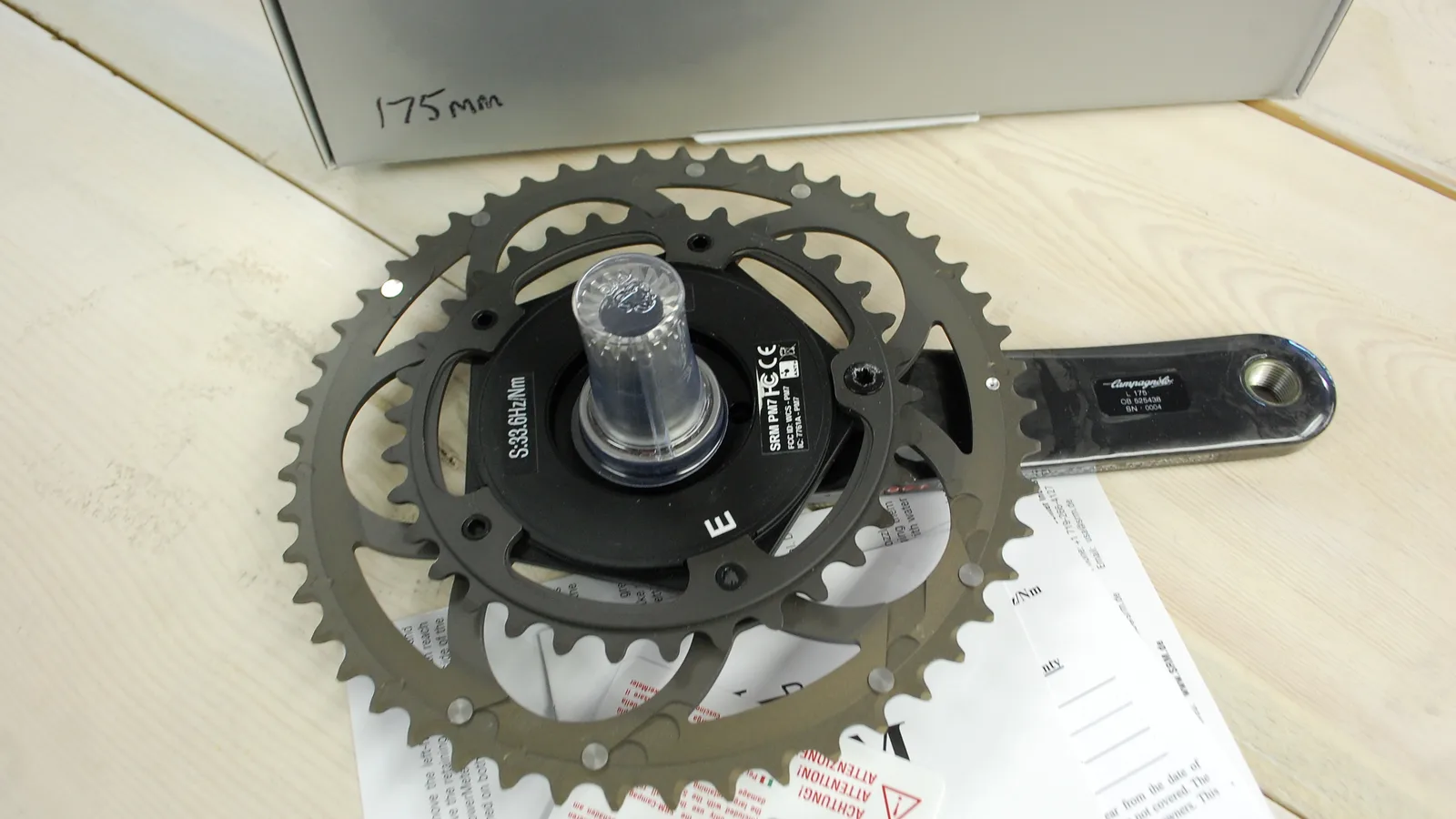
What is FTP in cycling, in plain words
FTP stands for Functional Threshold Power. It is the highest average power, in watts, that you can hold steadily for about an hour without blowing up. It is not a record and it is not your peak power: it is the effort level above which fatigue climbs fast and you have to back off.
What is it good for? It gives you a personal reference number to build training around. If your FTP is 250 W, riding at 140-185 W is easy endurance work while 240-260 W is threshold work. Without a reference, "hard" and "easy" change from day to day; with FTP, sessions become repeatable and you can see whether you are improving. If the concept is new to you, start with our beginner's guide to FTP and power on the bike.
How to calculate FTP: the 20-minute test
This is the most common method, proposed by Hunter Allen and Andrew Coggan in their book on training with power. You need a power meter (pedals, crank or hub) or a smart trainer, plus a steady climb or a trainer so you do not have to brake. The classic format: 20 minutes easy warm-up, three 1-minute fast efforts with 1 minute easy between them, 5 minutes easy, then 5 minutes very hard to take the edge off your legs, another 10 minutes easy and finally 20 minutes at the hardest steady pace you can sustain from start to finish.
Write down your 20-minute average power and multiply by 0.95. Example: 280 W average gives 280 x 0.95 = 266 W FTP. The factor is there because you can hold slightly less for a full hour than for 20 minutes. The key to the test is even pacing: if you start at 320 W and fade, the number will be falsely low. Start at a pace that feels almost too easy and push harder in the second half.
Because the test is hard, do it rested, with at least one easy day before and not after a heavy week. If you have heart problems, uncontrolled high blood pressure, or have not exercised in a long time, talk to a doctor first: maximal tests are not for everyone.
Other ways to find your FTP: ramp, 8-minute and estimates
The ramp test is the one used by indoor training apps: you start at low power and go up a step every minute (usually 20 W, sometimes 10 W) until you cannot continue. FTP is estimated as about 75% of the average power of the last full minute. It is shorter (20-25 minutes in total) and less stressful, but it often overestimates riders with a strong anaerobic capacity and underestimates more endurance-based riders.
The 8-minute test uses two 8-minute efforts with 10 minutes of recovery: FTP is about 90% of the better average. Many riders use it when 20 minutes is too much to manage mentally. Garmin, Wahoo and similar watches and computers also give automatic estimates, but they are approximations based on heart rate and speed: fine as a starting point, not a replacement for a real test.
Whichever method you pick, always repeat the same one. Comparing a ramp test with a 20-minute test makes you believe in improvements or losses that do not exist.
Power zones based on your FTP
Once you know your FTP, Coggan's zones are percentages of that number. Zone 1, active recovery: below 55%. Zone 2, endurance: 56-75%. Zone 3, tempo: 76-90%. Zone 4, threshold: 91-105%. Zone 5, VO2max: 106-120%. Zone 6, anaerobic capacity: 121-150%. Zone 7, neuromuscular power and sprints: above 150%.
Example with an FTP of 250 W: Z1 below 138 W; Z2 140-187 W; Z3 190-225 W; Z4 228-262 W; Z5 265-300 W; Z6 303-375 W. Most of an amateur's kilometres should be in Z2, with one or two sessions a week in Z4-Z5. To fit this into your week, use our 30 and 60-minute turbo trainer workouts, which are built on FTP percentages.
FTP chart and watts per kilo: rough benchmarks
The absolute number says little: 250 W is a lot for someone weighing 60 kg and ordinary for someone at 90 kg. That is why we use watts per kilo, FTP divided by body weight. Example: 250 W at 75 kg is 3.33 W/kg. You can work it out in seconds with our watts per kilo calculator, which also estimates climbing time.
Online charts do not agree with each other because each names the categories differently. As an order of magnitude that most sources share: below 2.0 W/kg beginners or occasional riders; 2.0-2.5 recreational; 2.5-3.2 regular amateur; 3.2-4.0 well-trained amateur, good level in gran fondos; 4.0-5.0 competitive amateur or former racer; above 5.0-5.5 elite; 6.0 and above top professionals. Do not be discouraged: most riders sit between 2.0 and 3.5.
Do not compare your numbers with other people's without checking age and test type. After 40-50 years of age a slow drop in FTP is normal. The useful comparison is with yourself: going from 2.6 to 2.9 W/kg in 8-12 weeks is a serious jump.
FTP without a power meter: what you can do
A power meter is the only tool that measures watts, but you do not need one to train well. Alternatives: threshold heart rate, estimated with a 30-minute all-out test (the average of the last 20 minutes is a good reference) and the heart rate zones that come from it; perceived exertion, on a 1-10 scale where threshold is about 7-8, hard but controlled, where you can say only a few words; or a smart trainer, which measures power and sends it to the app.
If you are thinking of buying a power meter, pedal- or crank-based units cost roughly from a few hundred euros upward, and single-sided systems are enough to see whether you are improving. Before spending, try working by feel and heart rate for a couple of months: if you enjoy the numbers approach, a power meter becomes a sensible purchase.
Common mistakes with FTP testing
1. Starting too hard and fading halfway. 2. Testing tired, without recovering from the week. 3. Changing conditions every time: an outdoor climb and a trainer test are not comparable, partly because trainer watts are usually lower due to heat and lack of airflow. 4. Treating the FTP shown by Garmin, Strava or Zwift as your true value. 5. Obsessing over the number: FTP is for training, not for bragging on group rides.
Another mistake is not updating your zones. If FTP goes up and you keep using the old percentages, the work becomes easier and progress stalls. Retest every 6-8 weeks, or when a session that used to be hard turns easy.
How to raise your FTP: workouts that work
The most effective sessions are done in blocks. Sweet spot, at about 88-94% of FTP: 2 or 3 blocks of 15-20 minutes with 5 minutes of recovery. Threshold, 95-100%: 2 x 20 minutes. VO2max, 106-120%: 5 efforts of 3-5 minutes with recovery equal to the effort. The rest of the week should be easy, in Z2: that is the base that lets you handle the hard work. A typical week for 5-6 hours: one long Z2 ride, one sweet spot session and one VO2max or threshold session, plus an optional recovery ride.
Alternate 3 weeks of load with 1 easier week at 30-40% less volume. FTP usually rises fastest in the first 3-4 months of structured training (often by 10-15%) and then progress slows. If your racing season starts in spring, winter is the time to build the base: check the 2027 event calendar to set goals and work backwards.
When to get professional help
A coach or a lab test makes sense if you want a precise measurement (lactate threshold and oxygen uptake), if you have competitive goals, or if you have trained for months without improving. If you feel chest pain, dizziness or unusual breathlessness during tests or intervals, stop and see a doctor before trying again.
FAQ
What does FTP mean in cycling?
It stands for Functional Threshold Power: the average power in watts you can hold for about an hour at a steady effort. Training zones are calculated from it.
How do you calculate FTP?
The classic method is a 20-minute maximal steady effort: multiply the average power by 0.95. Alternatives are the ramp test (about 75% of the last minute's average) or the 8-minute test (about 90% of the better average).
What is a good FTP for an amateur?
A regular amateur is usually between 2.5 and 3.2 W/kg, a well-trained one between 3.2 and 4.0. These are orders of magnitude: charts vary, so your improvement over time matters more.
Can I find my FTP without a power meter?
You cannot measure watts, but you can use threshold heart rate from a 30-minute test or perceived exertion. A smart trainer measures power and lets you test without buying a separate meter.
How often should I retest FTP?
Every 6-8 weeks during structured training, or when sessions that used to be hard feel easy. Always use the same protocol so results are comparable.
Is the FTP estimated by Garmin or Zwift accurate?
It is a useful starting estimate but can differ from your real value. For precise training, do a proper test and update the zones in your device.
How many watts per kilo do I need to climb well?
The higher your W/kg, the faster you climb. About 3 W/kg lets you handle gran fondo climbs steadily; 4 W/kg makes you a strong amateur. Use the watts per kilo calculator to estimate your time on a climb.
Keep exploring
Attrezzatura consigliata
Affiliate links: if you buy through these links Velunite receives a small commission, at no extra cost to you.