How to Organize a Group Running Session: Pace and Safety
How to organize a group run: declared paces, regrouping loops, sub-groups, safety and simple rules so nobody gets left behind or held back.
In 1 minute: save routes, download the GPX and join group rides.
Sign up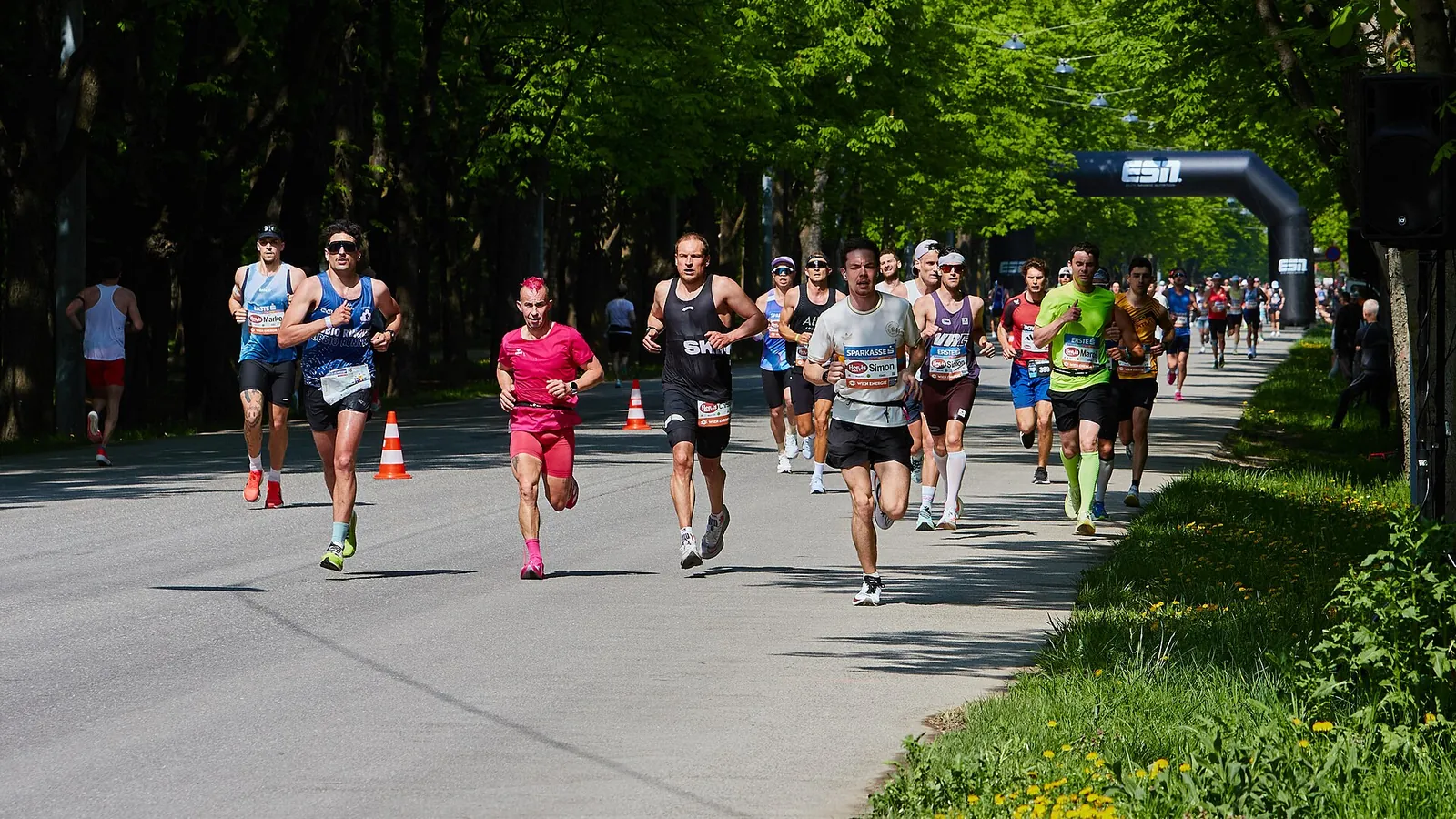
The short answer: how to organize a group run
A group run works when pace, distance and meeting point are clear before you start, and when the route lets people regroup. Running has a problem that cycling softens: drafting helps little, so a runner at 8:00 per mile and one at 6:30 drift apart in minutes. That is why the group should be built around pace sub-groups and meeting points, not a single pace.
Put pace, distance and type of workout in the invite, pick a loop or a route with regrouping points and a single chat. On Velunite you create the event with the pace stated and choose a running route.
Declare pace, distance and type of workout
Most failed group runs start with a misunderstanding about pace. State in the invite the expected average pace (for example "5:30-6:00 per km", about 8:50-9:40 per mile), the distance and whether it is an easy run, progression or intervals. As an order of magnitude for an easy group run:
- Conversation pace 6:00-7:00 per km (9:39-11:16 per mile) for beginners. - 5:15-6:00 per km (8:27-9:39 per mile) for runners with a few years behind them. - 4:30-5:15 per km (7:15-8:25 per mile) for trained runners. - Under 4:30 per km: a fast group with specific training.
The test is whether you can speak in full sentences: if you cannot, the easy run is not easy. One way to choose the right pace is to work out paces from your own times with the running pace calculator and to state a range in the invite, not a single number.
How big should the group be
Three or four people are enough to start. A well-run group reaches 8-10: beyond that it stretches along the pavement, gets in pedestrians' way and the leader cannot see who is at the back. Above 10, split into two pace sub-groups, with a lead for each and a common start.
Set a maximum in the invite and a waiting list. For people running in a group for the first time, give a contact for questions beforehand: fear of being too slow is the most common reason people do not turn up.
Route: the loop that lets people regroup
The ideal group route is a loop of 1-3 km to repeat, or an out-and-back with a turning point: either way faster runners complete an extra lap and meet the others again. In a park with a 2 km loop, the fast group runs 5 laps and the slow one 4, and everyone arrives at the meeting spot together.
Choose a route with few interruptions (traffic lights, junctions), uniform surface and, for evening sessions, enough light. Use the criteria in the guide on how to choose a running route (climbing per kilometre, surface, water). Share the GPX track and the meeting point with a precise time.
One chat for the session
The cycling rule applies to running too: no overlapping parallel WhatsApp groups. One dedicated chat, with a pinned message with date, time, meeting point, pace, distance and organiser contact. The evening before send a reminder with weather and clothing; in the morning write only if something changes.
After the run the chat stays as the meeting place for the next session: people who also share the photo and time of the workout want to come back more.
How to structure a group session
A good outline for a typical session:
1. Meet 10 minutes early: greetings, route recap, split into sub-groups. 2. Warm-up of 10-15 minutes at an easy pace, all together. 3. Main part: easy running or specific work (see the types of intervals in running intervals). 4. Cool-down of 5-10 minutes together. 5. Light stretching and a word about the next date.
For quality sessions (intervals, progression runs) everyone runs the same stretches at their own pace and regroups at the recovery. That way the same workout works for everyone without anyone feeling held back or pushed too hard.
Safety: especially for people who run alone
The group is a form of safety, especially for people who run in the evening or early morning. A few simple rules: run in single file where the road is narrow, face oncoming traffic outside built-up areas (check the rules in your country), cross all together at junctions with good visibility and never assume a driver has seen you.
In low light wear a reflective vest or bands and a headlamp. Anyone with a physical problem (sharp pain, dizziness, unusual breathlessness) stops and the leader arranges for someone to go with them; for unusual or persistent symptoms see a doctor. For solo runs share your live location with someone who knows when you will be back. For heat and water see the guide on how to choose a running route.
Nobody gets dropped: handling different levels
Every group has faster and slower runners: that is normal. The simplest way to handle it is regrouping at fixed points: each runs at their own pace between points, and whoever arrives first waits 1-2 minutes. On a loop, the faster runners complete an extra lap and slow down for the last lap with the others.
Name a "sweeper" for each session: they run behind the slowest, never drop away and should never feel uncomfortable. For beginners plan run-walk intervals (for example 4 minutes running, 1 walking) and a pace that does not push them over their limit. If you want everyone to progress, add an occasional session with progressive work, not just easy runs.
After the session and the most common mistakes
The closing ritual matters as much as the rest: stretching together, a photo, a coffee or breakfast, and the next date set before you part. A group that meets every week at the same time lasts longer than one that decides case by case.
Typical mistakes: undeclared pace; vague meeting point; a group too large without sub-groups; a route with too many interruptions; nobody closing the group; sessions too hard for everyone. To build a common goal, pick a race from the 2027 calendar and prepare the group with a plan, for instance with the guide on how to prepare for your first race.
FAQ
How many people do I need for a group run?
Three or four are enough to start. Above 8-10 it is better to split into pace sub-groups, otherwise slower runners get discouraged and faster ones get bored.
How do I handle runners with different paces?
With fixed regrouping points and a loop to repeat: faster runners do an extra lap. Above 8-10 people, use two sub-groups on the same route.
What is the right pace for a group easy run?
The one where you can speak in full sentences. Roughly 6:00-7:00 per km for beginners and 5:15-6:00 for those who have run a few years.
Is running in a group safer than alone?
Yes, especially in the evening or on isolated routes. Sharing your live location adds safety even for people who cannot join.
Do I need to be fit to join a group?
No, if the pace is stated in advance. Look for sessions marked as easy or beginner and check distance and pace before joining.
Which route should I choose for a group session?
A loop of 1-3 km to repeat or a route with few interruptions, uniform surface and enough light. Avoid complicated junctions and roads without pavements.
How do I keep the group together over time?
The same day and time each week, a single chat, a closing ritual (breakfast or coffee) and a shared goal such as a race to prepare for together.