Chain and Drivetrain Care: The Maintenance Habit That Saves You Money and Watts
A practical guide to drivetrain maintenance: cleaning, lubing, when to replace your chain, and how to spot a derailleur that needs adjusting.
In 1 minute: save routes, download the GPX and join group rides.
Sign upWritten by the editorial team at Velunite
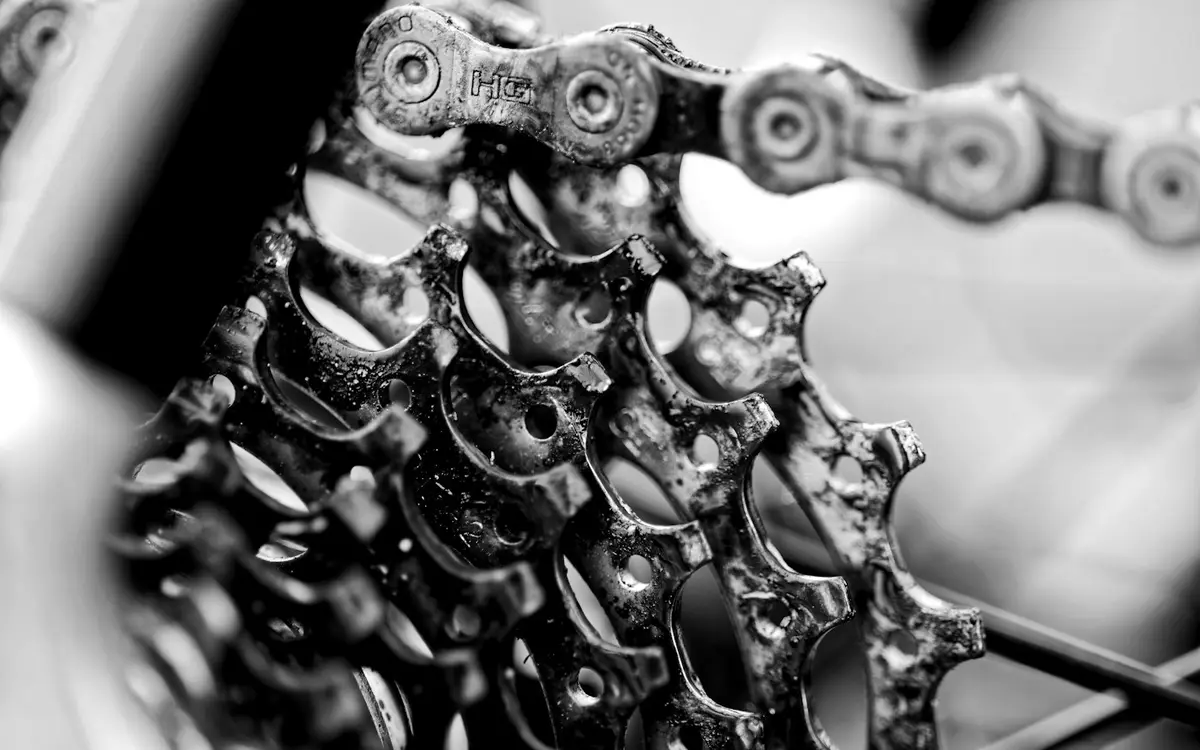
The drivetrain, meaning chain, cassette, chainrings and derailleurs, is the mechanical heart of your bike and also the part most riders neglect. Yet a few minutes each week can add thousands of kilometres to its life, reduce friction and keep your shifting crisp. Learn to look after it and you stop fearing strange noises and save money on spares. This guide explains what to do, how often and which tools you really need.
Why a dirty chain is expensive
Sand, dust and old lubricant form an abrasive paste that works its way between the chain rollers and the teeth of the sprockets. With every pedal stroke the paste files the metal: the chain stretches, the sprockets wear into shark-fin teeth and the shifting starts to skip. A neglected drivetrain lasts far less than a cared-for one, and when it gives out you often have to replace chain, cassette and chainrings together, a far bigger bill than regular maintenance. If you ride often in the rain or off-road, multiply the frequency of care.
Cleaning in ten minutes, every two or three rides
You don't need to take anything apart. You need a chain degreaser, a stiff-bristle brush and a rag. Apply the degreaser, turn the pedals backwards, then wrap the rag around the chain to wipe off the loosened dirt. Clean the rear derailleur pulleys and the cassette too, where grime collects. Avoid high-pressure water jets on the bottom bracket, hubs and derailleurs: they can push water where it shouldn't go and wash out internal grease. A full clean with the chain removed is only needed now and then, for example at the end of the season.
Lubricate without overdoing it
After cleaning the chain must be completely dry before lubricating. Wax-based lubricants are cleaner and suit dry weather; oil-based ones last better in the rain but tend to attract more dirt. The rule is always the same: one drop on every link, pedal backwards so the product soaks in, then wipe off the excess on the outside with a rag. Extra lubricant doesn't protect more: it attracts dust and dirt and undoes your work. Lubricate after every wash and, if you don't wash, roughly every 150-300 km, less if it rains.
When to change the chain, and why sooner is better
With use the links wear and the chain lengthens very slightly, a phenomenon called wear or stretch. A chain wear gauge, cheap and easy to use, tells you within seconds whether the chain has reached its limit: manufacturers typically give 0.5% for 11-speed chains and similar or lower values for others, but check the guidance for your own components. Replacing the chain while it is still within limits costs little and protects the cassette and chainrings, which cost far more; waiting too long wears them out as well and turns a small expense into a triple one. As an order of magnitude a road chain lasts many thousands of kilometres, but it depends on rider weight, terrain and care.
Shifting that skips or won't engage: what to try before the mechanic
Many imprecise-shifting problems are fixed by a small turn of the cable tension barrel adjuster on the rear derailleur, the knurled wheel near the derailleur or on the lever: small turns either way are often enough to restore crisp shifts. If the bike skips several gears at once or makes a constant noise, the cause is often a worn cable, dirty housing, a misaligned derailleur or an overly worn chain, and it is time to see a mechanic. Also check the derailleur hanger: after even a light fall it can bend and make good adjustment impossible.
A simple schedule
After each ride: a quick wipe of the chain. Every two or three rides or after rain: clean and lubricate. Every month: check wear with the gauge and the shifting tension. At the end of the season or after about three thousand kilometres: deep clean and decide on replacement. To see how things change in winter, read about winter bike maintenance.
Frequently asked questions
Can I use sewing machine oil or other household products? Better not: they are not made to cope with load, water and dust and often attract dirt. A bottle of dedicated lubricant lasts many months.
How many kilometres before changing chain and cassette together? There is no number valid for everyone: if you replace the chain at the right moment the cassette often lasts two or three chains. If you wait too long you usually replace everything together.
Does washing the bike with water damage it? A normal wash with a bucket and sponge doesn't; a high-pressure jet does, especially near bearings and hubs.
Looking after the drivetrain isn't a luxury for mechanics enthusiasts: it is the simplest way to make the bike last longer, ride with less friction and enjoy every outing without worry. Ten minutes every couple of weeks is enough to notice.
Recommended products
Maintenance starts with a bike-specific chain degreaser, which dissolves grime and old oil without attacking seals and paint.
After cleaning, a dry-conditions wax chain lube keeps the drivetrain cleaner and quieter than traditional oil.
To know when to replace it without guessing, a cheap bike chain wear indicator tool tells you in seconds whether a swap is due.
To do the whole job properly, a complete bike cleaning kit with brushes covers drivetrain, frame and wheels.
When the gauge says stop, a compatible replacement bike chain matched to your groupset speed count fixes it in one job.
As an Amazon Associate, Velunite earns from qualifying purchases. Some links in this article are affiliate links: if you buy through them Velunite may earn a small commission at no extra cost to you.
More articles
Latest from the Journal
- MTB races are closing: Sirente gone, Dolomiti on the edgeNovember 20, 2026
- Bologna 2027: the marathon costs 10 euros more at each price tierNovember 20, 2026
- WorldTour 2027 calendar: Worlds in August, Vuelta in SeptemberNovember 19, 2026
- Valencia, 6 December: Kejelcha returns to the marathon after sub-2November 19, 2026