Carbon-plate shoes: 40 mm by rule, and what it means for you
World Athletics caps road shoe soles at 40 mm. What the rule says, what it leaves out, and how to pick a plated shoe without the hype.
In 1 minute: save routes, download the GPX and join group rides.
Sign upWritten by the editorial team at Velunite
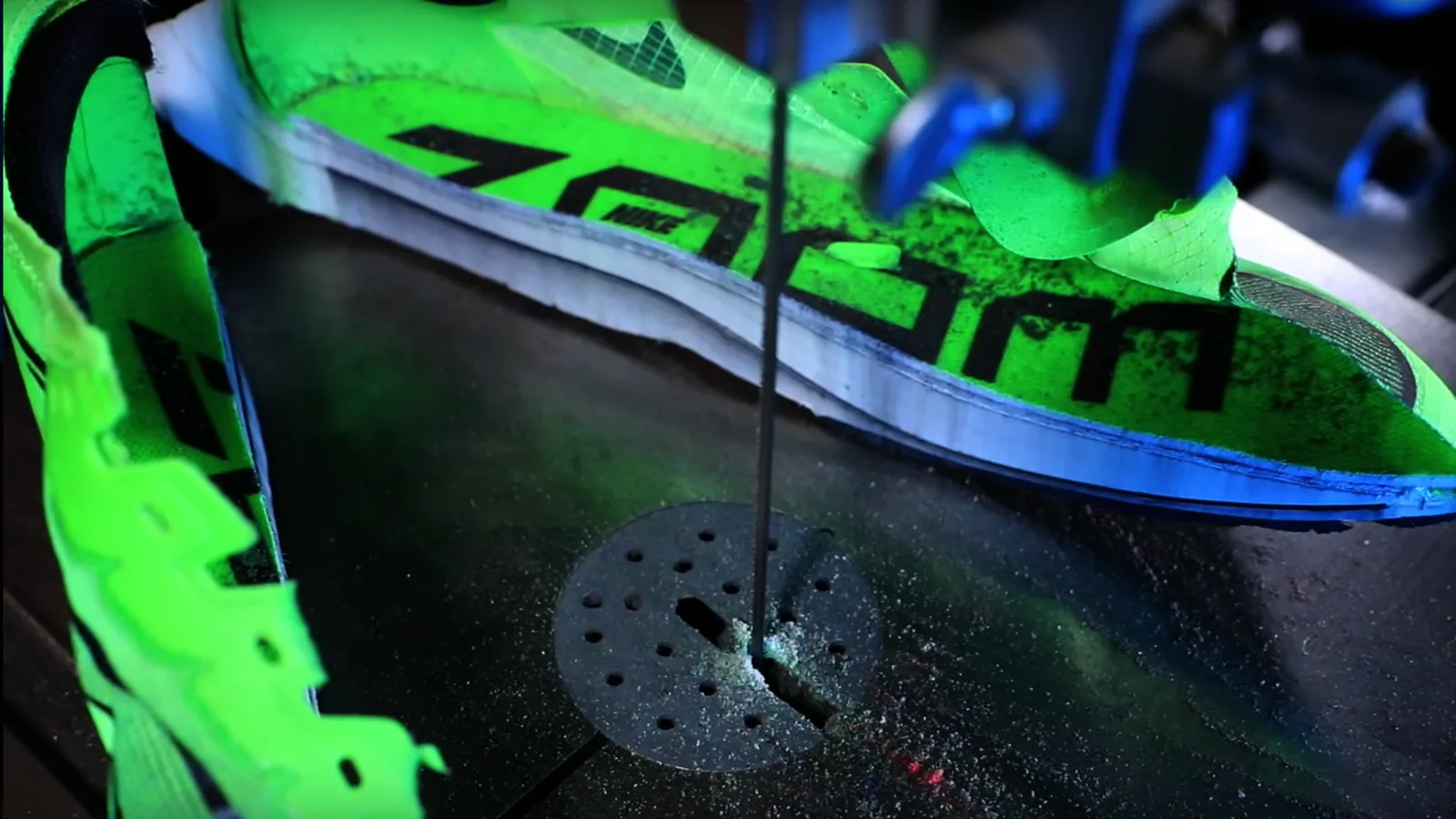
On 26 April in London, Sabastian Sawe won in 1:59:30: the first marathon under two hours in an official race. The time still awaits ratification by World Athletics, but within hours the conversation moved to another topic: shoes. The carbon-plated, foam-heavy models are the same ones many club runners buy for their races. What does the rule actually say, and what does it have to do with a Sunday morning run?
The number that matters: 40 mm on the road
The World Athletics rules do not ban plates. They limit how thick the sole can be. In Rule 5.13, as Athletics Weekly reported it in 2020, the limit is 40 mm for road races, 25 mm for track events of 800 metres and over and for cross country, and 20 mm for track events under 800 metres. To be clear, that is the version we could read. A new text, the Athletic Shoe Regulations (C2.1A), has applied since 20 April 2026, but we could not open its PDF, so the current figures should be checked on the World Athletics site before you decide anything.
What the rule does not say
The rule covers official competition. It does not decide what an amateur can buy, what a shoe should cost, or whether a shoe makes you faster. Development shoes, prototypes a brand can have approved before retail release, exist, and World Athletics publishes a list of approved shoes. But a Sunday runner does not need to know all of that to choose. What matters is how the shoe feels at your pace, and what it costs you in effort and discomfort.
Who needs one, and who does not
A plated shoe is built for racing or for fast sessions. For a beginner it is not needed: it costs more, wears differently and asks you to manage your pace well. There is no solid data showing that these shoes protect against injury, and anyone who promises that is overselling. If you want one for a race, try it first on intervals or a long run, not on race day.
Three questions before buying. How many races do you run in a year, and how many with a timing chip? How many kilometres a week do your legs cover, and can your body handle a change of shoe without a jump in load? Does the shoe bother you after ten kilometres, with your foot changing shape? If you answer yes to the first and no to the others, the plated shoe can wait. Our guide how to choose the right running shoes explains how to test a pair in store and at home.
Our doubt
The 40 mm limit looks reasonable for the elite, but the line between a race shoe and an everyday shoe is blurrier than it seems, and the market knows it. Our doubt is this: if London's time is ratified, the next question will not be about the shoe but about the rule, and who writes it. We prefer a simple rule that everyone can read.
And you? Would you buy a plated shoe for your next race, or wait a year and see how it works for those who have always worn them? Tell us in the comments. We are most interested in the view of people who have tried more than one model.
What to watch in the coming days
The most anticipated date is the Valencia Marathon on Sunday 6 December, where the organisers have put a prize of one million euros on the world record. The benchmark is London's 1:59:30, still awaiting ratification; we take the prize figure from Marathon Handbook, so check it on the race website. We covered it in detail in Valencia puts a million on 1:59:30. Rome returns on 14 March 2027, with entries already open (RunToday). To compare dates, the 2027 calendar lists the marathons to note down. And to see whether a target is realistic, the marathon time calculator works out the numbers for your pace, without any magic shoes.
Sources: Marathon Handbook, Sawe runs 1:59:30 in London 2026; ESPN, London 2026 and the first sub-two-hour marathon; World Athletics, Book of Rules, C2.1A Athletic Shoe Regulations; Athletics Weekly, approved shoes and Rule 5.13, 13 August 2020; Marathon Handbook, Valencia and the million; RunToday, Rome on 14 March 2027.
Comments (0)
No comments yet. Be the first!
More articles
Latest from the Journal
- UTMB 2027: no more age-group passes, only the top 10 get inNovember 15, 2026
- Giro Women 2027: 9 stages, 1,132 km and an 11 km uphill time trialNovember 15, 2026
- GPS on the riders: the mandate slips, but safety does notNovember 14, 2026
- Marathon world championships of their own from 2030, Athens leadsNovember 11, 2026