Pogačar at 42 resting bpm: who measures a champion's numbers?
Saturday Eurosport airs the Pogačar documentary with WHOOP data. Three figures compared, who measured them, and how to read your own resting heart rate.
In 1 minute: save routes, download the GPX and join group rides.
Sign upWritten by the editorial team at Velunite
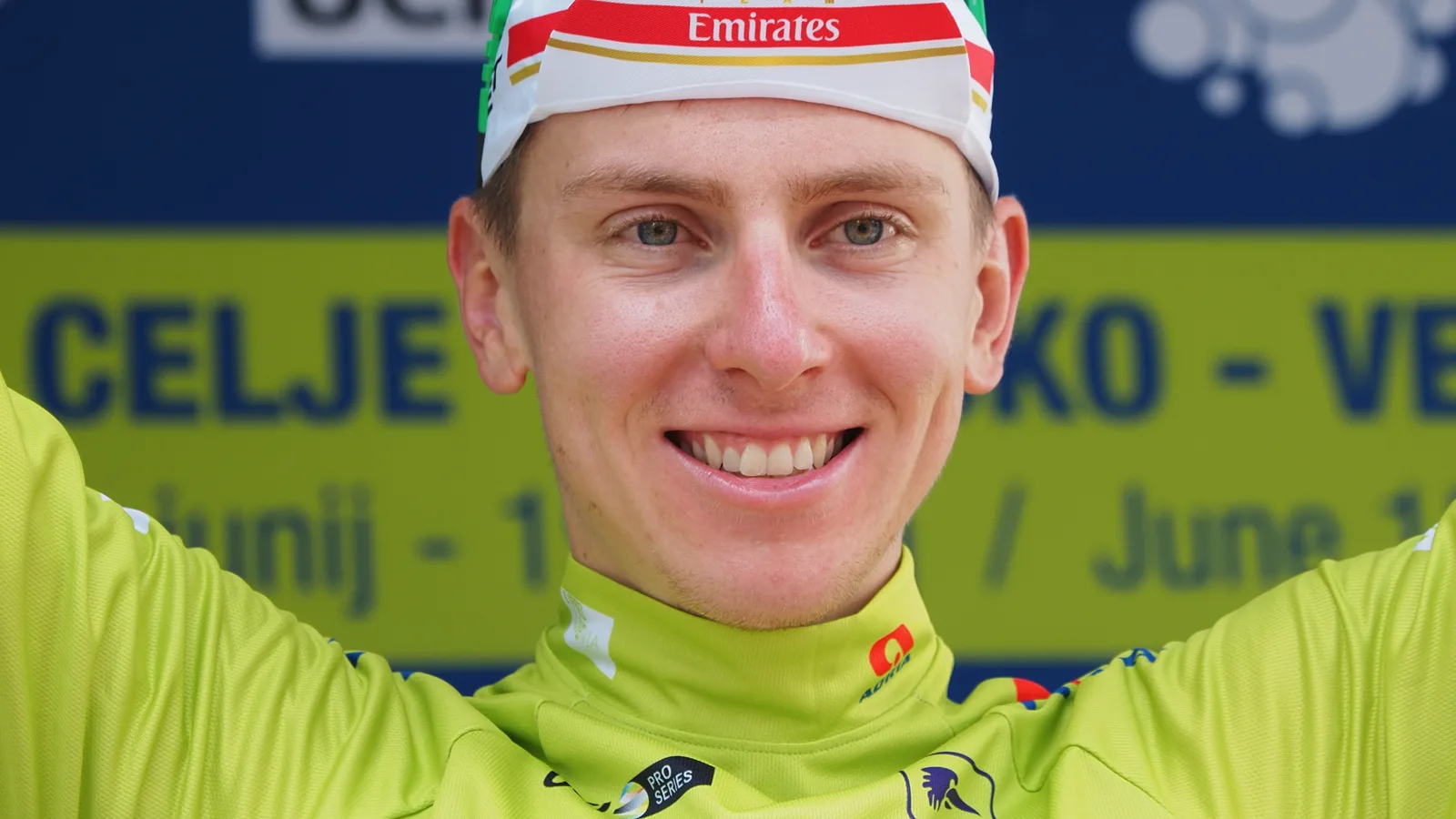
Forty-two beats per minute at rest, on average, during the 2026 Tour. The figure has been circulating since late July, and on Saturday it returns in Anatomy of a G.O.A.T, the documentary about Tadej Pogačar. The film airs at 13:50 on Eurosport 2 and on HBO Max. Our question is simple: when a champion shows a number like this, who measured it, with which device, and for how long?
What is on air, and who is involved
The documentary runs 45 minutes. The science segment features the physiologist Iñigo San Millán and Jean-Benoît Morin, plus Kristen Holmes, vice president of performance science at WHOOP, the maker of the wearable band. According to Brújula Bike, the film uses unpublished physiological data supplied by WHOOP, presented with charts and statistics. Nothing is hidden: the partner is declared. But a figure that comes from the company that makes the device has to be read with that label attached.
Three figures, three sources, not the same thing
The most quoted figure is 37 resting beats. BikeRadar printed it in an article dated 3 July 2025 and specified that it is the heart rate while asleep. The same text does not say who supplied the figure: not the rider, not the team, not a sponsor. The 2026 numbers instead come from WHOOP, which analysed more than 1,400 nights of seven UAE Team Emirates riders over six months, as Tour Magazin reported on 30 July. There, the average during the Tour is 42 beats, against 59 for WHOOP users of the same age, while at the start of the race the value dropped to 38.2.
None of these numbers is wrong. They describe different periods, devices and people. A reading taken in July 2025 cannot be compared with a Tour-long average, and a band that measures at night does not record what you get by checking your pulse on your wrist in the morning. When you read 37 and 42 in the same story, the point is this: the number depends on how you measure it and on who presents it.
Sleep has the same fragility. Tour Magazin reports 8.1 hours a night during the Tour and 6.9 in the immediate preparation phase, with 26 minutes more per night than WHOOP users of the same age. It also mentions one night of only four hours, linked to a night-time anti-doping control. There is nothing mysterious about it: a rider's sleep follows the race calendar more than a laboratory routine.
How to read your own resting heart rate without turning it into a race
Resting heart rate is a simple number, which is exactly why it gets misread. A sensible method: measure it as soon as you wake up, before getting out of bed, with the same device, for seven mornings in a row. Look at the weekly average rather than a single value, because one odd morning says little. If for several days the number rises by many beats without a clear reason, such as short sleep or a heavy training load, it is a signal worth watching, not a score on your fitness. If something worries you, the right person is a doctor, not a documentary.
For training zones, our heart rate zones calculator does the sums. For sleep and recovery, the fuller guide is sleep and recovery in cycling. Comparing yourself with Pogačar, with his 37 or his 42, tells you nothing useful about you. Your starting point is your own.
Our view
For us, a champion's number becomes a show when we do not know who measured it. The documentary is a fine chance to watch closely a rider who has won almost everything, and we are curious to hear the physiologists. But a partner's data remains a partner's data, and it deserves one more question. If you want to know what he plans for 2027, read what we know about his Tour Down Under.
Where do you stand? Is the figure the team shows enough for you, or do you want to know how it was measured? And do you check your resting heart rate every morning, or only when something feels wrong? If you watch on Saturday at 13:50, tell us in the comments which figure convinced you and which did not.
Sources: Tour Magazin, 30 July 2026; Brújula Bike, 4 November 2026; BikeRadar, 3 July 2025; Cyclingnews, 6 November 2026.
Comments (0)
No comments yet. Be the first!
More articles
Latest from the Journal
- Wings for Life 2027: you run against a car, not towards a finishNovember 7, 2026
- 2027 marathons sold out in days: how to get in anywayNovember 6, 2026
- Bianchi in crisis: €100 million of debt and the celeste at riskNovember 6, 2026
- Paris 2027 by lottery: 166,000 entries for about 60,000 bibsNovember 5, 2026