Hydration and Electrolytes on the Bike: How to Avoid Cramping in the Heat
Why water alone isn't enough on hot rides, how much sodium you actually need in the saddle, and the early warning signs of dehydration.
Written by the editorial team at Velunite
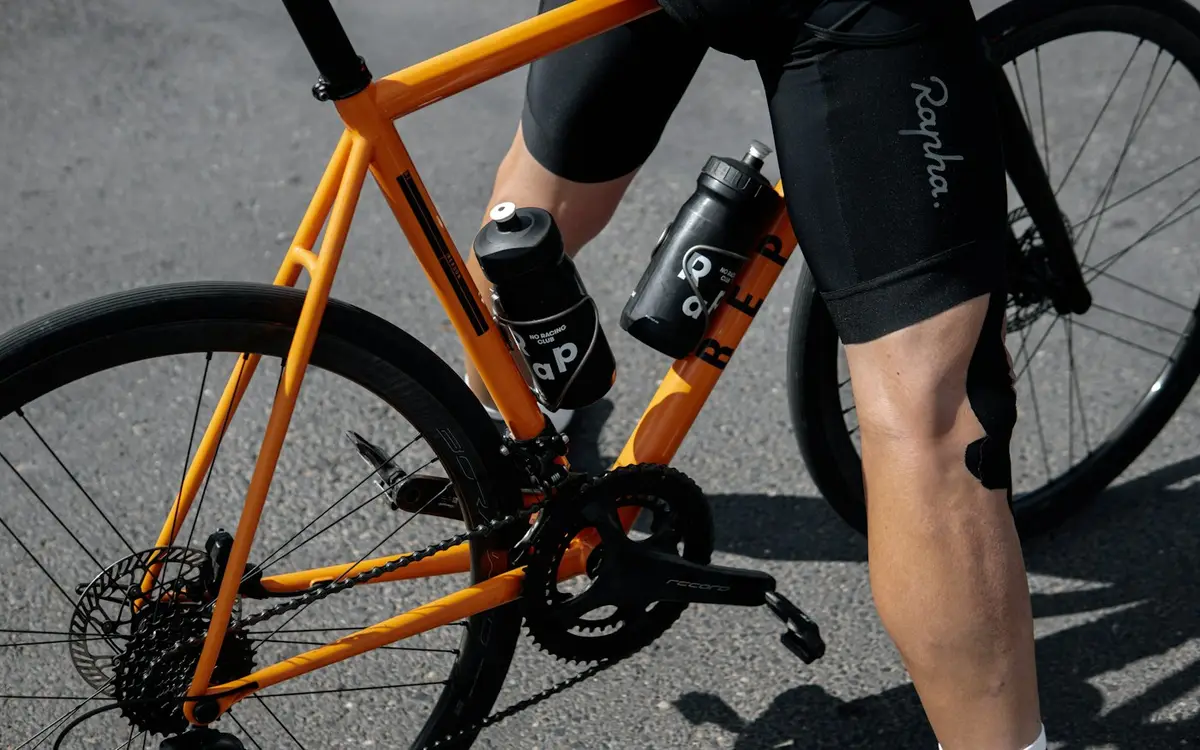
It happens to almost everyone at some point: you're halfway through a hot ride, you've been drinking steadily, and your calf suddenly locks into a cramp. The culprit usually isn't a lack of water -- it's a lack of electrolytes, sodium above all, which plain water can't replace.
Why plain water isn't enough
When you sweat, you lose more than fluid -- you lose electrolytes too, mainly sodium, potassium and magnesium, all of which your muscles need to contract and relax properly. If you only top up with water on a hot day, you dilute the sodium that's already low in your blood, which can worsen fatigue and actually increase cramp risk instead of preventing it. That's why a long, hot ride is worth carrying at least one bottle with electrolytes dissolved in it, not just water.
How much to drink and how much sodium you really need
As a rough guide, in hot conditions riders lose between 500 and 1000 ml of sweat per hour, with huge variation from person to person -- heavy sweaters can lose considerably more. Aim to drink roughly 500-750 ml per hour on rides longer than an hour, and add electrolytes once the temperature climbs past 25C or the ride runs beyond 90 minutes. Electrolyte tablets or powders are cheap and effective, and far more reliable than improvising with water and table salt.
Warning signs worth paying attention to
Intense thirst, a dry mouth, a mild headache and a sudden, unexplained drop in energy are all early signs of dehydration, and they're easy to dismiss because they build up gradually. A useful practical check: if your urine is dark and scarce after a ride, you drank less than you sweated out. By the time you actually feel thirsty, you're already behind -- it's better to sip at regular intervals, roughly every 10-15 minutes, rather than waiting for the urge.
Preventing heat cramps before they start
Beyond electrolytes and pacing your fluids, showing up already dehydrated is a common mistake -- drinking well in the hours before a ride, not just during it, cuts the risk considerably. Heat training matters too: it takes roughly two weeks for the body to partially adapt to high temperatures, sweating more efficiently and losing less sodium over time. Riders who train in the heat regularly tend to cramp far less than those who only do it occasionally.
The bottom line
In hot weather, water on its own isn't enough -- you need electrolytes, a steady drinking rhythm, and attention to your body's early signals. A bottle of electrolytes in your jersey pocket costs almost nothing and can be the difference between a ride that finishes well and one ruined by a cramp on the last climb.
Recommended products
Electrolyte tablets for cycling: easy to carry in a pocket to replace the sodium lost through sweat.
Electrolyte powder supplement: dissolve it in a bottle for longer or hotter rides.
Insulated bike water bottle: keeps your drink cooler for longer, especially useful on very hot days.
As an Amazon Associate, Velunite earns from qualifying purchases. Some links in this article are affiliate links: if you buy through them Velunite may earn a small commission at no extra cost to you.