Running Belt or Hydration Pack: How to Choose the Right One for Gels, Phone, and Water
A buying guide to running belts and hydration packs: capacity, soft flask bottles, phone pockets, and how to stop them bouncing while you run.
Free, in 1 minute: save routes, download the GPX and join group rides.
Sign up freeWritten by the editorial team at Velunite
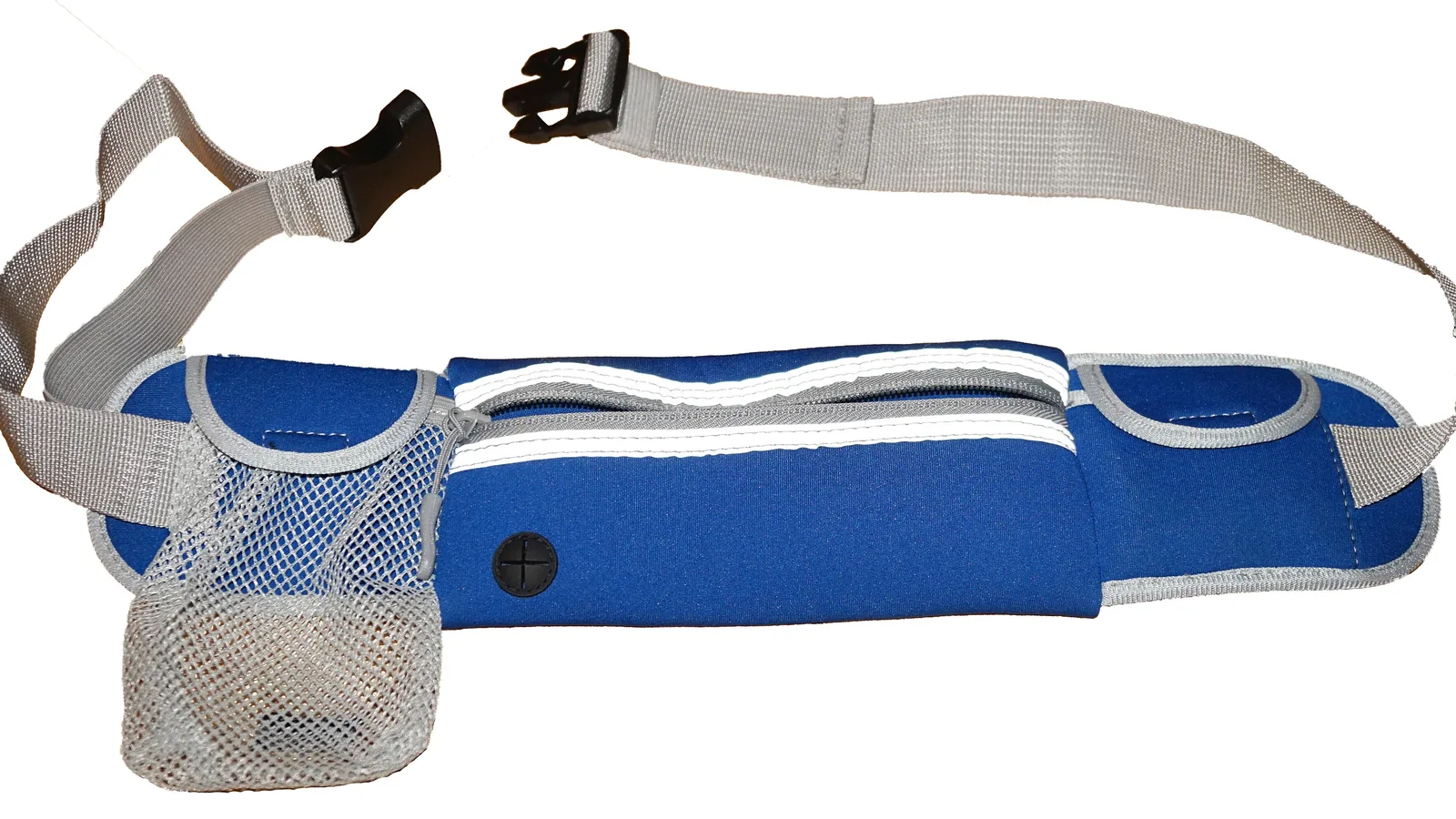
Keys, a phone, a gel or two, a bit of cash: even the simplest run requires carrying something, and how you carry it changes the comfort of the whole session. A well-chosen running belt or hydration pack should disappear while you run — no bouncing, no annoying sweat buildup, no slowing down to adjust it. Which model to pick mostly depends on how much you need to carry and for how long you're running.
All-in-one belts vs bottle belts
Running belts split into two broad families. All-in-one belts have one or more elastic pockets for a phone, keys, and gels, with no dedicated space for liquids — great for runs up to an hour or ninety minutes where you don't need your own water. Bottle belts, on the other hand, have dedicated holders for 150-250ml soft flask bottles, aimed at longer runs, especially in summer or on routes without water fountains.
Hydration packs or vests: when a belt isn't enough
For long runs, trail running, or multi-hour sessions, a simple belt may not be enough. In those cases a larger running pack, or a trail vest with front pockets for bottles you can reach without stopping, lets you carry more liquid, a rain shell, enough gels for the whole distance, and, if a race's rules require it, the mandatory safety kit.
The bounce problem
The reason many runners abandon a belt after a few uses is the annoying bounce with every stride. To reduce it, look for models with an adjustable buckle at multiple points, not just the center, and fabric that moves with the body instead of staying stiff. Wearing the belt slightly lower than the waist, closer to the hips, often helps keep it stable during the run.
Capacity and materials worth checking before buying
Before buying, it's worth considering: the actual pocket capacity (a large modern phone doesn't fit every elastic pocket), whether the fabric breathes or tends to trap sweat and heat, and whether the belt has a separate zipped pocket for valuables apart from the more exposed elastic ones — useful so you don't lose your house keys on a bumpy trail run.
How to choose the size and test it
Measure your waist or hips where you will wear it and compare with the size chart: a belt that is too loose bounces, one that is too tight compresses the abdomen and disturbs breathing. Before heading out test it with the weight you will carry, phone and flasks included: bounce on the spot, jog for a few minutes at home and check that it does not ride up or rotate. If possible try the belt in a shop with your own phone.
Where to put phone, keys and flasks
The phone sits best at the back or side, near the spine, where it bounces less; keys go in the zip pocket or on an inner clip. Flasks are usually carried at the front or sides, balancing the weight. In rain or heavy sweating, a zip bag protects the phone. Avoid loading the belt beyond what you need: every extra bit of weight increases bounce.
How much fluid to carry
It depends on duration, heat and sweat rate. For runs up to an hour you often do not need to carry water, while above an hour and a half, especially in summer, two 150-250 ml flasks let you take a few sips at regular intervals and refill when you find a fountain. For longer outings and trail running, our guides to hydration vests and packs for trail running and to running hydration belts and vests help you pick the right format.
Care: how to make it last
After the run empty the pockets and let the belt air-dry. Wash by hand with mild soap or in the machine on a gentle cycle if the label allows, and never use a dryer. Soft flasks should be rinsed after every run, and if you used a sugary drink mix wash them with warm water and mild soap to avoid smells and mold; replace them when the nozzle or valve deteriorates.
Recommended products
All-in-one running belt: handy for short runs where you only need to carry a phone, keys, and gels.
Running belt with soft flask bottles: built for longer runs when you want to carry your own water without a pack.
Trail running hydration vest: higher capacity, useful for long runs or trails where you need to carry more gear.
Replacement soft flask bottles: worth keeping a spare pair, since they wear out with frequent use.
As an Amazon Associate, Velunite earns from qualifying purchases. Some links in this article are affiliate links: if you buy through them Velunite may earn a small commission at no extra cost to you.
Attrezzatura consigliata
Affiliate links: if you buy through these links Velunite receives a small commission, at no extra cost to you.
More articles
Latest from the Journal
- Hinault and LeMond, 1986: betrayal or a team lesson?October 21, 2026
- Amsterdam, 2:03:33 in the rain, and a faster second halfOctober 21, 2026
- New York 2026: 50 years of five boroughs and three ItaliansOctober 20, 2026
- Sallanches 2027: the Domancy, twenty times, and Pogačar's planOctober 20, 2026