Shimano 105 Di2 vs SRAM Rival AXS: which electronic groupset to choose
Shimano 105 Di2 vs SRAM Rival AXS compared: shifting, price, battery life and who each entry-level wireless groupset is really for.
Free, in 1 minute: save routes, download the GPX and join group rides.
Sign up freeWritten by the editorial team at Velunite
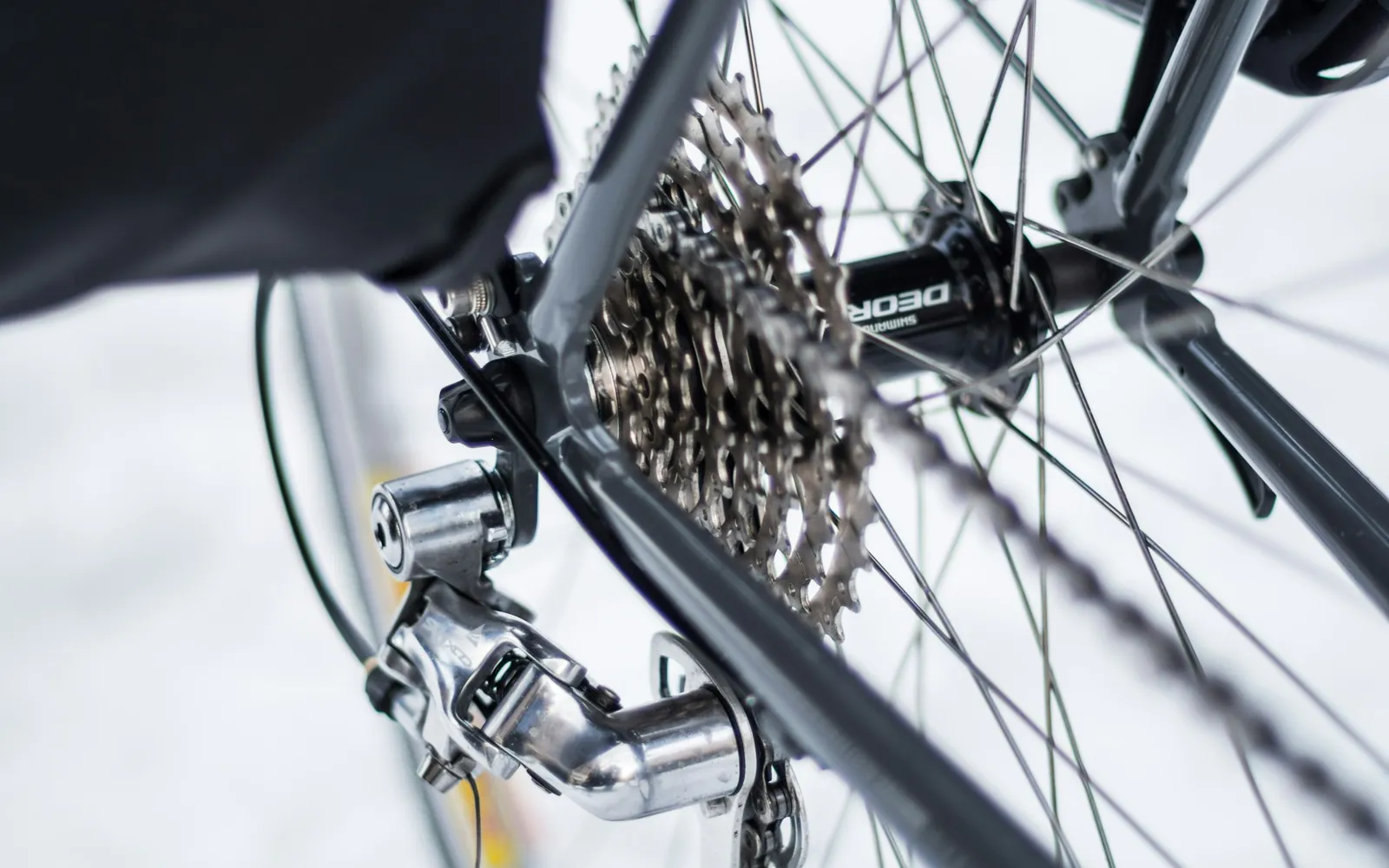
Until a few years ago, electronic shifting was a feature reserved for €8,000+ bikes. With Shimano 105 Di2 and SRAM Rival AXS, wireless electronic shifting has become accessible to riders on mid-to-upper range bikes who still don't want to spend a fortune. These are the two groupsets fighting for this segment, and it's worth understanding how they differ before choosing a bike built around either one.
Shimano 105 Di2: Shimano's electronics for everyone
105 Di2 brings the Di2 technology already seen on Ultegra and Dura-Ace down to the 105 tier, with 12-speed shifting and wireless shift levers, while the derailleurs are powered by a rechargeable central battery that Shimano states can cover several hundred kilometres per charge depending on use. The shifting feel closely mirrors the brand's higher-tier groups: precise, quiet shifts, with automatic multi-shift handling that helps a lot on uneven climbs.
SRAM Rival AXS: SRAM's democratic wireless system
Rival AXS instead brings the fully wireless system SRAM pioneered in road cycling down to its more affordable tier: every component (levers, derailleur, cassette-side mech) has its own independent battery or power source, with no wires running along the frame. The practical benefit is simpler installation and no cables to replace; the 12-speed drivetrain with wide-range cassettes (up to 10-36 or 10-30 teeth) also makes it appealing for riders tackling gran fondos with serious elevation gain.
Price and weight
Both groupsets sit in a roughly comparable price bracket, often between €1,100 and €1,600 for a complete kit depending on the retailer and build (double or single chainring, with or without an integrated power meter), notably more accessible than their respective Dura-Ace Di2 and Red AXS flagships. On weight, SRAM Rival AXS carries a few extra dozen grams compared with 105 Di2 due to its multiple independent batteries, a difference that's barely noticeable in everyday riding.
Which one to choose
If you already ride Shimano bikes and want to stay in that ecosystem, with precise shifting and mature electronics, 105 Di2 is the natural pick. If you like the idea of a fully wireless install, without even an electric wire between the levers and front derailleur, and you often ride mountain gran fondos where wide gear ranges matter, Rival AXS is worth trying. If you still need to pick the bike to put it on, our guide on choosing road and gravel wheels is a good next read.
Recommended products
A few useful accessories to pair with either groupset: a hand pump with gauge, a chain cleaning kit, a compatible GPS bike computer, and a set of cycling gloves for a better grip on the new electronic levers.
As an Amazon Associate, Velunite earns from qualifying purchases. Some links in this article are affiliate links: if you buy through them Velunite may earn a small commission at no extra cost to you.
Attrezzatura consigliata
Affiliate links: if you buy through these links Velunite receives a small commission, at no extra cost to you.
More articles
Latest from the Journal
- Hinault and LeMond, 1986: betrayal or a team lesson?October 21, 2026
- Amsterdam, 2:03:33 in the rain, and a faster second halfOctober 21, 2026
- New York 2026: 50 years of five boroughs and three ItaliansOctober 20, 2026
- Sallanches 2027: the Domancy, twenty times, and Pogačar's planOctober 20, 2026