Specialized Tarmac SL8 vs Trek Madone SLR: which race bike to choose
Specialized Tarmac SL8 vs Trek Madone SLR compared: weight, aerodynamics, comfort and indicative pricing to help you pick the right flagship road bike.
Free, in 1 minute: save routes, download the GPX and join group rides.
Sign up freeWritten by the editorial team at Velunite
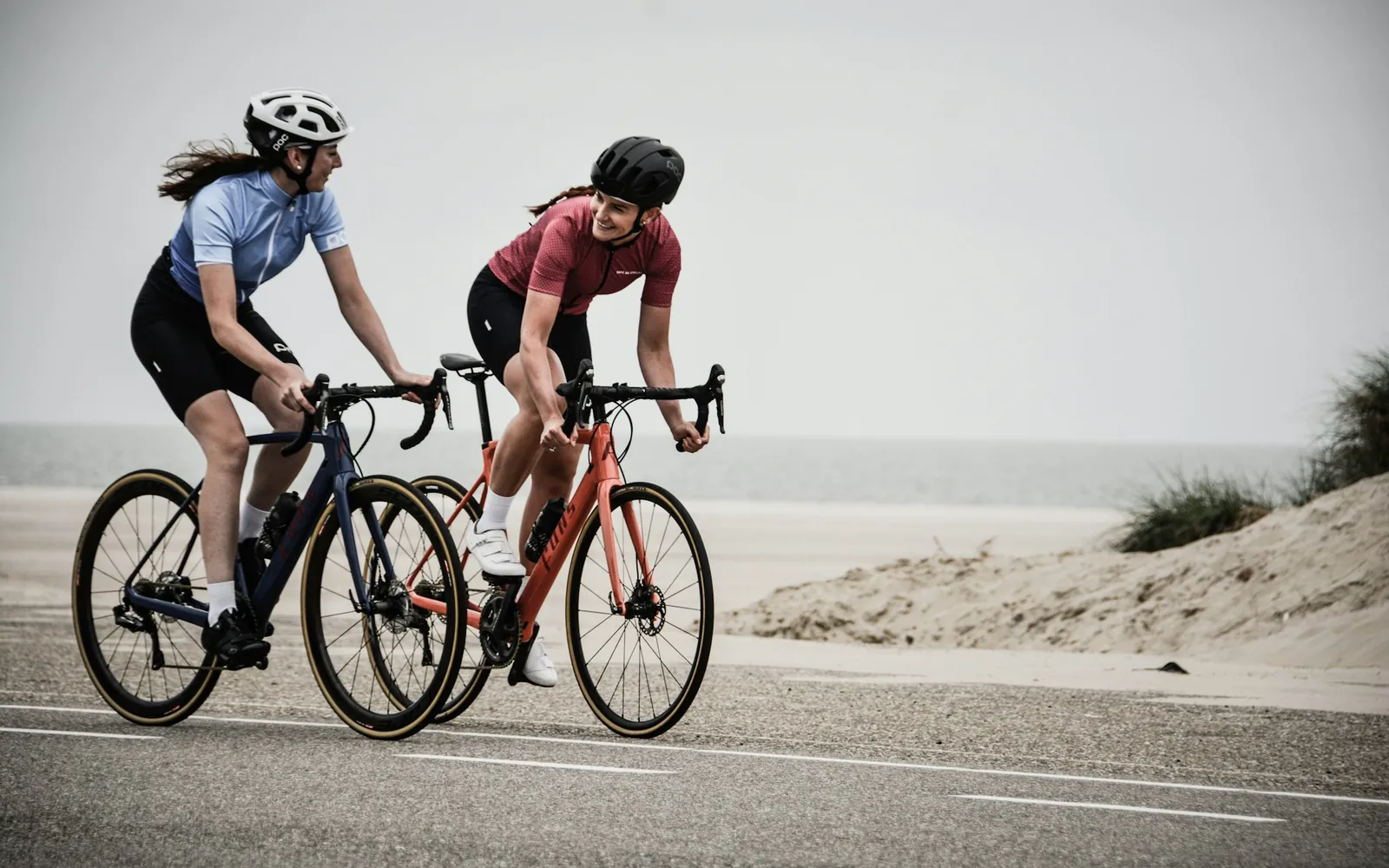
When it comes to flagship road race bikes, the Specialized Tarmac SL8 and the Trek Madone SLR are two of the names that keep coming up whenever riders compare bikes that climb well and still hold their own in a flat-out sprint. Both are high-end all-rounders, but they come from different philosophies: the Tarmac leans on a lightweight-meets-aero compromise, while the Madone comes from a more aggressively aero lineage that has shed weight in recent generations to stay competitive uphill.
Specialized Tarmac SL8: the classic, made more aero
The SL8 is the evolution of the Tarmac line that Specialized made noticeably more aerodynamic without losing the low weight the range has always been known for. According to the manufacturer, a Tarmac SL8 Pro with a Shimano Ultegra Di2 groupset weighs roughly around 7.25 kg in a size 56, with pricing that sits at the high end of the market (indicatively a few thousand dollars or euros, varying a lot by build and market — always check the current price list, since it changes often across the Pro, Expert and S-Works versions). The frame uses dropped tube shapes and a design meant to stay efficient both on the flats and on climbs, a balance that makes it one of the more versatile race bikes in its category.
Trek Madone SLR: the aero bike that learned to climb
The Madone started life as a pure aero bike, but the more recent generations (from Gen 7 onward) have shed a meaningful amount of weight compared with the earliest versions, centered on a design that integrates the IsoFlow vibration-damping system into the rear triangle. According to several industry outlets, this feature improves comfort on rough tarmac without giving up the torsional stiffness needed for sprints and sudden changes of pace. Top-tier builds sit in a weight range similar to the Tarmac's, roughly around 7-7.5 kg for the lightest configurations, with pricing in the same ballpark as the competition — again, always check the current price list given how often groupset and wheel configurations change.
Aerodynamics and comfort: the real differences
On paper both bikes are designed to be aerodynamically efficient, but they get there differently: the Tarmac favors thinner tubes and low weight, spreading a "quiet" aero advantage across the whole frame, while the Madone concentrates its aero work on the fork, steerer and rear triangle area with IsoFlow, which besides cutting through the air also works as a vibration filter. For riders covering a lot of kilometers on imperfect tarmac, this second aspect can make a noticeable difference in accumulated fatigue by the end of a long ride.
Geometry, sizing and build options
An aspect that's often overlooked when comparing flagships like these is geometry: both brands offer very dense size ranges, with the Tarmac historically leaning toward a slightly more compact position geared toward quick handling, while the Madone tends to run a touch longer up front, built to stay stable at high speed on flats and descents. Neither setup is objectively "better": it's worth test-riding both when possible before committing to a final size, since even a few millimeters of difference in reach or stack noticeably change how a bike feels over long rides. On the groupset side, both ranges are available with either Shimano Dura-Ace/Ultegra Di2 or SRAM Red/Force AXS drivetrains depending on the build, another factor that can sway your choice if you already have a preferred ecosystem from previous bikes.
Which one to choose based on how you ride
If your favorite terrain mixes serious climbs with flat stretches and you want a bike that doesn't penalize you in either situation, the Tarmac SL8 is probably still the more balanced choice. If instead you rack up a lot of miles on roads that aren't always smooth, and comfort in the saddle matters as much as outright performance, the Madone SLR's IsoFlow system could be the deciding factor. Either way, before an investment at this price point it's worth reading our guide on how to choose between road, gravel and mountain bikes to make sure a pure race bike is really the right tool for how and where you ride.
Recommended products
Anyone investing in a bike at this level deserves accessories to match: a carbon fiber road saddle to complete the weight savings, a GPS cycling computer to track power and speed, and a compact saddle bag that won't ruin the frame's aero lines.
As an Amazon Associate, Velunite earns from qualifying purchases. Some links in this article are affiliate links: if you buy through them Velunite may earn a small commission at no extra cost to you.
Attrezzatura consigliata
Affiliate links: if you buy through these links Velunite receives a small commission, at no extra cost to you.
More articles
Latest from the Journal
- Hinault and LeMond, 1986: betrayal or a team lesson?October 21, 2026
- Amsterdam, 2:03:33 in the rain, and a faster second halfOctober 21, 2026
- New York 2026: 50 years of five boroughs and three ItaliansOctober 20, 2026
- Sallanches 2027: the Domancy, twenty times, and Pogačar's planOctober 20, 2026