2027 Giro d'Italia stages: all 21 stages, km and official route
All 21 stages of the 2027 Giro d'Italia (8-30 May) from the official RCS route: date, start, finish, km and description. 3,418.9 km, 2 time trials.
In 1 minute: save routes, download the GPX and join group rides.
Sign upWritten by the editorial team at Velunite
The 2027 Giro d'Italia has 21 stages and runs from Saturday 8 to Sunday 30 May, from Trieste to Rome: 3,418.9 km, an average of 162.8 km a stage and 50,250 metres of climbing in total, according to the official route published by RCS Sport on giroditalia.it. Below is the full stage-by-stage list with date, start, finish, kilometres and what RCS writes about each day. The story of the route, with the rumours that were wrong and how long it takes to climb the Zoncolan, is in our piece on the 2027 Giro route: here we do the timetable, the one you print and stick on the fridge.
In short: two individual time trials (19.6 and 37.3 km, 56.9 in all), stage 16 Sondrio-Aprica with the Mortirolo, Gavia, Mortirolo sequence as the toughest day on paper, and the Monte Zoncolan on the penultimate day, Saturday 29 May. One warning: RCS gives an official climbing figure only for stages 1, 2, 3 and 16 and for the total, so for the other stages we do not write one.
What are the 21 stages of the 2027 Giro d'Italia?
Dates, starts, finishes, kilometres and descriptions below come from the official route page on giroditalia.it. We summarised the texts in our own words. The weekly totals are our own sums of the official kilometres.
Week one: stages 1-9, from Trieste to Monte Livata (8-16 May)
Stage 1, Saturday 8 May: Trieste-Trieste, 172 km. Rolling, with about 2,400 m of climbing (official figure) and short climbs in the finale that can suit attackers. Start and finish in Trieste, which hosted the Giro's finale in 2014.
Stage 2, Sunday 9 May: Ljubljana-Koper, 166 km. Entirely in Slovenia, about 2,200 m of climbing (official figure), constant ups and downs and a chance for sprinters who can climb a bit.
Stage 3, Monday 10 May: Cervignano del Friuli-Possagno, 163 km. About 1,450 m of climbing (official figure), mostly flowing with a few rises (Montello and Mostaccin). The finish is at the foot of Monte Grappa.
Stage 4, Tuesday 11 May: Argenta-Misano Adriatico, 151 km. Mostly flat across Emilia-Romagna, with no real climbing difficulty. The finish at the Marco Simoncelli circuit suits a bunch sprint.
Stage 5, Wednesday 12 May: Filottrano-Sarnano-Sassotetto, 139 km. First mountain stage: the final climb to Sassotetto, in the Sibillini Mountains, has several kilometres of steady gradient. The start is Filottrano, the town of Michele Scarponi.
Stage 6, Thursday 13 May: Alba Adriatica-Lanciano, 148 km. Rolling, with ups and downs inland in Abruzzo. The finale towards Lanciano suits explosive riders.
Stage 7, Friday 14 May: Sulmona-Campo di Giove, 19.6 km. Individual time trial of 19.6 km: in the second part the road climbs at around 5% towards Campo di Giove.
Stage 8, Saturday 15 May: Trasacco-Naples, 219 km. One of the longest stages of the Giro, from Abruzzo to Campania across the Apennines. Naples is a stage town for the sixth time in a row.
Stage 9, Sunday 16 May: Itri-Subiaco-Monte Livata, 180 km. Mountain stage in Lazio with a summit finish at Monte Livata: the final climb is a test for the general classification riders.
Week one total, our sum: 1,357.6 km.
Week two: stages 10-15, from Norcia to Milan (18-23 May)
Stage 10, Tuesday 18 May: Palombara Sabina-Norcia, 218 km. Apennine stage, a lumpy route with many changes of gradient. It passes the Forca di Presta and the Forca Ventolosa, leaving the Castelluccio plain, then Norcia.
Stage 11, Wednesday 19 May: Gualdo Tadino-Scarperia (Autodromo del Mugello), 220 km. The longest stage of the Giro, over the Umbrian-Tuscan Apennines, with ups and downs in the middle. The finish is on the Mugello circuit.
Stage 12, Thursday 20 May: Montecatini Terme-Zeri (Passo Due Santi), 173 km. Apennine stage with a summit finish at the Passo Due Santi (Zum Zeri area): most of the climbing comes in the second part.
Stage 13, Friday 21 May: Borgo Val di Taro-Reggio Emilia, 176 km. From the Parma Apennines down towards the plain: after the easy early hills it becomes fast and favours a possible sprint.
Stage 14, Saturday 22 May: Cantù-Piani di Bobbio/Valtorta, 187 km. Lombard Pre-Alps: Ghisallo, Culmine di San Pietro and Alino, then a high finish at Piani di Bobbio, one of the main difficulties of the second week.
Stage 15, Sunday 23 May: Monza (Autodromo)-Milan, 37.3 km. Individual time trial of 37.3 km from the Monza circuit to Milan, mostly flat and fast.
Week two total, our sum: 1,011.3 km.
Week three: stages 16-21, from Aprica to Rome (25-30 May)
Stage 16, Tuesday 25 May: Sondrio-Aprica, 192 km. 192 km and about 5,700 m of climbing (official figure), on paper the hardest stage of the Giro: the Mortirolo, Gavia, Mortirolo sequence, never used before, then Aprica.
Stage 17, Wednesday 26 May: Chiari-Vo', 194 km. From Lombardy to Veneto: a flat start, a livelier finale around the Euganean Hills with a few well-known local walls. The finish is Vo'.
Stage 18, Thursday 27 May: Rovereto-Madonna di Campiglio, 154 km. Entirely in Trentino with growing difficulty: a circuit of about 50 km between Ponte Arche and Spiazzo climbs the Passo Durone twice, then comes the Passo Daone and finally the climb to Madonna di Campiglio.
Stage 19, Friday 28 May: Rovereto-Sacile, 199 km. Climbs of Vigolo Vattaro and Bieno in the first part, then a long stretch mostly downhill and flat. In the finale the short rises of Montaner and Castello di Caneva.
Stage 20, Saturday 29 May: Pordenone-Monte Zoncolan, 180 km. Passo Duron (1,069 m) and Sella Valcalda (958 m), then the final climb to Monte Zoncolan: 10.1 km at an average 11.9%, with peaks of 22%. It was last used in 2018.
Stage 21, Sunday 30 May: Rome-Rome, 131 km. 131 flat kilometres: a city circuit of about 9 km repeated eight times, for the final sprint.
Last week total, our sum: 1,050 km in six consecutive stages.
Which is the longest stage, the shortest and the hardest?
The longest is Gualdo Tadino-Scarperia on 19 May, 220 km, followed by Trasacco-Naples (219) and Palombara Sabina-Norcia (218): three stages over 215 km within five days (15 to 19 May), with Monte Livata and the rest day on the 17th in between. The shortest road stage is the closing Rome-Rome, 131 km; the shortest of all is the Sulmona-Campo di Giove time trial, 19.6 km. Which is the hardest, RCS itself says: on paper Sondrio-Aprica, 192 km and about 5,700 metres of climbing, more than a tenth of the 50,250 total in one day (our calculation). The Zoncolan weighs in for its final ramp instead: 10.1 km at an average 11.9% with peaks of 22%. We do not compare the other stages by climbing because RCS does not publish it per stage.
Which stages of the 2027 Giro can you watch in person at the weekend?
Eight stages fall on a Saturday or Sunday: 1 and 2 (8 and 9 May), 8 and 9 (15 and 16), 14 and 15 (22 and 23) and 20 and 21 (29 and 30), for 1,272.3 km in all, our sum. If you can only pick one trip, the weekend summit finishes are Monte Livata (Sunday 16), Piani di Bobbio (Saturday 22) and Monte Zoncolan (Saturday 29). Roads on the route generally close several hours before the race passes, so check local council notices and bring water and a jacket.
If you prefer flat ground, pick the Milan time trial on Sunday 23 and the Rome finale on Sunday 30, both at the weekend and in a city.
How to ride the 2027 Giro stages (and how long it takes)
The best way to follow the Giro is to ride where it goes, usually before or after. In the 2027 Calendar you will find the May and early-summer gran fondos that touch these areas, and on the routes page you can search for rides in Friuli, Marche, Abruzzo, Lombardy and Trentino. With group rides you can find company. An example with numbers: the final Zoncolan climb is 10.1 km long (RCS figure); at 5 km/h it takes about 2 hours, at 6 km/h about 1 hour 41, at 7 km/h about 1 hour 27, at 8 km/h about 1 hour 16. Those are our calculations, distance divided by speed: assumptions, not predictions. For your own numbers use the climb gradient and VAM calculator; to see how to tackle the Mortirolo read the climb guide and for the Gavia the Stelvio and Gavia climbs. The number on your bike computer matters less than what you feel in your legs at the second hairpin.
When are the rest days of the 2027 Giro d'Italia?
The official route page does not name them, but the stage calendar makes it clear: after stage 9 on Sunday 16 May the race restarts on Tuesday 18, and after stage 15 on Sunday 23 it restarts on Tuesday 25. So Monday 17 and Monday 24 May are the days without a stage. That is our deduction from the RCS calendar, not a statement.
Does the 2027 Giro d'Italia go through Slovenia?
Yes: stage 2, Sunday 9 May, is Ljubljana-Koper, 166 km, described by RCS as entirely Slovenian, linking the capital and the Adriatic town. On 10 May the race restarts from Cervignano del Friuli, so it is back in Italy. On stage 1, a loop from Trieste to Trieste, RCS says nothing about crossing the border.
How many time trials are there in the 2027 Giro d'Italia?
Two, for 56.9 km in all: Sulmona-Campo di Giove on Friday 14 May (19.6 km, stage 7, with the second part climbing at around 5%) and Monza-Milan on Sunday 23 May (37.3 km, stage 15), mostly flat and fast, which RCS calls potentially decisive for the overall classification. Together they are shorter than an average mountain stage.
Which are the sprinters' stages of the 2027 Giro?
RCS does not publish a list of sprint stages. In the descriptions, stages 4 (Argenta-Misano), 13 (Borgo Val di Taro-Reggio Emilia) and 21 (Rome) openly mention a sprint; stage 2 offers some chance to sprinters who can hang on. The rest is our reading: stages 3 and 17 are described as flowing, and 19 has a long downhill and flat stretch but also short rises in the finale.
Which side are you on?
One line to take away: the 2027 Giro is 3,418.9 km long and on paper its hardest stage, Sondrio-Aprica, is 192 of them. Which day will you mark on the calendar, and where will you go to see it? Tell us in the comments: if you need company, open a group ride on Velunite.
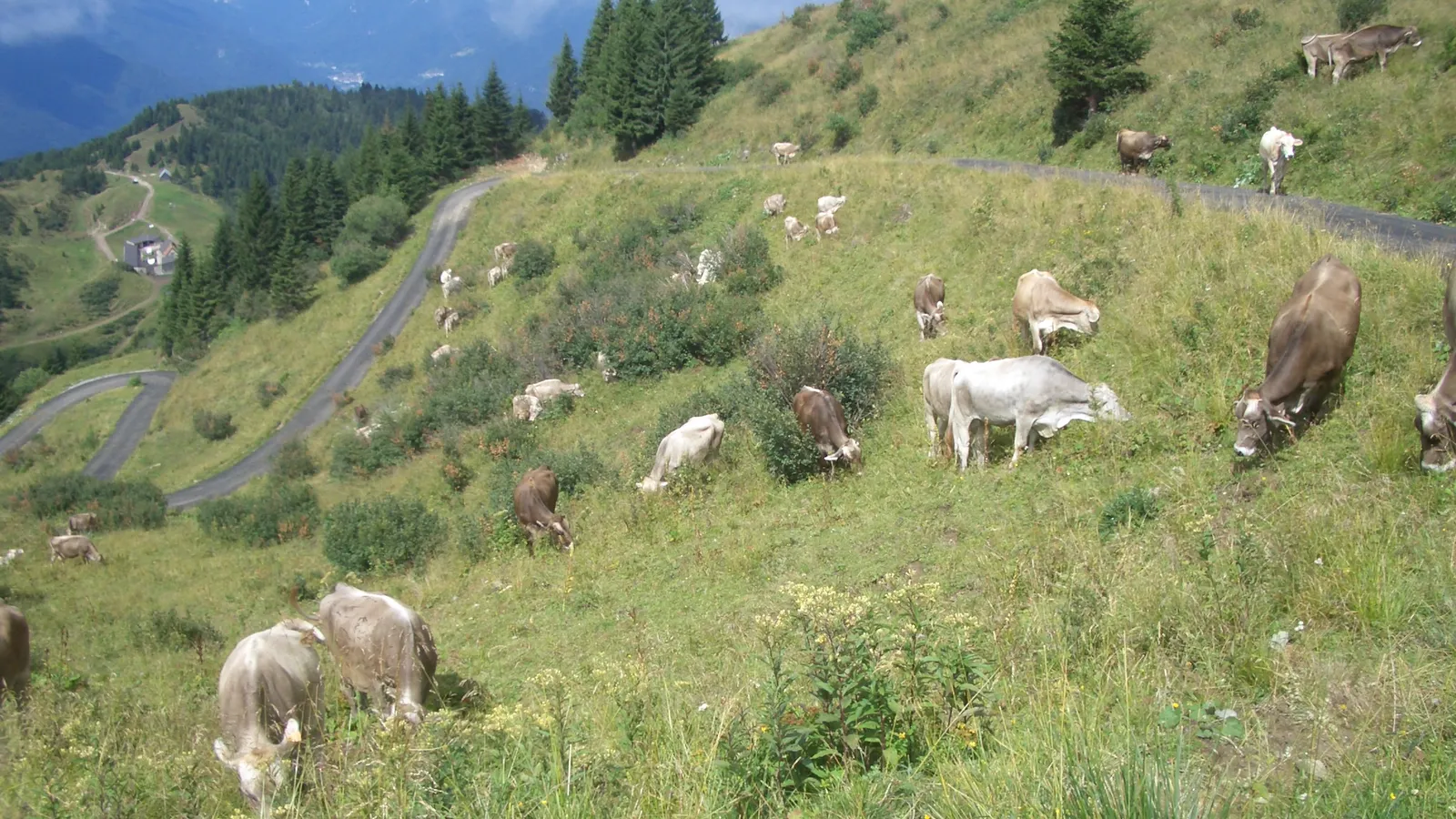
Source: official route of the 2027 Giro d'Italia, RCS Sport, giroditalia.it (dates, starts and finishes, kilometres, descriptions, totals: 3,418.9 km, average 162.8 km, 50,250 m). Archive photo: Emanuele Paolini, Wikimedia Commons. We read the official web page; we did not read the RCS press release or the per-stage altimetry, so we give no climbing figure beyond those cited, no count of summit finishes and no Cima Coppi.
Comments (0)
No comments yet. Be the first!
More articles
Latest from the Journal
- Verona Run Marathon 15 Nov: entries, the Arena and the courseNovember 3, 2026
- 2027 Giro d'Italia route: stages, double Mortirolo and ZoncolanNovember 3, 2026
- Almost 200 pros still without a 2027 contract: who they areNovember 2, 2026
- Ravenna Marathon 8 November: registration, course and paceNovember 2, 2026