Running and Cycling in the Cold: What to Wear at 0, 5, 10 °C
What to wear below 10, 5 and 0 degrees for running and cycling: layers, hands and feet, wind chill on descents and visibility in low light.
In 1 minute: save routes, download the GPX and join group rides.
Sign up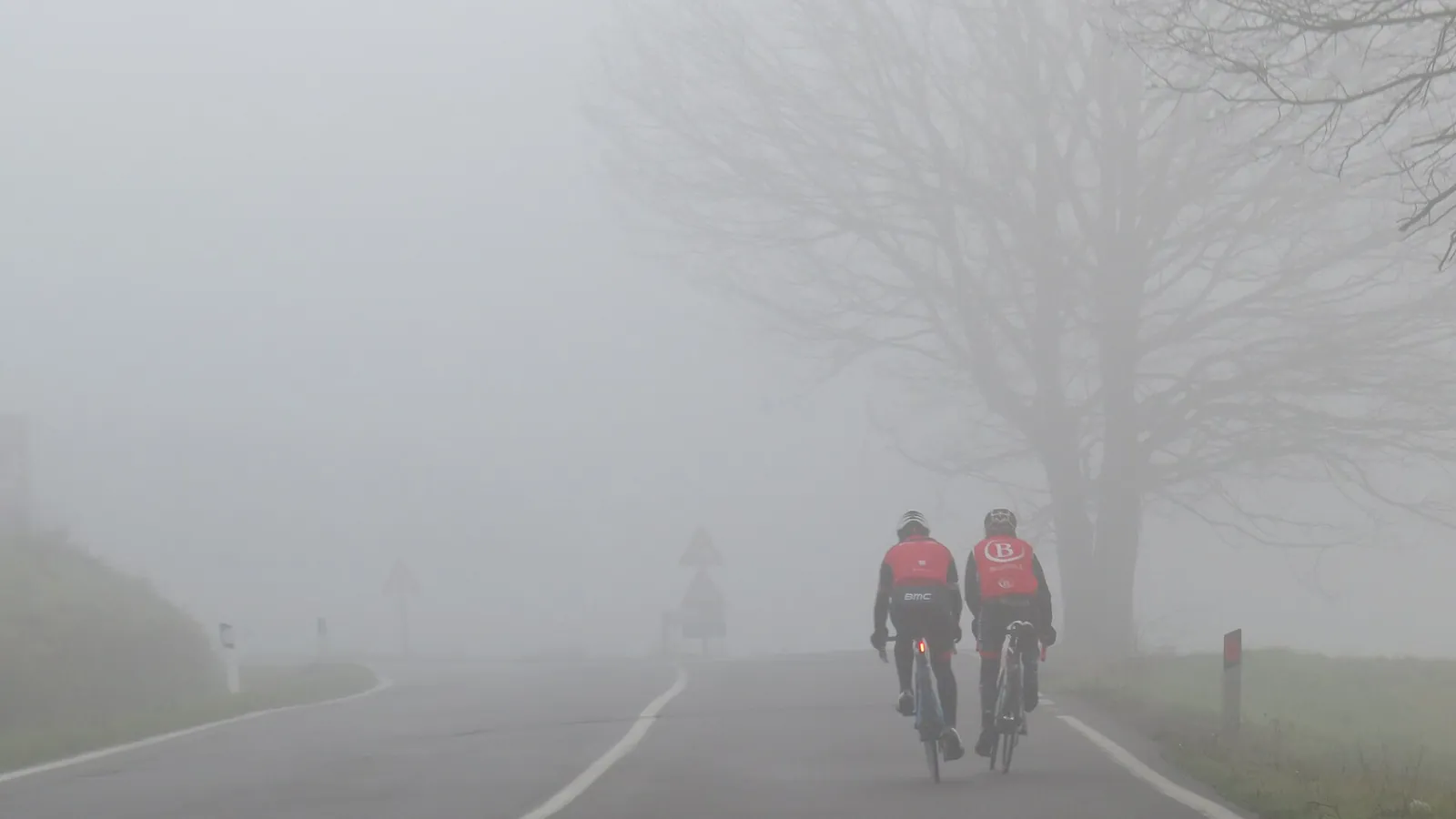
In short: how to dress for running or cycling in the cold
At 5 °C the thermometer says 5, but descending at 40 km/h your body feels about minus 1. The most useful rule is to dress in layers and start slightly cold. You wear a technical base layer that wicks sweat (never cotton), a middle layer that traps heat and, if needed, a breathable windproof or waterproof outer layer. When running you should feel a little cold for the first few minutes, because you will warm up quickly; on the bike the relative wind chills you much more, so you need wind protection on the chest, hands, feet and ears.
Below you will find a table by temperature (with wind chill numbers, the data nobody calculates), details on hands, feet and head, how to adjust on descents, visibility on short days, and when it is better to stay in or move to the trainer.
The three-layer system, properly explained
Base layer: a close-fitting technical shirt (polyester or merino wool) that moves sweat away from the skin. Cotton stays wet and chills you: Mayo Clinic guidance advises against it next to the skin and recommends layers of warm materials such as wool or fleece (tips for exercising outdoors in winter). Middle layer: thermal top or light fleece, the real insulator. Outer layer: a windproof jacket and, if needed, waterproof, but breathable: a non-breathable shell makes you sweat and then freeze.
The advantage is that you can add and remove: a windproof gilet in your pocket is worth more than a heavy jacket. The most common mistake is overdressing: the same source notes that exercise produces a lot of heat and dressing too warmly is a frequent error. If you are already warm at the start, halfway you will sweat too much and then get cold.
What temperature, what clothing: table for running and cycling
Running, 10-15 °C: light long-sleeve top, shorts or short tights. 5-10 °C: thermal top, gilet or light windproof jacket, tights, light gloves, headband. 0-5 °C: two layers on top plus a windproof jacket, tights, gloves, hat, technical socks. Below 0 °C: three layers on top, warmer gloves, neck gaiter, watch out for ice. For running use the rule "dress as if it were 6-8 degrees warmer", that is, choose the clothing you would wear at that higher temperature.
Cycling, 10-15 °C: long-sleeve jersey, windproof gilet, arm and leg warmers or tights. 5-10 °C: base layer, thermal jersey, windproof jacket, long tights, winter gloves, overshoes, ear headband. 0-5 °C: add heavy gloves, thermal overshoes, under-helmet cap and neck gaiter. Below 0 °C: consider the trainer (see turbo trainer workouts) if there is a risk of ice.
Wind on the bike: how cold it really is
Felt cold depends on speed: with the standard wind chill formula (the one used by Canadian weather services), at 5 °C riding at 20 km/h the wind chill is about 1 °C; at 40 km/h on a descent it is about minus 1 °C. At 0 °C and 40 km/h you get to around minus 7 °C. It is an estimate for exposed skin, but it explains why hands and face freeze on descents even on "mild" days. A windproof jacket on the torso and suitable gloves change the day.
Uphill you sweat and downhill you cool: carry a windproof gilet to put on at the top, and if you have many descents, open the jacket on the climb and close it before descending. In running the relative wind is much lower, which is why lighter garments are enough.
Hands, feet, head and neck
These are the areas that suffer most. Suitable gloves (warmer on the bike, where hands are still on the bars), thermal socks and, on the bike, overshoes or toe warmers; a headband or under-helmet cap covering the ears; and a multi-use neck tube you can pull up over your nose. Avoid shoes that are too tight: poor circulation chills the feet more than the cold. A shoe half a size larger with a wool sock can be warmer than a tight one with two socks.
After the ride change out of wet clothes immediately: it is when you chill most. Keep a dry top in your pack or car.
Visibility and safety in low light
From October to February darkness comes early: wear reflective items or bright colours and use front and rear lights, on all the time, on the bike. For running, a headlamp and a high-visibility vest are a useful investment. With ice, wet leaves and slippery asphalt slow down, drop tyre pressure slightly on the bike (see bike tire pressure) and choose lit routes. Share your ride with the people you go out with: on Velunite you can plan the outing among the routes and pick familiar roads.
Breathing, warm-up and hydration in the cold
Cold dry air can irritate the throat: if it bothers you, breathe through your nose in easy phases and cover your mouth with a neck gaiter (more in how to breathe while running and the blog on running in cold weather). Warm up indoors, 5-10 minutes of mobility, so you start already warm. Drink even if you do not feel thirsty: under layers sweat is easy to underestimate.
Winter ride checklist
Before leaving: base layer, thermal top, windproof jacket or gilet in your pack or pocket; light spare gloves; headband or hat; neck gaiter; charged lights switched on (bike) or a headlamp (run); phone with a full battery; a bar or gel and a bottle; on the bike, a spare tube, levers and a pump (see basic bike maintenance); a dry top for afterwards. Three questions before heading out: how strong is the wind, is there ice, and when does it get dark. If an answer worries you, shorten the ride and stay close to home or to places where you can shelter.
When to stay indoors
Ice on the road, very strong wind with temperatures below zero, freezing rain and poor visibility are reasons to change plan: trainer, treadmill or strength work at home. People with asthma, heart or circulation problems (such as Raynaud's) should talk to a doctor before training in very low temperatures. This content is informational and does not replace professional advice.
Send it to the friend who heads out in a cotton T-shirt even in January, before the next ride.
FAQ
Is it better to feel a bit cold at the start?
Yes, especially when running: after 10 minutes you warm up. If you are warm at the start, halfway you sweat too much and then cool down.
Is cotton fine for running in the cold?
No: it holds sweat and chills you. Use technical fabrics or merino wool as the layer against the skin.
At what temperature is it better not to go out?
It depends on wind, ice and how you feel. With an icy road or a very low wind chill it is better to postpone or choose the trainer or treadmill.
How do I dress on the bike below 5 degrees?
Base layer, thermal jersey, windproof jacket, long tights, winter gloves, overshoes and a headband or under-helmet cap over the ears. On descents remember the wind chill is much lower.
How many layers do I need to run at 0 degrees?
Usually two layers on top (base plus thermal) and, if windy, a light jacket, plus tights, gloves, hat and neck gaiter. Dress as if it were 6-8 degrees warmer.
How do I keep my feet warm on the bike?
Thermal or wool socks, overshoes and shoes that are not tight. If needed, chemical toe warmers or thermal overshoes below 3-5 degrees.
Should I drink less when it is cold?
No: you sweat in the cold too and thirst is felt less. Carry a bottle and drink in small, regular sips.