Strength Training for Runners and Cyclists: 6 Moves, 20 Min
Why strength work helps runners and cyclists, how often to do it, and a 6-exercise bodyweight routine with an 8-week progression. Start at home today.
In 1 minute: save routes, download the GPX and join group rides.
Sign up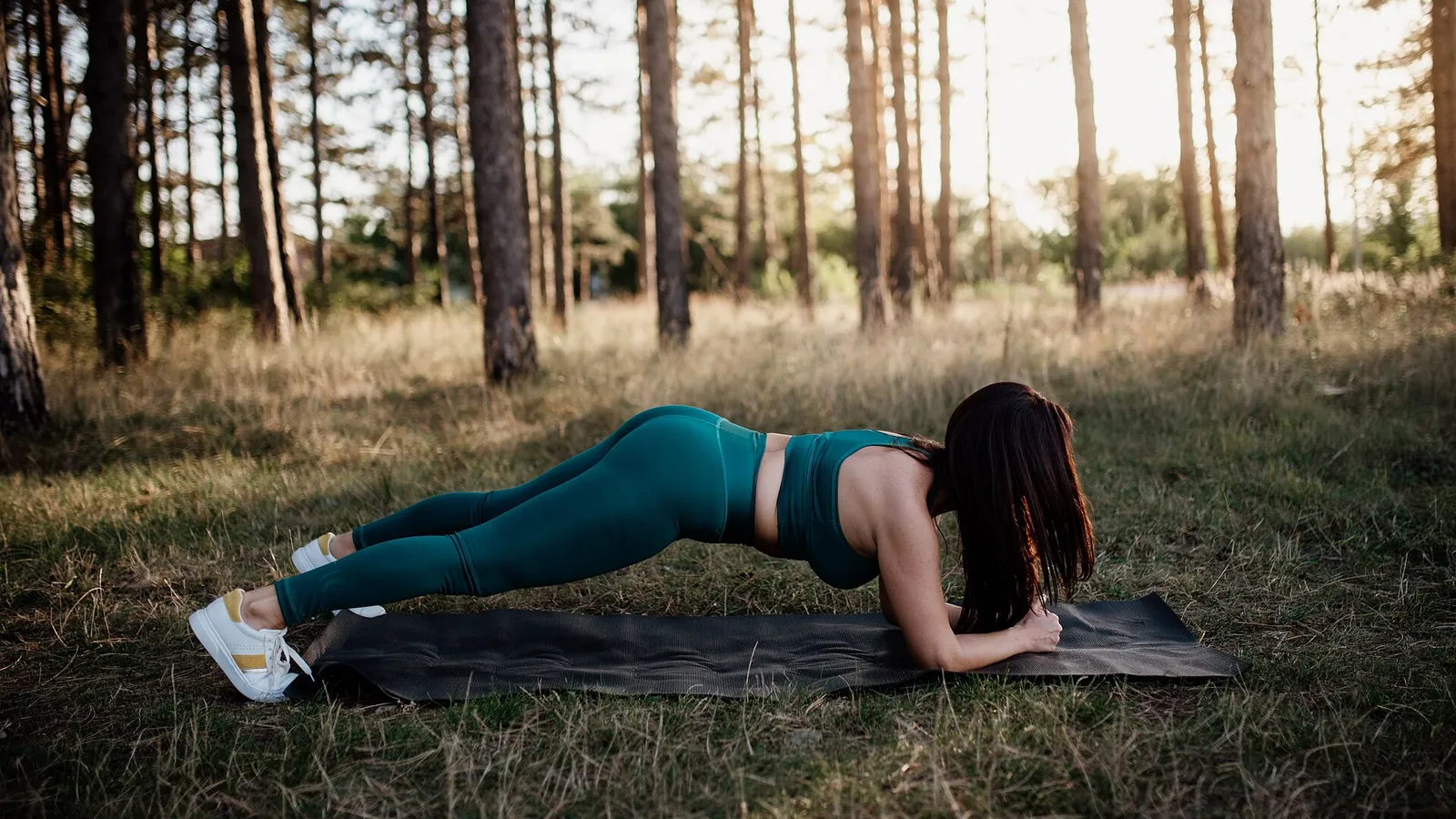
In short: do runners and cyclists really need strength training?
Two 20-minute sessions a week can change how you run and ride, and you do not need a gym. Yes, and you need neither a gym nor big biceps. A review of endurance sports research (Rønnestad and Mujika, 2014) concludes that adding strength work, heavy or explosive, to running training can improve performance, and that for cycling heavy strength work shows the clearest benefit. The logic is simple: muscles and tendons that can produce more force spend less energy at the same pace, and your form holds up longer at the end of a session.
The minimum recipe that works for most amateurs: two sessions a week of 20-30 minutes during base and build phases, and a single maintenance session when races get close. This guide gives you the routine, the progression, where it fits in your week and the mistakes to avoid. If you run, read it alongside our guide on preventing running injuries, where strength work is the main pillar.
What changes for runners and what for cyclists
A runner absorbs an impact at every step, roughly two to three times body weight through the landing leg, thousands of times per run. Ankle, calf (soleus and gastrocnemius), glutes and the muscles that stabilise the pelvis matter most. When they give up, knee and shin pay the price. That is why the routine includes calf raises and single-leg work.
A cyclist has no impact but pushes for hours in a closed position: quads and glutes work on every pedal stroke while abs, lower back and upper back hold the posture. Many riders have sleepy glutes and tight hip flexors, so bridges, lunges and core work help your lower back too (see our blog on back pain while cycling). If you do both sports, the routine below works for both.
The routine: 6 bodyweight exercises for legs, glutes and core
Total time 20-25 minutes. Warm up for 5 minutes with hip and ankle mobility and a few unweighted squats. Do 2 sets of 10-12 reps for the first two weeks, then 3 sets. Rest 45-60 seconds between sets.
1) Bodyweight squat: feet shoulder-width apart, lower for 3 seconds until your thighs are almost parallel, then drive up through your heels. Knees follow the direction of your toes. 2) Alternating lunges: long step, back knee grazing the floor, torso upright. 3) Glute bridge: lie on your back, feet close to your hips, push the pelvis up and squeeze for one second at the top. 4) Standing calf raises on a step: lower slowly with the heel below the step level. 5) Front plank: 30-45 seconds with the body in a straight line, no sagging lower back. 6) Side plank: 20-30 seconds per side, hips high.
Tempo matters more than rep count: three seconds down and one up gives a better stimulus than twenty fast reps. If you do not feel the muscles working, slow down.
How to progress over 8 weeks (with almost no equipment)
Weeks 1-2: the routine above, 2 sets. Weeks 3-4: 3 sets at the same slow tempo. Weeks 5-6: move to single-leg versions: Bulgarian split squat (back foot on a chair), single-leg bridge, single-leg calf raise. Weeks 7-8: add load, for example a backpack with books or two 1.5-litre water bottles, and work at 8-10 reps with a weight that makes the last two hard but clean.
A note on the calf: add a variation with the knee slightly bent to target the soleus, the muscle that works hardest in easy running and loads the Achilles tendon. For the side of the hips, add lateral band walks or side-lying leg raises before or after the session: they stabilise the pelvis and help protect the knee.
If you already have training experience and a gym, you can move to heavy work: 3-4 sets of 4-6 reps, squat or leg press and Romanian deadlifts, with demanding loads and long rests (2-3 minutes). Learn the technique with an instructor: this is where the reviewed research sees the best results, but poor form under heavy load is expensive.
When to do it in your week and your season
A simple rule: strength goes where it does not steal quality from your key sessions. For runners, on a quality day (intervals, threshold: see running intervals and types of training) do strength after the run or on the easy day that follows. Avoid heavy leg work in the 24-48 hours before a key session or the long run. For cyclists, a rest day or a short easy ride works well; if you ride indoors (30 and 60 minute turbo trainer workouts), you can do strength on the same day, a few hours apart.
Across the season: off-season, two sessions; in the 6-8 weeks before your target event, one session at the same intensity with fewer sets; in the final week, nothing new and no load that leaves you sore. The first days of a new routine will leave your legs heavy: that is normal, but schedule it in a week without a race.
Common mistakes
Knees collapsing inward in squats and lunges: often a sign of weak glutes, so reduce the range and push the knees outwards. Back arching in the plank: shorten the time and do more sets. Doing strength "when it happens": one session now and then is not enough, consistency over six to eight weeks of two sessions a week is what you need before judging. Changing everything at once: change one variable at a time, reps, load or exercise difficulty. Training legs to failure the day before a race or key session.
If you have acute pain, an ongoing injury or a medical condition (heart, back, joints), ask a sports doctor or physiotherapist before starting. This content is informational and does not replace medical advice.
Source and next steps
Rønnestad BR, Mujika I. Optimizing strength training for running and cycling endurance performance: A review. Scandinavian Journal of Medicine & Science in Sports, 2014: PubMed record. To get moving: create a run or ride group on Velunite and fix a home strength day with the people you train with, or look for new routes for your easy days.
Send it to the training partner who has never done a plank: pick your weekly strength day together.
FAQ
Will strength training make me gain weight?
Not with a bodyweight routine or light loads: the main effect is the ability to produce force and better stability, not muscle size. Gaining size takes many sets, a calorie surplus and months of focused work.
Can I do strength on interval day or long run day?
It is better to separate them. If you cannot, do strength after the quality session or at another time of the day with moderate loads. Avoid heavy leg work the day before the long run and before races.
Do I need equipment?
No, a mat and a step are enough to begin. Later you can add a loaded backpack, dumbbells, a kettlebell or a resistance band.
How many times a week should I do strength work?
Two sessions of 20-30 minutes are a good start during base and build phases. In racing season one maintenance session is enough. Even one session a week beats none.
Is the gym better than training at home?
To begin, home is perfectly fine. The gym helps when you want high loads and few reps (especially for cycling), and then it is worth having an instructor teach you the movements.
How long before I see results?
A feeling of more stability comes in about 3-4 weeks, clearer improvements after 6-8 weeks of consistency. Do not expect changes from a single session.
Can I start strength training after 40 or 50?
Yes, it is very useful for tendons and bones. Start with low loads, watch your technique and, if you have health problems or pain, check with a doctor first.