Ganna, Ciccone, Carapaz: why pro contracts now get broken
Ganna, Ciccone and Carapaz all left before their deals ended. Why it keeps happening, according to Pogačar's agent, and what it means for fans.
Free, in 1 minute: save routes, download the GPX and join group rides.
Sign up freeWritten by the editorial team at Velunite
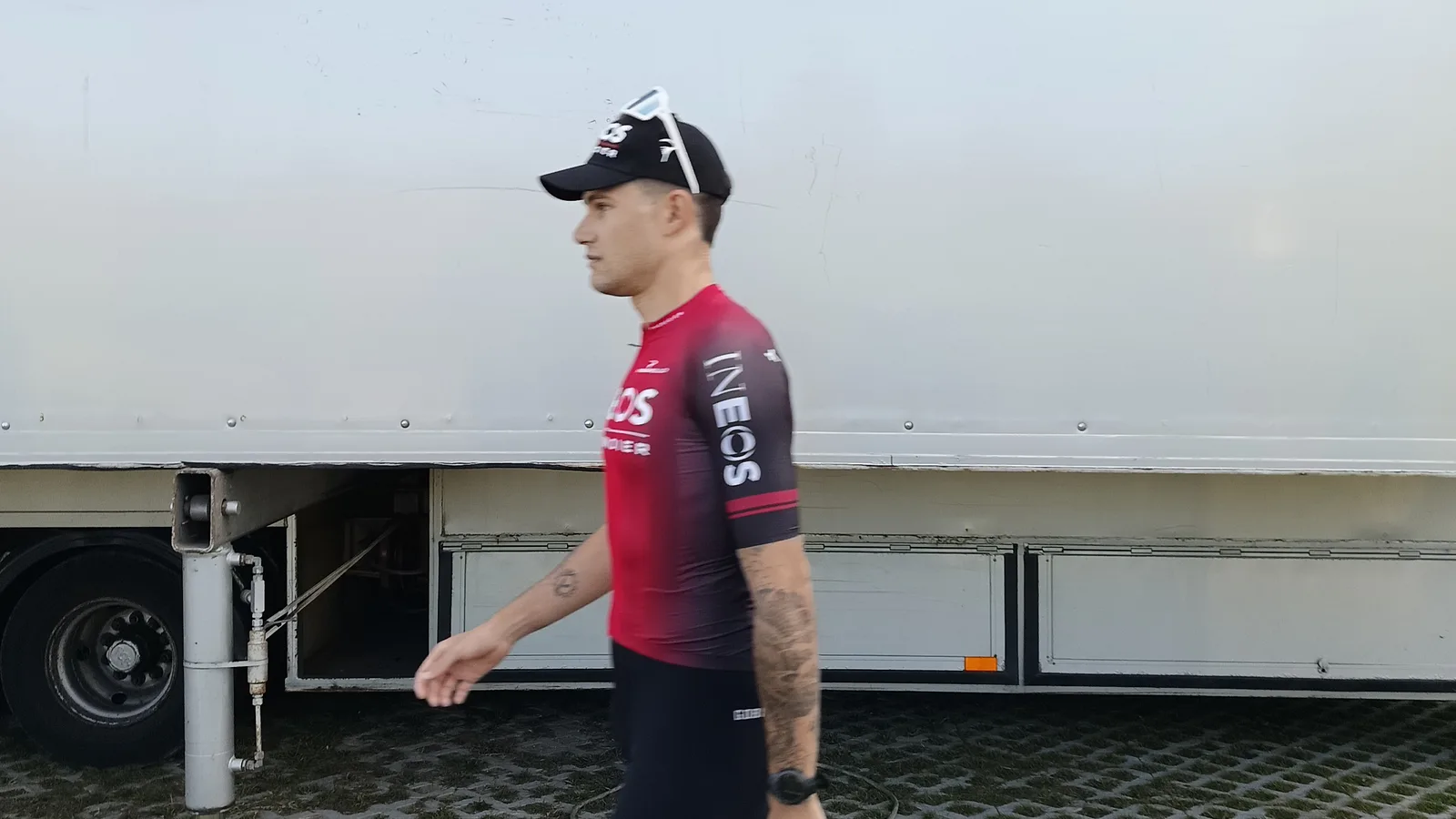
On 13 October Filippo Ganna officially became a Lidl-Trek rider, with a contract running to 2029. At Ineos he had a deal until the end of 2027. The same week, Giulio Ciccone left Lidl-Trek for Pinarello-Q36.5 and Richard Carapaz left EF Education for NSN, also with a contract still running. Three early exits in a few days are not a coincidence, and Pogačar's agent has offered an explanation.
What happened, in order
Ganna had raced for the British team since 2019: eight seasons, according to Domestique, and a contract that, going by 2022 reports, ran to the end of 2027. OA Sport broke the Lidl-Trek news on 13 October, with the deal until 2029 and a line that says a lot: Ganna is happy to reunite with Jonathan Milan, whom he calls 'an exceptional person'.
Ciccone left Lidl-Trek with a contract still in force and signed for Pinarello-Q36.5: three years, according to CyclingUpToDate. Carapaz, according to Sporza, still had a deal with EF Education-EasyPost and signed with NSN. Jonathan Vaughters, EF's boss, told Cyclingnews that letting him go was 'the simple option' to cut costs. In the same market Sam Welsford also left Ineos early, for Jayco AlUla.
How much the new teams paid we don't know: none of the sources we read says, and we won't invent figures.
Carera's explanation
Carera, who is Pogačar's agent and also represents Ciccone, spoke to La Gazzetta dello Sport, and his analysis was picked up by Cyclingnews and Domestique. First point: contracts have become much longer. With a two-year deal you wait for it to end if something is wrong; with five years ahead of you things change, and the odds of arguments and break-ups rise.
The second point is about who is in charge. Until five or six years ago teams were often run by former riders without big plans; today sponsors such as UAE, Decathlon, Lidl and Red Bull are behind them and see cycling as a strategic investment. One figure stood out for us: according to Carera, a 25 million budget was among the richest in 2020, while today it would be among the five smallest.
And the numbers: until a few years ago an early break happened roughly once every three years; now Carera estimates around ten a year. For him the turning point is December 2023, when Cian Uijtdebroeks moved from Bora to Visma. After that case, according to Cyclingnews, the UCI asked for a three-way agreement between rider, old team and new team before a mid-contract move. We write that with caution: the Domestique article doesn't mention it.
There are plenty of examples already. Remco Evenepoel left Soudal Quick-Step a year early, and the team confirmed it received compensation. Juan Ayuso had a deal to 2028 with UAE and signed five years with Lidl-Trek. Pogačar is the exception: his UAE contract runs to 2032 and the exit clause, for Carera, is 'almost symbolic' because nobody can afford to trigger it.
Our view
We sit in the middle, and it's not an elegant way of not choosing. On one hand a rider is a worker, and if someone offers a better project or more money, and the current team agrees, finding a deal is normal. On the other there is something we regret: for a fan, a jersey should mean something. If a contract is a price rather than a promise, the bond between rider and team becomes weaker than the one between fan and rider.
A line to take away: in today's cycling a contract is no longer a promise, it's a price. Maybe that is too cynical a summary, but judging by Carera's numbers it's hard to say it's wrong.
We are left with a doubt too: if breaks become about ten a year, small and development teams pay the bill, since they train riders and see them taken away. We have no data on how often that really happens, so we leave it as a question.
And us, with no contracts
The nice thing about group rides is that the only penalty for changing company is a bit of embarrassment at the cafe. If you get on better with another group on Sundays, go. On Velunite's group rides page you find who rides near you, and the 2027 Calendar lists the gran fondos and races where you can meet others.
Where do you stand: should a rider be free to leave whenever he wants, or should a signed contract be honoured to the end? And does the jersey matter more to you, or the person wearing it? Tell us in the comments.
Comments (0)
No comments yet. Be the first!
Attrezzatura consigliata
Affiliate links: if you buy through these links Velunite receives a small commission, at no extra cost to you.
More articles
Latest from the Journal
- Venice, 2:07:31: a course record and a dropped bottleOctober 25, 2026
- Hinault and LeMond, 1986: betrayal or a team lesson?October 21, 2026
- Amsterdam, 2:03:33 in the rain, and a faster second halfOctober 21, 2026
- New York 2026: 50 years of five boroughs and three ItaliansOctober 20, 2026