Venice, 2:07:31: a course record and a dropped bottle
Venicemarathon 40th edition: course record in 2:07:31 and Jerono dropping her bottle and still winning. The pace maths and what you can copy in your marathon.
Free, in 1 minute: save routes, download the GPX and join group rides.
Sign up freeWritten by the editorial team at Velunite
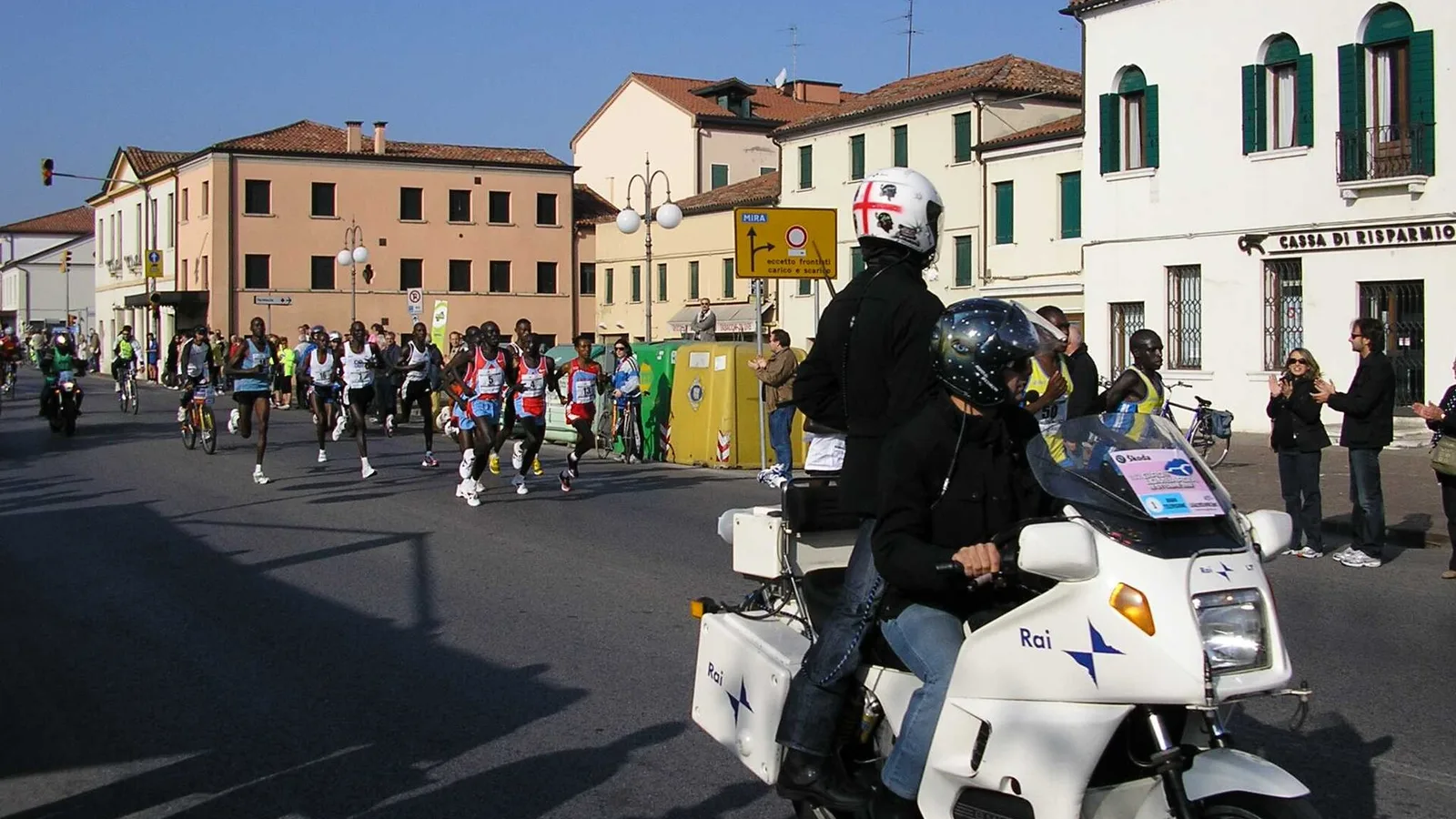
This morning, Sunday 25 October, in the 40th Venicemarathon, Kenya's Peter Kwemoi Ndorobo won in 2:07:31, a new course record. But the scene that stuck with us is in the women's race: Jackline Jerono dropped her bottle at the last aid station, stopped to pick it up and still managed to win, by seven seconds. The data are those published today by FIDAL and Sportface: final results could change by a few seconds.
Men: three under the old record
Behind Ndorobo came Ethiopia's Berhanu Tarto Yatede in 2:07:47 (the two sources swap first and last name) and Kenya's Dickson Simba Nyakundi in 2:07:56, both personal bests, according to FIDAL. The previous record was 2:07:41, by Uganda's Solomon Mutai in 2023: Ndorobo beat it by ten seconds and, Sportface writes, all of the top three did. Eight men finished under 2:10.
The group stayed together for a long time: fifteen runners together at halfway in 1:03:39. The Ponte della Libertà decided it, where Ndorobo broke away, FIDAL reports.
Let's do the maths. 2:07:31 is 7,651 seconds: about 3:01 per kilometre for 42 kilometres and change. The second half took 1:03:52, 13 seconds more than the first. Practically even pace from the first kilometre to the last. A week ago in Chicago the second half had cost 27 seconds, and in Amsterdam the winners had run the second part faster: we wrote about both in our articles on Chicago and Amsterdam. Three marathons, three variations of the same theme: running even wins.
Women: the bottle
The winner is Kenya's Jackline Jerono in 2:26:16, improving her personal best by over five minutes. Second was Ethiopia's Alemaz Teshale in 2:26:23, on her debut at the distance; third Worknesh Alemu Mola in 2:28:46. Five athletes came through halfway together in 1:14:02.
Then the aid station. Jerono dropped her bottle at the last refreshment point, had to stop to retrieve it, made up the ground and passed Teshale. How much time she lost, neither FIDAL nor Sportface says: we only know that the final gap was seven seconds. Her average pace was about 3:28 per kilometre.
One thing we asked ourselves: would you have stopped too? We would probably have let the bottle go and settled for a cup afterwards. She chose to stop and was right, but it is a professional's decision, from someone with the legs to allow it. We don't turn one episode into a rule.
High water and a bridge
A detail to read with caution, because only one source writes it: according to Sportface, there was high water in the lagoon in the morning, with a tide peak of 95 centimetres at 9:45, and the paving at the entrance to the city was still slippery. The leaders were expected in the old town after 11:30. The same source claims the conditions favoured a fast race.
Anyone who has run Venicemarathon knows the bridges, especially the last ones, break your rhythm more than the elevation profile says. If you're thinking of running it next year, our Venicemarathon guide has the course and tips.
What to copy, at your scale
We are not professionals and don't pretend to be, but three things can be borrowed. The first is regularity: if you aim for 4 hours the average pace is about 5:41 per kilometre, and halfway in 2:00 is a good starting point. The marathon time calculator does the maths for you. The second is to practise aid stations in training: drinking from a cup or a bottle while running is a skill you learn. The third is to decide beforehand what you do if something goes wrong: the bottle that falls, the gel that slips. It's not a training plan or medical advice, just a way of reading the race.
The next big date is the New York marathon on 1 November: we covered it in our article on New York 2026 and the three Italians.
Have you ever dropped a bottle or a gel in a race? Did you stop to pick it up or carry on? Tell us in the comments: we're curious how real runners see it.
Comments (0)
No comments yet. Be the first!
Attrezzatura consigliata
Affiliate links: if you buy through these links Velunite receives a small commission, at no extra cost to you.
More articles
Latest from the Journal
- Ganna, Ciccone, Carapaz: why pro contracts now get brokenOctober 25, 2026
- Hinault and LeMond, 1986: betrayal or a team lesson?October 21, 2026
- Amsterdam, 2:03:33 in the rain, and a faster second halfOctober 21, 2026
- New York 2026: 50 years of five boroughs and three ItaliansOctober 20, 2026