Crippa second in New York: 13 seconds, and Los Angeles 2028
New York Marathon 2026: Almgren wins in 2:06:01, Crippa second by 13 seconds. The last 7.2 km, the pace maths and what changes for Los Angeles 2028.
In 1 minute: save routes, download the GPX and join group rides.
Sign upWritten by the editorial team at Velunite
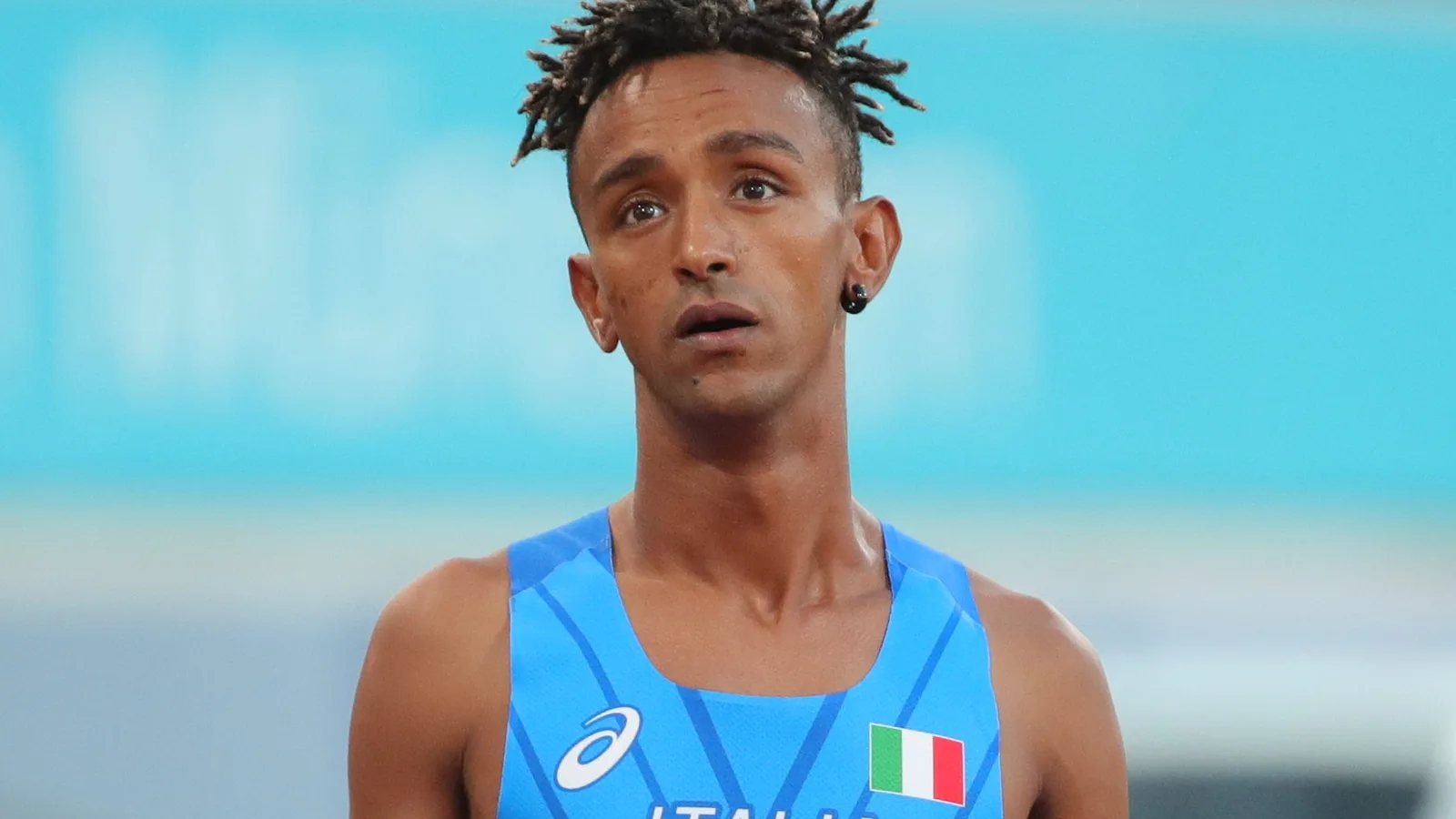
Yeman Crippa ran the New York Marathon in 2:06:14 and lost by 13 seconds to a Swedish debutant. That is how it ended today, 1 November: Andreas Almgren first in 2:06:01 in his very first marathon, Crippa second, and Kamohelo Mofolo of Lesotho third in 2:06:26. On Friday we wrote that Almgren's debut was the one that intrigued us most. We did not expect to see him ahead of everyone, and an Italian was a whisker behind him.
Who won the 2026 New York City Marathon?
In the men's race the finishing order is Almgren 2:06:01, Crippa 2:06:14, Mofolo 2:06:26, defending champion Benson Kipruto 2:06:27, then Haftu Strintzos of Australia 2:06:34 and Zouhair Talbi of the USA 2:06:43. Mofolo took the podium by a single second. In the women's race Sheila Chepkirui won in 2:24:36 ahead of Jessica McClain, 2:24:42, and Hellen Obiri, 2:24:43: three athletes within seven seconds. These times match between Marathon Handbook and OA Sport.
Last year Obiri won in 2:19:51, this year the winning time was 2:24:36: not a record-breaking edition, and it confirms what we wrote on Friday, that in New York the paper favourite is never a guarantee. Giovanna Epis was 11th in 2:28:55, six seconds off the top 10: we only read this figure on OA Sport.
How was it decided: the last 7.2 kilometres
According to Marathon Handbook the group went through 5 km in 15:30, a cautious pace, and through halfway in 1:04:01 with everyone still together. At 35 km the first ten were separated by less than a second. From there Almgren broke the group and ran the last 7.2 km in 20:27, while Crippa, the closest, did them in 20:40.
The maths is ours: 20:27 and 20:40 are 1,227 and 1,240 seconds, about 2:50.4 and 2:52.2 per kilometre. The 13-second difference matches the final margin, so at 35 km the two were practically level. Less than two seconds per kilometre: the gap between two repetitions of the same group, and yet it was enough for second place.
The reports do not agree on how it ended. OA Sport describes an acceleration by Almgren in the last kilometre, Canadian Running Magazine a fading Crippa, and gives a margin of 14 seconds, which does not match the official times. We trust the times.
What is a negative split and what is it worth if you run in four hours?
A negative split is a second half faster than the first. Marathon Handbook writes that Almgren ran the second half in under 62 minutes, more than two minutes faster than the first, which was therefore just over 64 minutes. OA Sport publishes for Crippa 1:04:04 at halfway and so 1:02:10 in the second half, 1:54 less: about 1.5% of the finishing time. We read this on a single source, but the group's halfway time of 1:04:01 makes it credible.
Apply it to a 4:00:00 marathon: 1.5% is about 3:36, so a first half of 2:01:48 (about 5:46 per km) and a second of 1:58:12 (5:36 per km). The calculation is ours and it is not personal advice: New York has bridges and hills, and an amateur loses pace for different reasons than a professional. If you want to try, do it in training first and use the running pace calculator to know your pace for each half.
What does Crippa's second place mean for Los Angeles 2028?
According to OA Sport, with this second place Crippa has qualified for the Los Angeles 2028 Games: under the new rules a top-five finish in a Platinum-level marathon counts as the standard. The qualification period started today, 1 November 2026, and ends on 30 April 2028; there are 70 places per gender, with a maximum of three athletes per nation, and the standards will be published in December (Marathon Handbook and OA Sport). We have not seen an official World Athletics statement about Crippa, so we write according to OA Sport.
The same source recalls that it is the best Italian placing in New York in thirty years, since Giacomo Leone's win in 1996, and that Italy was back on the podium after five years. It is also the third-best time of Crippa's career after the 2:05:18 of Paris and the 2:06:06 of Seville 2024.
And you, how far are you from 2:59 per kilometre?
2:06:14 is 7,574 seconds over 42.195 kilometres: about 2:59.5 per kilometre. Someone running a marathon in 4:00:00 holds about 5:41 per km, 162 seconds more on every kilometre: to run Crippa's marathon you need almost twice the time. It is not a reason to feel small: it is a way to understand what you see on TV. With the marathon time predictor you can see what pace you need for your goal.
What to watch next
The next big Italian marathon is Florence, on Sunday 29 November: in our Florence Marathon guide you find the course and tips. Then comes Valencia on 6 December, where a million euros is on offer for beating the world record: we wrote about it in our Valencia piece. If you want to choose a race for 2027, the 2027 Calendar helps, and with the group rides you find company for the long runs. Our piece from Friday is still here: New York on Sunday: no Hassan, Almgren debuts.
Now it is your turn: what struck you more, Almgren's winning debut or Crippa's second place by 13 seconds? And do you think Crippa can aim for a medal in Los Angeles? Tell us in the comments.
Sources: Marathon Handbook, men's results, Marathon Handbook, LA28 Olympic qualification, OA Sport (results, splits, qualification), Canadian Running Magazine (race report).
Comments (0)
No comments yet. Be the first!
More articles
Latest from the Journal
- Cyclocross 2026-27: Koppenberg, Casasola and the 12 World Cup roundsNovember 1, 2026
- Tour Femmes 2027: team time trial in London, Puy de Dôme finaleOctober 30, 2026
- New York on Sunday: no Hassan, and Almgren's marathon debutOctober 30, 2026
- TotalEnergies leaves Cube for Pardus: Chinese bikes in the pelotonOctober 28, 2026