Getting started with road cycling: your first 90 days
What you actually need to start road cycling: bike setup, riding position, nutrition, first training blocks and mistakes to avoid in the first three months.
In 1 minute: save routes, download the GPX and join group rides.
Sign upWritten by the editorial team at Velunite
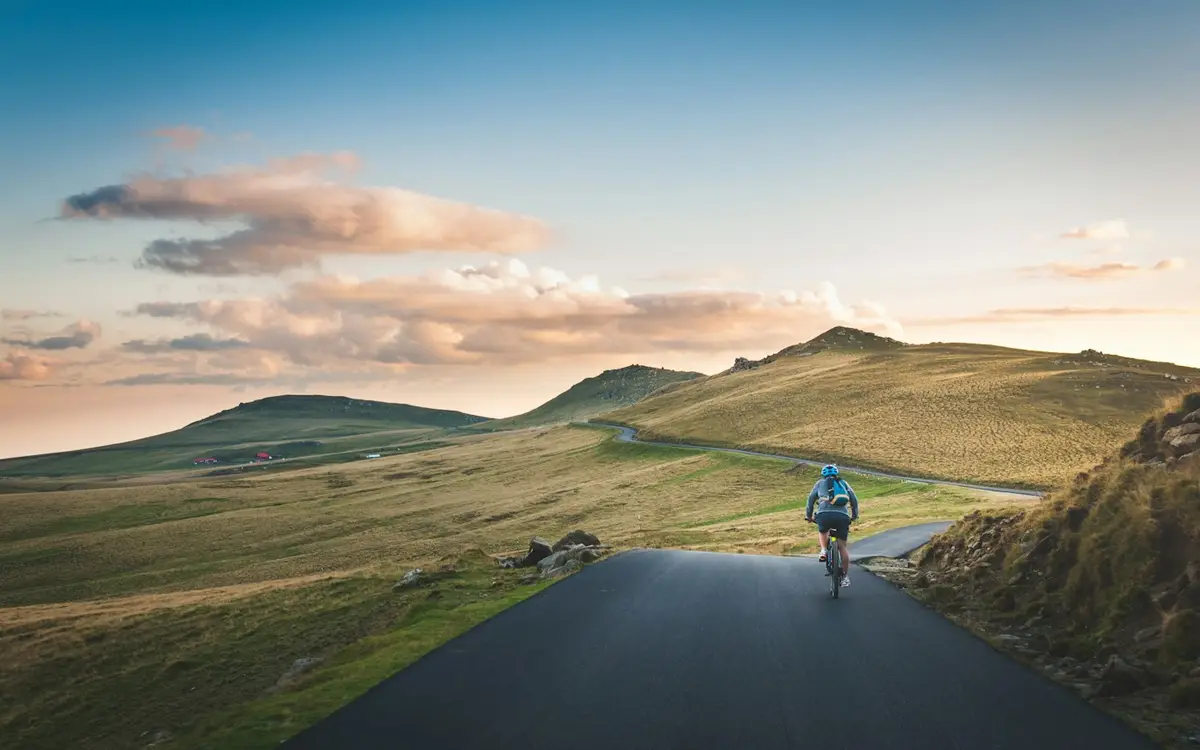
People who get into road cycling often assume the first problem is picking the right bike. In reality, during your first 90 days three things matter far more: your position on the bike, how you build load, and consistency. A mid-range bike that fits well beats an expensive one that doesn't, and a simple routine of three rides a week beats any ambitious plan you abandon after two weeks. This guide lays out what to do, in what order, and which mistakes to avoid.
Position on the bike comes first
Before you rack up kilometres, spend half an hour on setup. Saddle height, reach to the bars and cleat position affect your knees, back and neck much more than the frame does. A starting point many mechanics use: with the pedal at its lowest point your knee should stay slightly bent, not locked. If your hips rock from side to side the saddle is too high; if your knee climbs sharply towards your chest it is too low. Recurring knee pain in the first weeks is almost always a setup issue, not a training one. If you can, ask a shop for a basic bike fit: it costs little compared with the value of the bike. There is a do-it-yourself method in our guide to DIY bike fit.
The minimum kit you really need
For the first three months you need only a few things: a bike in your size and in good condition (second-hand is fine if the components aren't worn), a certified helmet, front and rear lights, a bottle, a spare inner tube with tyre levers and a mini pump, and a pair of padded shorts. You don't need clipless shoes, a bike computer or full technical clothing yet. If you buy used, check the chain, cassette and brake pads: they wear out and their replacement weighs on the budget. For what to look for, read how to choose a bike and our guide to buying a used road bike.
The first weeks: volume, not intensity
The most common mistake is starting with long, fast rides to make up for lost time. In the first 30 days the goal is to build hours in the saddle at low-to-moderate intensity: your body has to get used to the movement, the contact points and repeated loading before it gets used to hard cardiovascular work. Three rides a week of 45-60 minutes beat a single 3-hour ride in the first month. As a rule of thumb, avoid raising total weekly time by more than 10-15% from one week to the next, and every three or four weeks include a lighter week.
A realistic progression for someone starting from zero: weeks 1-2, three 45-minute rides on flat roads; weeks 3-4, two 60-minute rides and one of 75; weeks 5-8, two rides of 60-75 minutes and one of 90-120 with some gentle climbing; weeks 9-12, add one long climb at a steady pace and try to reach two hours. By the end you will have an aerobic base that lets you join a social ride of 50-70 km without suffering.
How to tell if you are going too hard
The simplest test is your breathing: on base rides you should be able to speak in full sentences. If you can only manage two words at a time you are already working too hard and will pay for it after half an hour. If you have a heart-rate strap or a bike computer, use zone 2 as a reference; we cover it in the article on zone 2 training. The relationship between perceived effort and gradient improves quickly: after 3-4 weeks the same hills start to cost less, which is the most encouraging sign there is.
Nutrition: the mistake everyone makes
Under 90 minutes at moderate intensity, arriving well hydrated and drinking during the ride is usually enough: you don't need a complex fuelling plan. Trouble starts when rides pass an hour and a half without food: that is where the classic hunger crash appears, which many beginners mistake for poor fitness when it is simply a lack of carbohydrate. Keep a banana or a bar in your pocket and eat something after the first 45-60 minutes. Quantities and timing are in our guide to fuelling long rides.
Routes: repeat rather than explore
For the first two months it pays to repeat two or three familiar routes instead of always looking for new roads: it lets you measure progress (same time, less perceived effort) and lowers the chance of being caught out by a climb or a busy stretch. On Velunite you can save your favourite routes and check the elevation profile before leaving, so you always know what to expect. Avoid busy main roads, and if you are unsure how to behave, read the rules for riding safely in traffic.
The group helps more than you think
Riding alone is easier to organise, but people who train with others, even once a week, tend to stay consistent far longer. A social ride with a declared pace pushes you a little further without the risk of overdoing it, and the social side is often what turns an attempt into a habit. Before joining a group always ask for the average pace and expected elevation.
Frequently asked questions
How long does it take to ride 50 km without struggling? For most people who start sedentary but healthy, between 6 and 10 weeks of three rides a week. It depends a lot on the route: 50 km on the flat is very different from 50 km with 800 metres of climbing.
Road bike or gravel bike to start? If you ride mostly on tarmac a road bike is more efficient; if you want to mix gravel roads and asphalt, a gravel bike is more versatile and forgives potholes. Either is fine if it fits you.
Should I train by heart rate or by power? Not at first. Perceived effort and breathing are enough in the first three months; the tools matter later, once the base is built.
In short
In your first 90 days focus on three things: bike setup, gradual build-up of volume and consistency. Speed, power and distance will come by themselves: they are not the starting point.
Recommended products
The first thing to buy is safety: an entry-level certified road bike helmet in the right size matters more than any component.
Early-months comfort runs through padded beginner cycling shorts, which make the first hours in the saddle bearable.
Being seen matters even by day: a basic front and rear bike light set costs little and mounts in minutes.
The first puncture always comes too soon: a small lightweight mini pump plus a spare tube avoids the walk home.
For hands in the first cold spells and grip on the bars, padded half-finger cycling gloves are the piece you will use all year.
As an Amazon Associate, Velunite earns from qualifying purchases. Some links in this article are affiliate links: if you buy through them Velunite may earn a small commission at no extra cost to you.
Attrezzatura consigliata
Affiliate links: if you buy through these links Velunite receives a small commission, at no extra cost to you.
More articles
Latest from the Journal
- TotalEnergies leaves Cube for Pardus: Chinese bikes in the pelotonOctober 28, 2026
- Rome Marathon 2027: 137 days to go, should you sign up now?October 28, 2026
- Pogačar in Australia in January? What's true and what's a podcastOctober 27, 2026
- Kwizera runs 58:03 in Valencia: Spanish record, not yet EuropeanOctober 27, 2026