Rome Marathon 2027: 137 days to go, should you sign up now?
Rome is run on Sunday 14 March 2027 and last year the bibs ran out in December. What we know, what to check, and how to use the 19 weeks left.
In 1 minute: save routes, download the GPX and join group rides.
Sign upWritten by the editorial team at Velunite
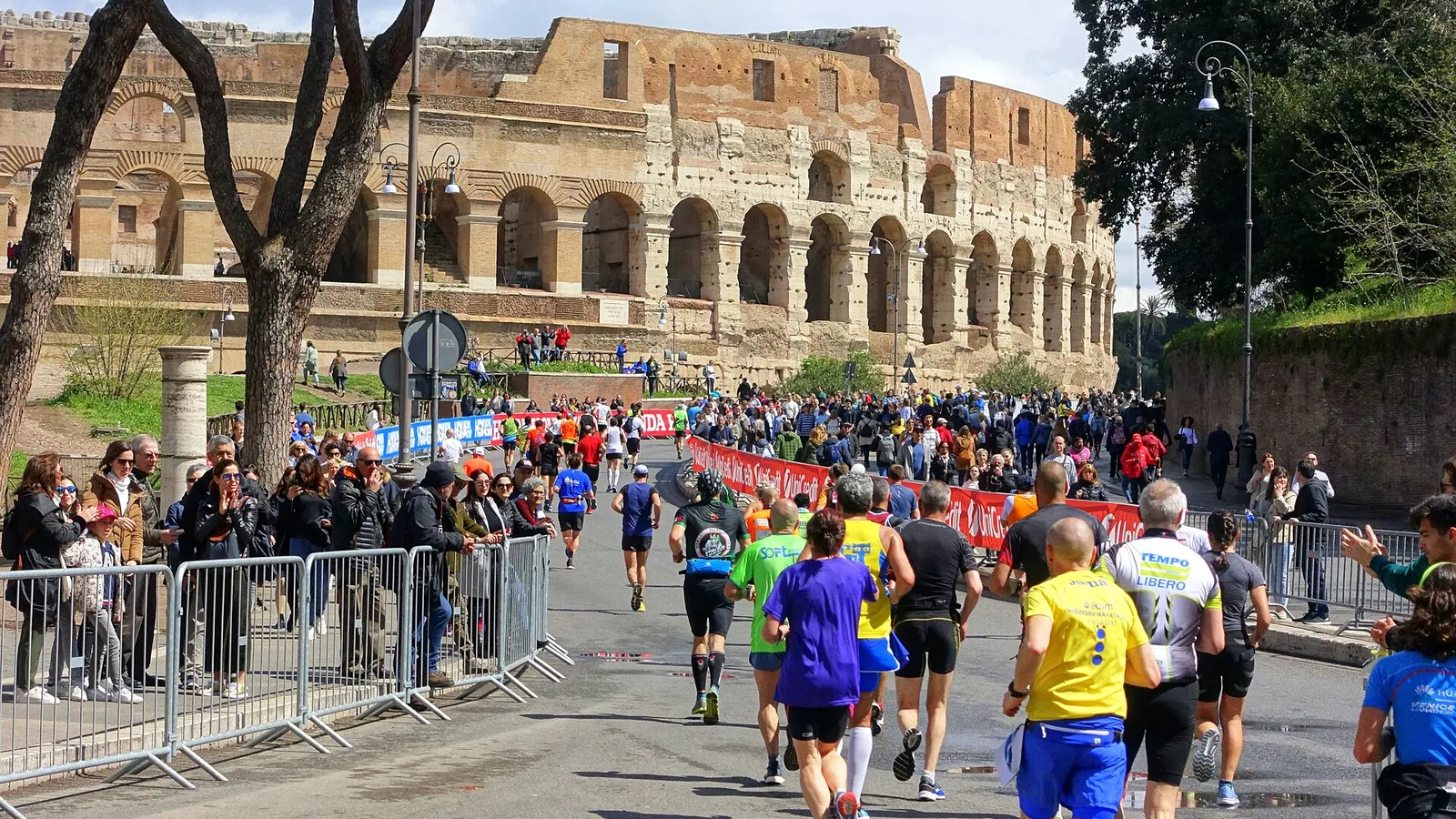
Today is Wednesday 28 October and the Rome Marathon is 137 days away: 19 weeks and 4 days, if you want to redo the maths with us. The official site lists the marathon for Sunday 14 March 2027, with the 5 km Fun Run the day before. If you are thinking about running it, the decisions are due now, not in February. Here is what we checked, what we did not, and how we at Velunite see it.
The countdown, plainly
One hundred and thirty-seven days sounds like plenty until you look at a calendar. Subtract the Christmas weeks, the properly cold ones and the inevitable cold in the nose, and the weeks when you actually run well are fewer than you think. Many first-marathon plans last between 16 and 20 weeks: that is a rough guide, not a rule, and if you already have a half marathon or a season of steady running behind you, you start ahead. The point is that whoever starts today still has margin, and whoever waits for January does not.
Why the hurry: last year it ended in December
The 2026 edition was run on 22 March. On 4 December 2025 AGI wrote that marathon registration had closed, sold out, with about 36,000 entrants and growth from the 7,000 of 2019 (organisers' figures). Turismo Roma, on the same story, speaks of 30,000 entrants: the two sources do not match and we cannot explain the difference, so we give you the order of magnitude and nothing more. Add that in Rome, as marathons.com points out, there is no lottery and no qualifying time: arrival order is what counts.
For 2027 there is a new tender: the race was awarded for five years, 2027 to 2031, to a partnership of Infront Italy, Corriere dello Sport-Stadio and SSD Rome Marathon Runners, as reported on 23 April by Quotidiano.net and Corriere dello Sport, which already then announced that registration was open. What we could not verify is whether bibs are still available today: the official page does not say, so go and check directly on the race website.
The paperwork before the bib
Here you need some caution. According to marathons.com, for the 2026 edition anyone entering the competitive category needed a RunCard (15 euros, valid for a year) and a medical certificate of fitness for competitive athletics, uploaded to the registration platform; those choosing the non-competitive option needed neither. Also for 2026, transfers and deferrals were not refunded. The 2027 rules are on the official site as a PDF: read them before you pay, because rules can change.
Our advice, which is an opinion: book the medical visit now, not in January, because clinics fill up. And do not treat it as a rubber-stamp formality: if you have doubts about your health, this is the moment to ask a doctor, not us.
19 weeks in three pieces
This is not a training plan, but a scaffold to think with. From the end of October to mid-December (about six weeks) regularity is what counts: three or four fixed runs, a long run that grows a little at a time, shoes tested and working. With the clocks changed, darkness arrives early: if you run after work, re-read how to organise yourself after the clock change. From mid-December to mid-February is the block where the kilometres pile up and the toughest long runs happen, with the holidays taken into account. The last three or four weeks are for easing off, not for making up lost time.
To put a number on your goals without inventing it, start from your real times: the marathon time calculator turns a 10 km or a half into a starting estimate, and the pace calculator gives you splits every 5 km. They are estimates, not promises: on race day your body decides, not a spreadsheet.
Who keeps you going in January
In our experience the hardest part of a March marathon is not race day but a rainy Tuesday evening in January. A fixed appointment with someone weighs more than an alarm clock: that is why on Velunite you can find group rides and the Rome page with places to run in the city. Finding a partner for Sunday long runs now, in October, is the most underrated move in the whole countdown.
Now it is your turn: are you running it in 2027, and with what goal (finishing, going under a time, enjoying the Colosseum)? And if you have already signed up, how are you handling the certificate and the plan? Tell us in the comments, and if you need a partner for the long runs, say so.
Comments (0)
No comments yet. Be the first!
Attrezzatura consigliata
Affiliate links: if you buy through these links Velunite receives a small commission, at no extra cost to you.
More articles
Latest from the Journal
- TotalEnergies leaves Cube for Pardus: Chinese bikes in the pelotonOctober 28, 2026
- Pogačar in Australia in January? What's true and what's a podcastOctober 27, 2026
- Kwizera runs 58:03 in Valencia: Spanish record, not yet EuropeanOctober 27, 2026
- Longo Borghini in Piasco and cyclocross is back: the pro weekendOctober 26, 2026