Gravel Riding in Tuscany: the Best Routes Through Chianti and Val d'Orcia
Where to ride gravel in Tuscany: the white roads of Chianti and Val d'Orcia, from Siena to Montalcino, with practical tips for planning the ride.
Free, in 1 minute: save routes, download the GPX and join group rides.
Sign up freeWritten by the editorial team at Velunite
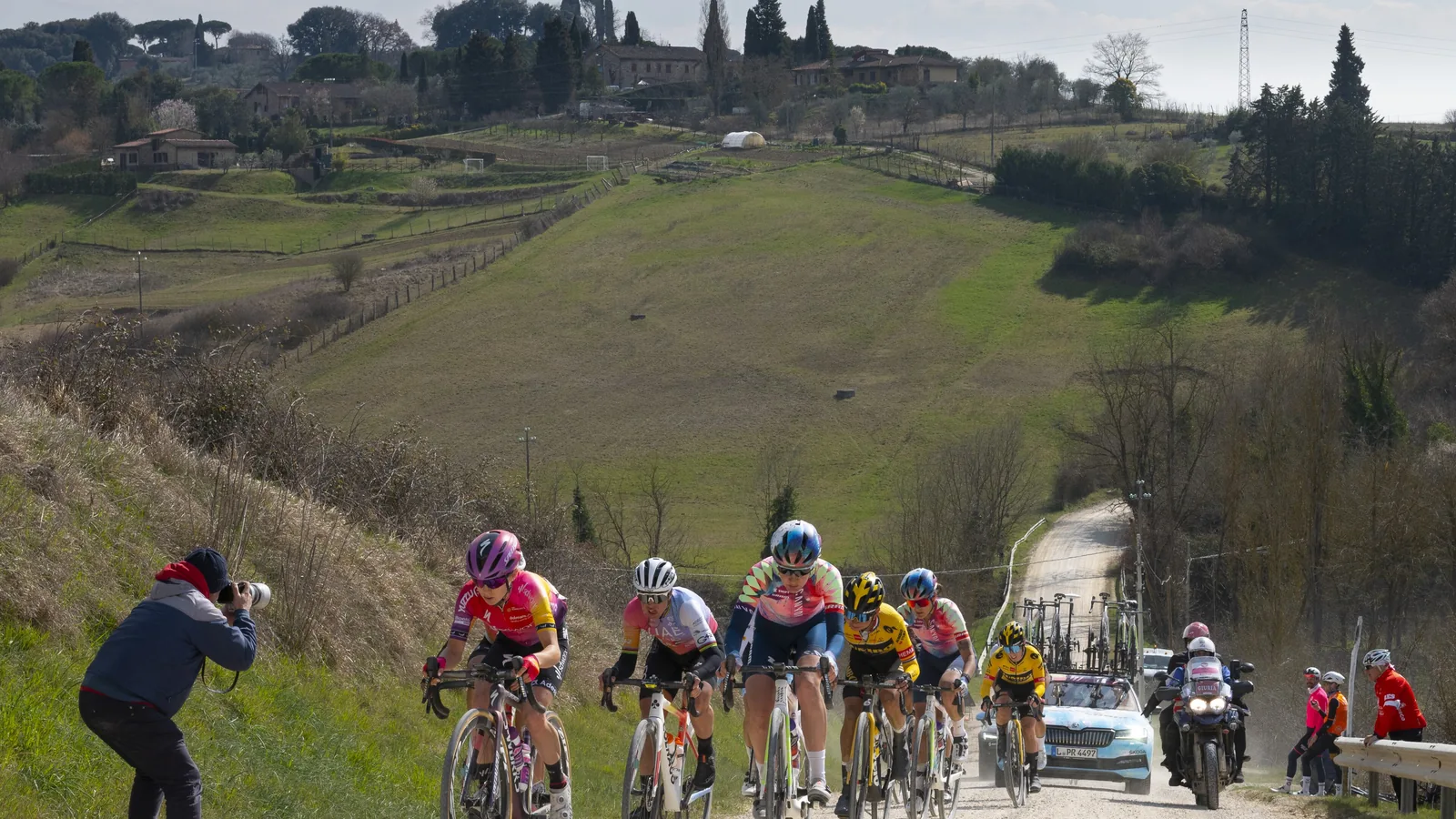
Tuscany is arguably the Italian region most associated with gravel riding, thanks to its famous 'strade bianche' — white gravel roads that have drawn cycle tourists for decades and have become ideal terrain for modern gravel bikes. Between Chianti and Val d'Orcia lies a network of well-kept, rolling but never extreme gravel roads, perfect for building half-day or multi-day routes through constantly changing scenery.
The white roads of Chianti
Starting from Siena or Castellina in Chianti, the gravel roads connecting villages like Radda, Volpaia, and Panzano offer compact, flowing terrain generally in good condition, mixed with paved sections that let you build loops of various lengths. The area is hilly but with manageable gradients, ideal both for first-time gravel riders and for those looking for a longer workout with constant rhythm changes on the rolling terrain.
Toward Val d'Orcia: Montalcino and the Via Francigena
Heading further south, Val d'Orcia delivers some of Italy's most photographed gravel landscapes: the cypress-lined gravel roads toward Montalcino, the ridgelines around Pienza, and stretches of the Via Francigena that cross the area offer more open, less shaded gravel than Chianti — worth riding with extra caution, especially in summer, given the heat and sun exposure.
When to go and how to plan
Spring (April-May) and autumn (September-October) are the best windows: pleasant temperatures, green or autumn-colored countryside, and less tourist traffic than summer. In summer, it's worth starting very early to avoid the hottest hours, especially on the open stretches of Val d'Orcia. Many local B&Bs and agriturismi are used to hosting cycle tourists and offer secure bike storage, useful for multi-day trips.
A Chianti itinerary idea
A typical ride starts from Castellina in Chianti or Gaiole, an area tied to the vintage ride L'Eroica, and links Radda, Volpaia and Panzano with a mix of asphalt and white roads. A half day of 40-60 km is a good goal for beginners; stronger riders can add loops toward Siena. There is no single official route: the rule is to alternate gravel sections with paved links, choosing according to weather and group level. Always check the track on a map and make sure the roads are open.
Tires, pressures and gearing
On these roads a gravel bike with 38-45 mm tires is the most common choice. Lower the pressure compared with asphalt: start from the values suggested by the manufacturer for your weight and tire and adjust a little at a time; our guide to tire pressure explains how to reason, and if you are thinking about tubeless there is tubeless or inner tubes. For gearing, Tuscan hills alternate short ramps that can exceed 10 percent: a wide cassette or a 1x with an easy gear helps a lot.
Mud and rain
After rainy days the Tuscan white roads, rich in clay in some areas, can turn into heavy, slippery mud: postpone the ride or choose paved variations. Even in summer sudden thunderstorms change the surface quickly. If you have never done gravel, our guide on how to start gravel riding gives you the basics.
Supplies, signal and GPX
Between villages fountains are rare, so leave with at least two bottles and something to eat. In the countryside phone signal can be missing: download the GPX track to your bike computer or phone for offline use; to choose a device see how to choose a GPS bike computer. For a multi-day ride, our guide to bikepacking for your first weekend explains how to organise luggage and stages.
Gear worth considering for this kind of ride
For a multi-hour ride on Tuscan gravel roads, it's worth considering gravel tires with a good balance between rolling speed and grip (loose dust and uneven gravel can get slippery), and for multi-day trips a bikepacking bag to carry spares, tools, and an extra layer, since temperatures between morning and afternoon can vary considerably.
Worth considering for the trip
Gravel tires for mixed terrain: a solid balance between rolling speed on asphalt and grip on Tuscan white roads.
RockBros bikepacking bags: practical for organizing a multi-day trip through Chianti and Val d'Orcia without a backpack.
As an Amazon Associate, Velunite earns from qualifying purchases. Some links in this article are affiliate links: if you buy through them Velunite may earn a small commission at no extra cost to you.
Attrezzatura consigliata
Affiliate links: if you buy through these links Velunite receives a small commission, at no extra cost to you.
More articles
Latest from the Journal
- Hinault and LeMond, 1986: betrayal or a team lesson?October 21, 2026
- Amsterdam, 2:03:33 in the rain, and a faster second halfOctober 21, 2026
- New York 2026: 50 years of five boroughs and three ItaliansOctober 20, 2026
- Sallanches 2027: the Domancy, twenty times, and Pogačar's planOctober 20, 2026