Cycling heart rate zones: chart, max HR and how to use them
Cycling heart rate zones: work out max HR, see a worked zone chart, cardiac drift, when your monitor lies and a sample week. Free calculator.
In 1 minute: save routes, download the GPX and join group rides.
Sign up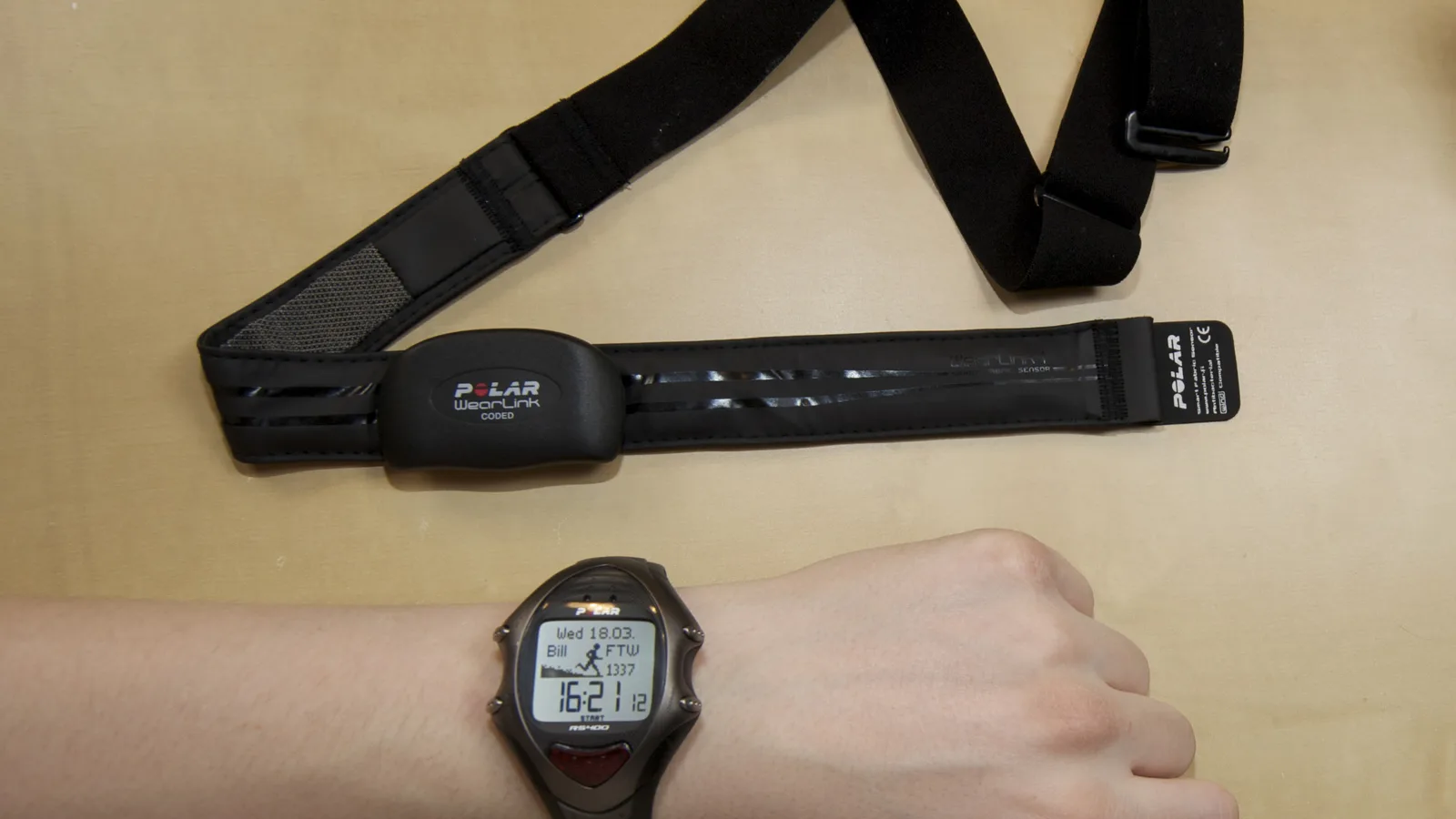
Cycling heart rate zones: the short answer
Cycling heart rate zones split your effort into five bands, each a percentage of your maximum heart rate, so you can ride easy days easy and hard days hard. To set them you need your max heart rate and, ideally, your resting heart rate. A worked example: a 40-year-old has an estimated max of about 180 beats per minute, and their zone 2, the easy endurance band, runs from 108 to 126 bpm (60-70% of max).
The part most guides skip is that bike numbers are not running numbers. Max heart rate on the bike is often 5-10 beats lower than when running, because you are seated, the saddle carries your weight and a smaller muscle mass is working. So build your zones from efforts on the bike rather than copying them from a running watch. Below you will find the formulas, a pre-calculated chart, a second zone scale based on threshold, the situations where a heart rate monitor misleads you, and a sample week of training.
If you want the numbers straight away, our free heart rate zone calculator uses the Karvonen method. If you want to understand what you are doing, keep reading.
How to work out your max heart rate for cycling
There are three ways, from least to most accurate.
1. The classic formula: 220 minus your age. It is the most common and the least reliable, because for any individual it can be out by 10 beats or more either way. For a 40-year-old it gives 180. 2. The Tanaka formula: 208 minus 0.7 times your age, from a 2001 meta-analysis of 351 studies (almost 19,000 people) in the Journal of the American College of Cardiology. It also gives 180 at 40, but at 60 it gives 166 against 160 for the classic formula, and is generally considered more realistic after 40. 3. A field test: after a 15-minute warm-up, ride an 8-10 minute climb that starts hard and finishes flat out, with the last 2 minutes at your absolute limit. The highest number on your monitor is your bike max. Only do this if you are used to hard efforts, on a rested day, and tell someone where you are riding.
If you are not used to maximal efforts, or you are over about 40-45 and not regularly active, skip the max test, use Tanaka and adjust your zones from what you see on real rides. If you have a heart condition, take medication that slows the heart (beta-blockers, for example, lower your heart rate at every intensity) or have symptoms, the formulas do not apply: talk to a sports doctor before setting zones.
Cycling heart rate zone chart (worked example)
The five-zone model is what most bike computers use, Garmin included. Percentages are of max heart rate. Here is the chart for a 40-year-old with a max of 180 bpm and a resting rate of 55 bpm, worked out both as a plain percentage and with the Karvonen method, which also uses resting heart rate (resting rate plus a percentage of the reserve).
Zone 1, recovery (50-60%): 90-108 bpm, or 118-130 with Karvonen. You can chat and smile; it flushes the legs. Zone 2, endurance (60-70%): 108-126, or 130-142 with Karvonen. The aerobic base, long easy rides. Zone 3, tempo (70-80%): 126-144, or 142-155 with Karvonen. Brisk but sustainable, the grey zone discussed below. Zone 4, threshold (80-90%): 144-162, or 155-168 with Karvonen. Hard work, a few words at a time. Zone 5, maximal (90-100%): 162-180, or 168-180 with Karvonen. Short intervals, you cannot hold it for more than a few minutes.
Notice the difference: the same zone 2 is 108-126 with plain percentages and 130-142 with Karvonen. It is not a mistake. Karvonen raises the zones compared with the plain percentage and usually describes fit riders better. Which one should you use? Try both for two weeks: the right zone 2 is the one where you can hold full-sentence conversation for an hour without feeling pushed. If the plain-percentage zone 2 feels like a stroll, you are probably fitter than the formula says.
Threshold-based zones (LTHR): the coaches' scale
Riders who have trained for a while often base zones not on max heart rate but on threshold, the average heart rate you can hold for about an hour. You estimate it with a 30-minute test: after a warm-up, ride 30 minutes as hard as you can at an even effort, and your average heart rate for the last 20 minutes is your lactate threshold heart rate (LTHR). It is the method popularised by American coach Joe Friel.
A widely used scale, attributed to Andrew Coggan, uses these percentages of LTHR: zone 1 below 68%, zone 2 69-83%, zone 3 84-94%, zone 4 95-105%, zone 5 above 106%. With a threshold of 165 bpm, zone 2 runs from about 114 to 137 and zone 4 from 157 to 173. The advantage is that the test tells you something about you, not a population average. The drawback is that it needs a 30-minute maximal effort, and if you pace it badly the number comes out wrong.
If you ride with a power meter or smart trainer, threshold power (FTP) is even more stable than heart rate: see our guide to FTP in cycling. The two complement each other: power tells you what you are producing, heart rate tells you what it costs you today.
Why heart rate lies on the bike: lag, drift, heat and bad days
A heart rate monitor is not a speedometer. It reacts with a delay and depends on a lot of things, and knowing the limits saves you from ruining a ride because of one number.
1. Lag: on a 1-2 minute interval heart rate climbs a minute or two behind the effort and can stay high after you stop. For short intervals use perceived effort or watts; for long rides heart rate works very well. 2. Cardiac drift: in a steady effort of an hour or more, heart rate creeps up even if power stays the same, because of heat, sweating and dehydration. A few beats of drift on a long ride is quite common. If you see much more, you probably need to drink more: see our guide to what to eat and drink on long bike rides. 3. Heat and altitude: for the same effort your heart rate is higher. In summer you reach zone 2 at lower watts. 4. Fatigue, short sleep, illness, caffeine, stress: they can raise resting heart rate and lower your maximum. If your morning resting rate is 5-7 beats above normal, an easy day is often a good idea. 5. The sensor: chest straps are far more reliable than optical wrist sensors, which on a bike suffer from handlebar vibration and a bent wrist. For zone training, a strap is worth buying.
A climbing trick: in the first minutes of a long climb keep your heart rate below zone 4 and let it rise only in the last third. Riders who start a 40-minute climb in zone 5 almost always fade. On our cycling routes you can check distance and gradients to pick the right climb for this kind of session.
How to use the zones: a sample week for 3-4 rides
Zones only matter if they change what you do. A balanced week for a recreational rider who rides 3-4 times, indoors included (see our turbo trainer workouts of 30 and 60 minutes), could look like this:
1. Tuesday, 60 minutes, steady zone 2. If you drift above the zone on a climb, ease off or change gear. 2. Thursday, 60 minutes with 3 x 8 minutes in zone 4, with 4 minutes recovery in zone 1. 3. Saturday or Sunday, 2-3 hours in zone 2, with some zone 3 if the road forces it. 4. Optional, 45 minutes in zone 1 as active recovery.
The aim is for about three rides in four to sit in zones 1-2, with only one hard session. It is an approach inspired by polarised training and explains why riding easy makes you faster; for the detail, read about zone 2 and your aerobic base. To see how much you burn at different intensities, there is our calories burned cycling chart.
Common mistakes with cycling heart rate
The first mistake is trusting 220 minus age blindly. The second is copying zones from a running watch: on the bike your max is lower, and if you do not correct for it you spend the week riding below the zone you think you are in. The third is living in the grey zone, zone 3: it feels like the right amount of work, but it is too hard to recover from and too easy to really raise threshold. Fourth: watching the number instead of your body. If your heart rate says zone 2 but your legs are lead, the monitor is lying and you are right. Fifth: changing your zones every ride. Update them every 6-8 weeks or when a test gives you a new value, not before.
One last point on health. Heart rate is a training tool, not a medical test. If during effort you have chest pain, unusual palpitations, dizziness or breathlessness out of proportion, stop and have it checked by a doctor, especially if you are over 40 or have a family history of heart problems.
Sources and further reading
Tanaka formula: Tanaka H., Monahan K.D., Seals D.R., Age-predicted maximal heart rate revisited, Journal of the American College of Cardiology, 2001. Percentage zones and the Karvonen method: Garmin's guide to heart rate zones (Italian). To train with your own data, connect your device and import FIT and GPX files into your Velunite history; for a general introduction to zones read heart rate zones: how to calculate and use them. Looking for events? See the 2027 calendar.
Velunite editorial team, updated 1 November 2026.
FAQ
What is a good heart rate for cycling?
It depends on the goal; there is no single number. Easy endurance rides sit at 60-70% of max heart rate (about 108-126 bpm for a 40-year-old), hard intervals at 80-90%. That is why you need your own zones, not a copied figure.
How do I calculate max heart rate for cycling?
Use the Tanaka formula (208 minus 0.7 times age) or a hill field test. On the bike the value is often 5-10 beats lower than when running, so do not reuse numbers from a running watch.
What heart rate is too high when cycling?
There is no limit that applies to everyone. If your heart rate sits in zone 5 for a long time, or climbs far more than the effort suggests, back off. If you feel chest pain, dizziness or palpitations, stop and see a doctor.
What heart rate is zone 2 in cycling?
60-70% of max. With a max of 180 that is 108-126 bpm; with Karvonen and a resting rate of 55 it becomes 130-142. The practical test is being able to talk in full sentences.
Is it better to train by heart rate or by power?
Power is more immediate and stable, while heart rate tells you what the effort costs you today. If you do not have a power meter, a chest strap is an excellent start; using both together is better still.
Why does my heart rate rise when my power stays the same?
Cardiac drift: heat, dehydration and accumulated fatigue raise heart rate at the same effort. A few beats on long rides is normal; if it is marked, drink and eat more and slow down.
Is a wrist optical sensor good enough for cycling?
It is fine for a rough idea, but handlebar vibration and wrist position make it less reliable on a bike. For zone training a chest strap is more accurate.