Bike Lights and Visibility: How to Be Seen (Day and Night)
Front, flashing rear, reflectives and placement: four habits that massively change the odds on the road.
In 1 minute: save routes, download the GPX and join group rides.
Sign upWritten by the editorial team at Velunite
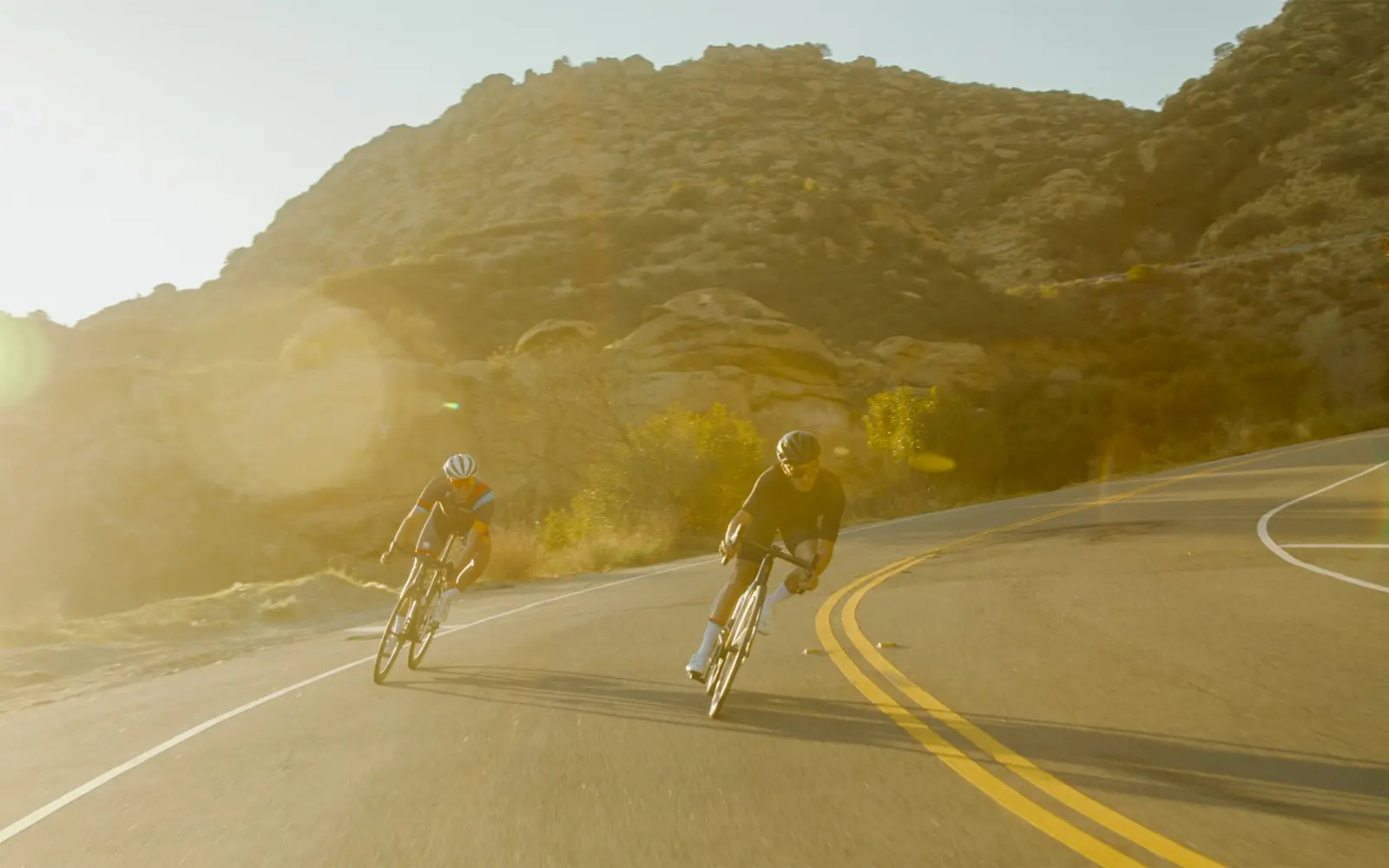
Modern lights have turned riding at night from a gamble into normality, but only if used well. Being seen isn't about the most powerful beam: it is about the right light in the right mode, mounted in the right place. In this guide you will see how to choose front and rear lights, which modes to use by day and night, how many lumens you really need and how to complete visibility with reflectives and clothing.
What the highway code says
In Italy the highway code requires, when it is dark and in tunnels, a white or yellow front light, a red rear light and reflectors. Rules can differ from country to country: if you travel abroad, check local rules on approved lights (for example in Germany StVZO approval is required). A light fitted but flat or aimed badly is useless: always check charge before leaving.
At the front: seeing and being seen are two jobs
The front light does two things: it lights your way and gets you noticed by drivers. To light the road you need power: as an order of magnitude, in town on lit streets 100-200 lumens are enough; outside town on dark roads you need 400-800; for night MTB trails even more than 1,000. To be noticed you need a flashing mode or side visibility. A sober combination in town is a low-power steady light plus flash; on dark roads and unpaved tracks you need the full beam and, if you can, a second light on the helmet, which lets you light where you look. Adjust the beam angle: if it dazzles oncoming traffic you are less safe, not more.
At the rear: flashing is king
For the rear light, an irregular flash is generally noticed much earlier than a steady beam, by day and night. Keep it on in daytime on busy roads too: some studies, including a Danish one, indicate daytime lights can reduce crashes, although results vary and no light is a guarantee. Prefer a rear light with good side visibility and a wide angle, and mount it on the seatpost or the back of your pack without covering it. If you ride in a group, the rear lights of the first and last riders matter most.
Reflectives and position beat lumens
A reflective gilet or ankle bands in motion catch headlights better than doubling the lumens. Reflective parts in motion (ankles, wheels, pedals) tell a driver instantly that it is a cyclist, because the shape of the movement is recognised. And the light must be visible: a saddle bag covering the rear light cancels the advantage. A light-coloured helmet or one with reflective details and bright clothing complete the picture: see how to choose a helmet and riding safely in traffic.
Battery, charging and modes
Claimed run time varies a lot with mode: maximum power drains the battery in a couple of hours, flashing lasts far longer. Choose USB-rechargeable lights with a charge indicator and, if you ride long, consider a power bank or a spare light. In cold the battery performs less. Recharge your lights after every long ride: forgetting is one of the most common mistakes. There are also hub-dynamo lights, handy for everyday riders because they never go flat.
Mounting and maintenance
A solid mount stops the light shifting on bumps. Check screws and seals, and clean the lenses. In rain or off-road prefer lights with adequate waterproofing (look for an IPX4 rating or higher). Carry a cable and periodically check the mount isn't worn.
When to use what: examples
City commuter: low-power steady front plus flashing rear, lights always on even by day. Evening road ride: 400-800 lumen front light, flashing rear, reflective jacket. Night off-road: full beam on the bars and a light on the helmet. Dawn and dusk: lights on anyway, even if you can see well. For safety, winter clothing is part of the same strategy: see dressing in layers for the cold.
Frequently asked questions
Do I need lights in the daytime? They aren't compulsory, but a flashing rear light increases visibility in uncertain light.
Can I use my phone's light? It isn't a reliable solution: battery, mounting and water protection are limited.
How much to spend? A good mid-range pair of lights is a minimal investment compared with safety.
In short
Front to see, flashing rear to be seen, reflectives on moving parts, charged batteries. Four habits that cost little and change the odds a lot: the best riding technique is no use if cars don't see you.
Recommended products
The most practical starting point is a front and rear bike light set with flashing modes: it covers both needs from this guide, seeing and being seen, in one go.
Regulars on dark rural roads should consider a powerful rechargeable front bike light, with a beam angled down so it never dazzles oncoming traffic.
At the rear, where flashing makes the difference, compare flashing rear bike lights: models with automatic dusk switch-on mean you never forget them off.
As the article explains, moving reflectives beat lumens: a high-visibility reflective vest costs little and fits over any jacket, while reflective bands for cycling on the ankles flag your pedaling motion to car headlights.
As an Amazon Associate, Velunite earns from qualifying purchases. Some links in this article are affiliate links: if you buy through them Velunite may earn a small commission at no extra cost to you.
More articles
Latest from the Journal
- MTB races are closing: Sirente gone, Dolomiti on the edgeNovember 20, 2026
- Bologna 2027: the marathon costs 10 euros more at each price tierNovember 20, 2026
- WorldTour 2027 calendar: Worlds in August, Vuelta in SeptemberNovember 19, 2026
- Valencia, 6 December: Kejelcha returns to the marathon after sub-2November 19, 2026