Winter mountain running: microspikes, jackets and safety
Running in the mountains in winter without needless risk: microspikes, layers, jacket, light, avalanche bulletin, safety rules and a sample 10 km outing.
In 1 minute: save routes, download the GPX and join group rides.
Sign upWritten by the editorial team at Velunite
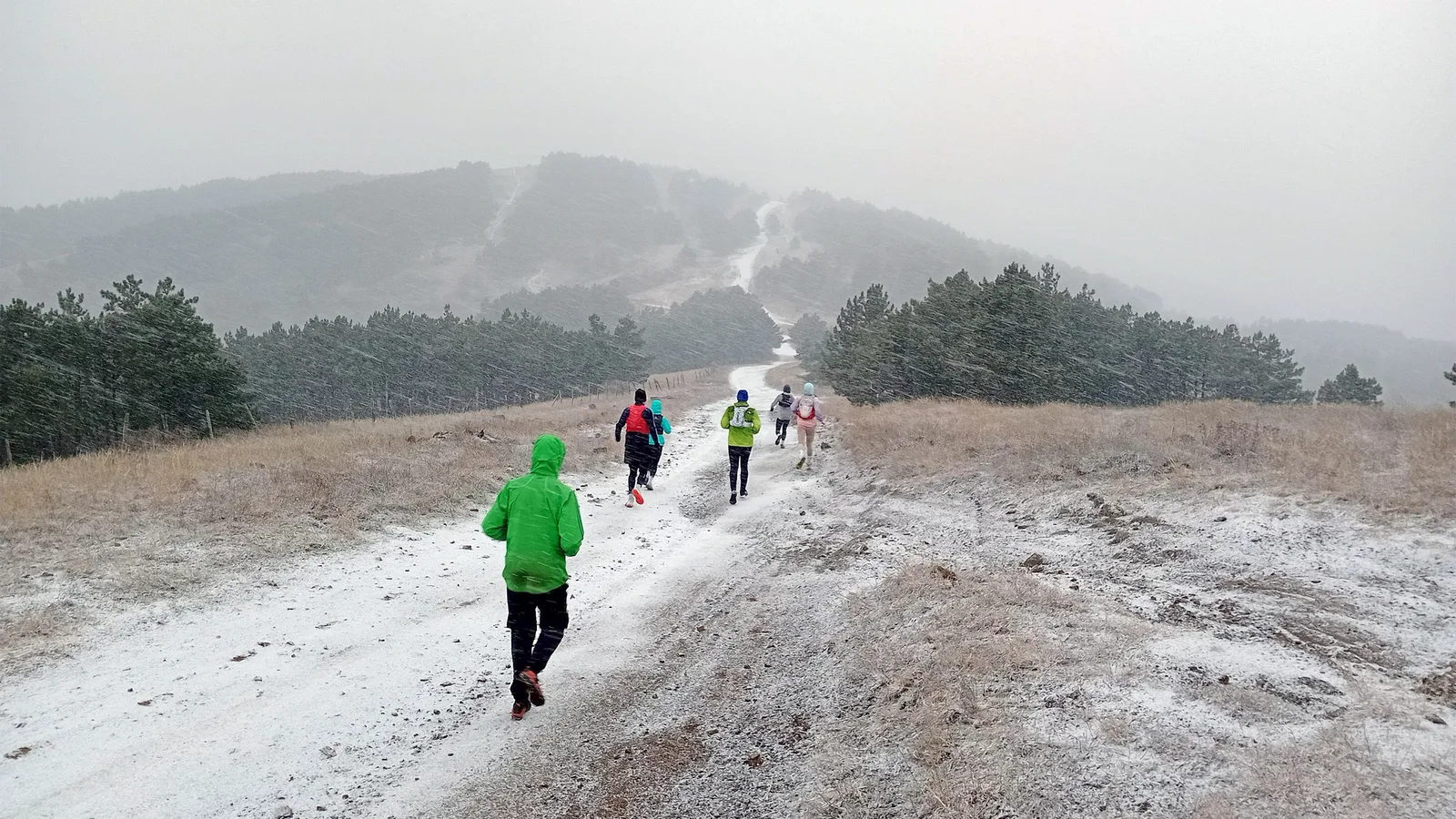
Running in the mountains in winter is one of the finest experiences trail running offers: silent paths, cold air, clean views. It is also an activity in which mistakes cost more than in summer: cold, ice, early darkness and fresh snow change the picture. This guide is not a mountaineering manual, but it gathers the basics for heading out with balance: what to wear, when you need microspikes, how to read conditions and which safety rules to follow. If you are starting trail running from scratch, the guide to trail shoes is the starting point.
How should you dress for winter mountain running?
The principle is the same as for any cold-weather run, explained in the guide to running in the cold, but with an extra safety margin, because at altitude temperatures drop with the wind and when you stop, sweat cools you quickly. You need a breathable base layer against the skin, a light thermal second layer and, in your pack, a windproof or waterproof jacket to put on at stops and on descents. Add gloves (ideally two pairs, one spare), a headband or hat, a neck gaiter and technical socks. Avoid cotton: it soaks up and stays cold. An example: at 0 degrees with light wind, many runners start in a long-sleeve thermal top and a light jacket, and keep a warm second layer in the pack to put on as soon as they stop.
When do you need microspikes?
Microspikes are chains with studs that slip over your shoes and give traction on packed snow and ice. They are needed when the trail is icy or has pressed snow, especially uphill and on steep descents; on deep fresh snow they matter less, and on bare rock or dry tarmac they wear down and can slip. Choose the size by your shoe and try them at home before using them. If you want to look at options, there are trail running microspikes on Amazon: choose ones with sturdy chains and an elastic strap that holds well. On the shoe itself, a tread with pronounced lugs still helps: the guide to winter running shoes, waterproof versus breathable helps you choose.
How do you assess conditions before setting off?
The risk that most distinguishes winter mountains from road running is snow on slopes. Before leaving, check the regional avalanche bulletin: AINEVA gathers the bulletins of the Alpine and Apennine regions that publish them, with a danger level from 1 to 5 (in Italian). At level 3 or above avoid steep slopes (as a general rule above 30 degrees) and gullies; choose broad-ridge trails, forest roads and wooded routes, where the risk is much lower. Look at the weather of the day and of the day before: wet snow or rain followed by frost makes the surface dangerous. If in doubt, turn back or shorten the route.
What safety rules do you need?
Tell someone where you are going and when you expect to be back. Carry a charged phone, a headlamp with spare batteries (light fades early, see the guide to night running), a light emergency blanket, a whistle and an offline map of the route. In an emergency call 112, the single European emergency number that connects you with rescue; the Italian Alpine Club also offers the GeoResQ app to send your position to rescuers. Avoid running alone in isolated areas and, if you are with others, keep the pace of the slowest. Do not push beyond your experience: winter is not the time to try a new route without studying it first, perhaps with an organised group run.
How does training change?
Slow down without shame: snow and uneven ground cut pace by 1-2 minutes per kilometre compared with summer, so go by perceived effort or heart rate. An example outing: 10 km with 400 metres of climbing on a forest road and wide trail, about 1 hour 40, with a jacket in the pack and two short breaks. After the outing change out of wet clothes immediately and warm up indoors; then follow the advice on recovery after running. For the climbing, the guide to hill training is a good complement, and for hydration and food the guide to packs and vests for trail running explains what to carry; remember that water in bottles can freeze, so keep it close to your body.
Which mistakes should you avoid?
The first is underestimating time: short days and slow outings mean returning in the dark. The second is overdressing, sweating and then cooling at stops: better to start slightly cold. The third is going on steep slopes with fresh snow without having read the bulletin. The fourth is using microspikes on rock and thin ice without care. The fifth is having no plan B to turn back. If you have a mountain race goal for 2027, the 2027 race calendar helps with planning; to find suitable routes you can search running routes on Velunite and check elevation and surface.
Note: these are general indications and do not replace specific training or the advice of a mountain guide or mountain rescue; if in doubt, turn back. Some links are affiliate links: if you buy through them, Velunite may earn a small commission at no extra cost to you. Velunite editorial team.
More articles
Latest from the Journal
- Milan Half Marathon on Sunday: 20,000 at the start, route and bib pickupNovember 21, 2026
- Pink jersey 2027: Castelli out, MAAP in. Is the Giro still Italian?November 21, 2026
- MTB races are closing: Sirente gone, Dolomiti on the edgeNovember 20, 2026
- Bologna 2027: the marathon costs 10 euros more at each price tierNovember 20, 2026