Gravel vs Road Bike: Differences and Which to Buy
Gravel bike or road bike? Tyres, gearing, weight and geometry compared, a test based on your last 10 rides and a checklist to avoid a wrong purchase.
In 1 minute: save routes, download the GPX and join group rides.
Sign up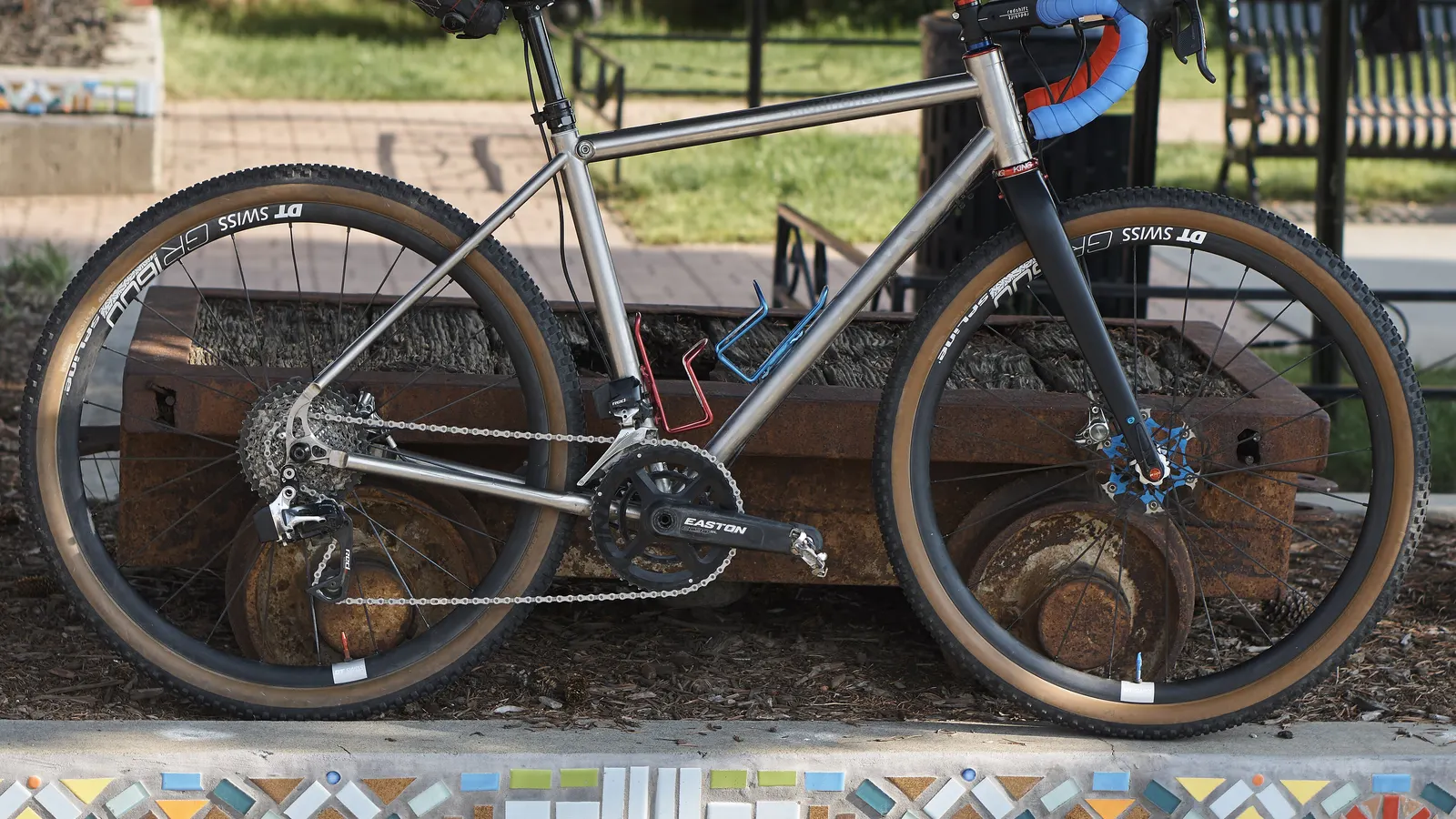
Gravel vs road bike: the short answer
If you ride almost only on tarmac, care about speed and sportives and have no plans to touch gravel tracks, a road bike is still the most efficient choice. If part of your rides goes over dirt roads, broken tarmac or canal paths, and you want one bike for everything, a gravel bike makes more sense, even if it will feel slightly less lively on smooth tarmac. The gap is not huge: many modern road bikes take 32 mm tyres and many gravel bikes run smooth 35 mm tyres, so the two categories overlap in the middle.
In this guide you get the differences that matter (tyres, gearing, geometry, weight), a practical test based on your last ten rides so you decide with data rather than trends, the one-bike-two-wheelsets solution, a checklist to run before buying and the mistakes we see most often. If you are still choosing between three categories, start from our guide to road, gravel or MTB and come back once you have narrowed it down.
The differences that really matter between a gravel and a road bike
On paper they look like twins: diamond frame, drop bars, disc brakes. In practice five things change, and each has a real effect on the ride.
1. Tyres and clearance. A modern road bike usually runs 28-32 mm tyres, and the frame fits 32-35 mm at most. A gravel bike starts at 35 mm and goes to 45-50 mm, often with the option of smaller 650b wheels. More volume means lower pressures, more grip and more comfort: that is why a gravel bike seems to absorb bumps. For the right pressures read our guide to tyre pressure.
2. Geometry. A gravel bike usually has a longer wheelbase, a slacker head angle and a taller head tube: it is steadier and less twitchy, and the riding position is more relaxed. A road bike, especially a race one, is shorter, lower and more reactive when you sprint or corner at speed.
3. Gearing. A compact road bike has 50/34 chainrings with an 11-30 or 11-34 cassette: the easiest gear is 34x34, a ratio of 1.00. A single-ring gravel bike often has a 40-tooth ring with a 10-44 cassette (40/44 = 0.91), or a 46/30 double with 11-34 (30/34 = 0.88). Lower gears help when the climb is on loose ground and the wheel slips. To compare setups use the gear ratio calculator and our guide to gears, shifting and cadence.
4. Weight. As a rough guide a complete road bike weighs 7-9 kg and a gravel bike 8.5-10.5 kg at the same price level, because frame, fork and wheels are sturdier. We have a dedicated guide on how much a road bike should weigh.
5. Mounts. A gravel bike almost always has mounts for several bottle cages, mudguards, racks and bikepacking bags. A road bike usually has fewer or none. If you like leaving for two days with bags, this matters more than weight.
How much slower is a gravel bike on tarmac?
Many numbers circulate and almost none is universal: they depend on tyres, position and the road. What I can say is what happens in practice. At flat-road speeds (above 25-30 km/h) air resistance is the biggest part of the effort, and it depends far more on your position and bars than on the type of frame. A gravel bike with smooth 32-35 mm tyres and a position close to your road bike loses little. A gravel bike with 45 mm knobbly tyres is noticeably slower: knobs roll worse and hum on tarmac.
So before calling a gravel bike slow, look at the tyres: often it is the same bike, and everything changes with a set of fast-rolling covers. I am not giving a km/h figure because I have not measured it on your bike and the numbers floating around start from different conditions. For an honest estimate, run a test: same route, same recommended pressure, two laps at a steady effort, and compare time and heart rate, maybe on a bike borrowed from a friend.
When to choose a road bike
A road bike is the right choice if at least three of these apply: 1. More than 85-90% of your distance is on good tarmac. 2. You ride sportives or road races and every watt matters. 3. You climb a lot and every kilo shows. 4. You ride in a fast group: the low position and reactivity help you stay in the train. 5. You are not interested in bags, mudguards and touring.
Even then you do not have to settle for thin tyres: a modern road bike with disc brakes and 30-32 mm is more comfortable than you think and perfect for battered back roads. If you are thinking of a used bike, read how to buy a used road bike first.
When to choose a gravel bike
A gravel bike is the right choice if you recognise yourself in these cases: 1. You already ride, or want to ride, one outing in five on dirt roads, unpaved cycle paths or canal banks. 2. You live where tarmac is rough and 28 mm tyres suffer. 3. You want one bike for training, commuting and multi-day trips. 4. You ride in winter and want wide tyres and mudguards (see road bike or gravel for winter). 5. You like exploring more than chasing the clock.
If you have never ridden off-road, start with the basics in gravel biking: what it is and how to start and the guide to road and gravel wheels: the wheelset changes more than you would expect.
One bike with two wheelsets: the middle way
If you do not want to choose, many experienced riders use one solution: a gravel bike with two wheelsets. The first, with knobbly or semi-slick 40-45 mm tyres, for dirt and bikepacking. The second, with smooth 28-32 mm tyres, for road rides. Swapping wheels takes ten minutes if both are 700c and share the same cassette. The extra cost is a second pair of wheels and a cassette, roughly the price gap between an entry-level gravel bike and a second bike.
The opposite solution, a road bike with 32-35 mm tyres, works only if the frame really has the room (check the maximum width stated by the manufacturer, not the one that looks like it fits). To understand how tyres are measured there is Sheldon Brown's page.
The last-10-rides test to decide
A method we use to avoid being swayed by videos: take your last ten rides, from your watch or from Velunite activities, and for each note the share of unpaved surface, even approximate (say 0%, 10%, 40%). Then average it.
Below 10-15% a road bike with wide tyres covers everything. Between 15% and 35% the doubt is real and a gravel bike with two wheelsets is the most flexible answer. Above 35% the gravel bike is the obvious choice. It is our practical rule, not a standard, but it forces you to think about the rides you actually do and not the ones you dream of. If you have no habit yet, explore the cycling routes in your area and see how many have mixed surface.
A second test, useful if you already own a bike: fit the widest tyres the frame allows, lower the pressure following the chart and do two rides. If you enjoy it and do not feel the need for more, maybe you do not need a second bike.
Checklist before you buy
1. Size: measure carefully, gravel geometry is different. Our guide to road bike size by height helps. 2. Tyre clearance: check the maximum width stated by the manufacturer. 3. Hydraulic disc brakes: standard on new bikes, on used ones check pads and rotors. 4. Gearing: choose for your hardest ramps, not the average ones. 5. Mounts: bottle cages, mudguards, racks, if you want them. 6. Wheels: tubeless-ready, wide rims are a big plus on gravel. 7. Service: a nearby shop is worth more than a 10% discount. 8. Test ride: at least 30 minutes at your pressure and your pace.
Do not forget the total budget: helmet, lights, pedals, saddle bag and tools add up, in a serious purchase, to 10-15% of the bike price.
Common mistakes when choosing
1. Buying a gravel bike for the mud and never leaving tarmac: you end up with a heavier bike than you need. 2. Buying a road bike to go fast and then avoiding every rough road: rides get shorter and motivation drops. 3. Putting too much weight on the groupset: the gap between one level and the next is felt less than the gap between two tyres. 4. Forgetting the tyres: with covers wrong for your terrain, any bike performs worse than it could. 5. Not testing the size: same number, different geometry. 6. Judging by average speed: it depends on you, the wind and the route more than on the bike.
Sources and notes
Tyre, gearing and weight figures are typical values for each category, checkable on manufacturers' spec sheets; they are indicative and vary by model. The 10-15% and 35% thresholds are an editorial rule of thumb, not scientific data. For your outings, find your next ride among Velunite's cycling routes and propose it to the group. Velunite Editorial, updated 3 November 2026.
FAQ
Is a gravel or road bike better for beginners?
If you do not yet know where you will ride, a gravel bike is more versatile and more forgiving: wide tyres, relaxed position, no limits if you find dirt. If you already know you will ride only on tarmac and want to race, start with a road bike.
How much slower is a gravel bike on tarmac?
It depends mostly on tyres and position: with smooth 32-35 mm tyres the difference is small, with 45 mm knobs it is obvious. There is no figure valid for everyone.
Can I ride a road bike on gravel?
Yes on compact, dry dirt roads, with at least 30-32 mm tyres and disc brakes. On loose ground, stones or mud the risk of punctures and slides goes up.
Can I fit road wheels on a gravel bike?
Yes, if they are compatible with brakes (disc), axle and cassette. Many riders use a second wheelset with smooth 28-32 mm tyres for tarmac rides.
How much heavier is a gravel bike than a road bike?
Usually 1-2 kg more at the same price: roughly 8.5-10.5 kg against 7-9 kg. Weight matters more on long climbs than on the flat.
Is a gravel bike good for road sportives?
It can be done with smooth tyres and light wheels, but riders chasing a time usually prefer a road bike: more aerodynamic and more reactive when the pace changes.
How much does it cost to go from road to gravel?
There is no single price: at the same level the cost is similar. The real extra cost is the second wheelset, if you want two setups.