Gravel biking: what it is and how to start on dirt roads
What gravel biking is, which bike you need, tyres and pressure, how to pick your first dirt-road routes and a plan for your first five rides.
In 1 minute: save routes, download the GPX and join group rides.
Sign up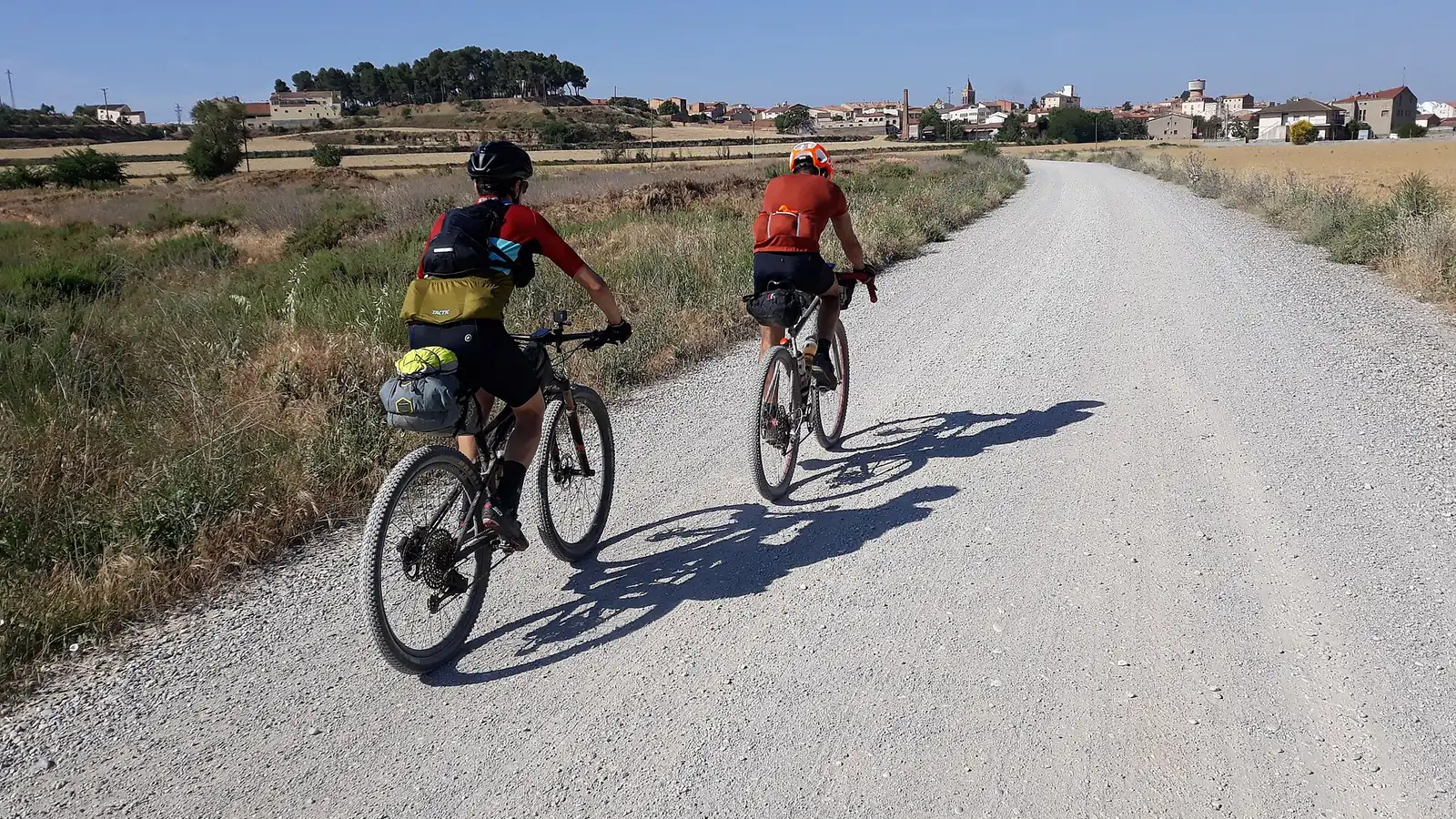
In short: what gravel is and how to start
Gravel is riding on white roads, compact dirt tracks and farm lanes, mixed with tarmac, on a bike with drop bars but a more comfortable frame and wider tyres. To start you do not need a new high-end gravel bike: you need a bike with tyres wide enough, a few adjustments to pressure, a carefully chosen route and some calm on the descents. You learn the rest ride after ride.
This guide explains how to tell a gravel bike from a road bike and a mountain bike, what you really need, what pressure to run, how to choose your first routes, riding technique on dirt and a plan for your first five rides. If you are still deciding what to buy, also read gravel or road bike: differences and which to choose.
What a gravel bike is: frame, tyres, gearing
A gravel bike looks like a road bike, with drop bars, but its frame has more tyre clearance, a wider fork and stays, more stable geometry and a less aggressive position (BikeRadar). Road bikes typically run 23-28 mm tyres; gravel bikes usually take larger sizes, often 35-45 mm, with a more or less knobbly tread.
The drivetrain is also built for mixed terrain: lower gears than a road bike (often a single chainring or a compact double) for climbing on dirt, where rolling resistance is higher and average speed lower. The guide on gears, shifting and cadence shows how to think about teeth, and the gear ratio calculator calculates speed and cadence.
A useful clarification: gravel is not a discipline with one rulebook. Under the same label you find more road-oriented bikes, adventure bikes with racks and bikepacking mounts, and race bikes. Choose according to the terrain you will really ride.
Gravel, road and mountain bike: practical differences
As an order of magnitude, and with a lot of variation between models: - Road bike: 25-30 mm tyres, tarmac; it is the fastest and lightest on the road; on compact dirt you can only go with 30-32 mm tyres or wider. - Gravel: 35-45 mm tyres, tarmac plus white roads and dirt tracks; more comfortable, a little slower on smooth tarmac (with road tyres the gap shrinks a lot). - Mountain bike: suspension and 2.0-2.4 inch tyres, technical trails, descents and loose ground; heavier and uncomfortable on tarmac.
The rule is simple: if most of your rides are on compact surfaces (tarmac and white roads), gravel is the best compromise. If you often ride trails with roots and rocks, a mountain bike gives you more control; if you ride almost only tarmac, a road bike is more efficient.
What you need to start (and what you do not)
You can start with the bike you have if it takes tyres at least 32 mm wide in good condition: what matters is checking brakes, pressure and bolts. Dirt rides stress spokes and tyres more, so a check before the season avoids problems (basic maintenance). - Helmet and glasses (stones and dust). - A spare inner tube or a tubeless kit with plugs and sealant, tyre levers, pump or CO2, multi-tool. - Two bottles: out in the countryside fountains are rarer (look up fountains and bars). - Lights even by day, especially in wooded sections. - A charged phone and the GPX track downloaded before you leave.
What you do not need at the start: a full high-end groupset, bikepacking bags, tyres specific to every surface. Buy only what you are missing after your first five rides.
Tyres and pressure: the starting point
Pressure is the adjustment that changes comfort and grip the most. Industry guides give as a starting point, for a tubeless tyre of about 40 mm, a value between 30 and 40 psi (roughly 2.0-2.8 bar), lower for a lighter rider and loose ground and higher for a heavier rider and compact ground; the front is often run a little lower than the rear. These are indicative values: use the tyre or wheel manufacturer's calculator and refine it with experience.
Two signs tell you that you are off: if the bike bounces and loses grip, pressure is too high; if you feel the rim hitting stones or the tyre squirming in corners, it is too low. With tubeless you can run lower pressures with less risk of pinch flats; with inner tubes you must be more careful. The guide on tyre pressure shows how to reason about road bikes.
Choosing your first dirt routes
Start with short rides, 30-50 km (20-30 miles), on compact surfaces, with little climbing and a loop that brings you home. To judge difficulty use climbing per kilometre as explained in how to choose a bike route: on gravel the same climbing costs more effort than on tarmac because rolling resistance is higher; a ride that would be easy on the road at 12 m/km can feel demanding.
Check the surface before you go: after rain many white roads turn to mud, and clay clogs wheels and brakes. Look for photos and comments from people who have ridden the route. On Velunite you can search routes, read the elevation profile and surface type and download the GPX; keep it offline on your bike computer, because outside villages the signal can drop.
Riding technique on dirt
1. Eyes up: look 10-15 metres ahead, not at the wheel. You see holes and stones in time. 2. Weight: on descents shift your weight slightly back and keep your fingers on the levers. 3. Braking: brake before corners, not in them; use both brakes, with more emphasis on the rear on loose ground; do not lock the front. 4. Corners: keep the outside pedal down and load your weight on it; avoid braking with the bike leaned over. 5. Climbs: stay seated, pedal in smooth circles, keep weight on the rear so the wheel does not spin. 6. Pace: rolling resistance lowers your average, so do not measure yourself against your road rides; use heart rate or perceived effort (heart rate zones).
In a group keep bigger gaps than on tarmac: stones thrown up by the wheel ahead and dust reduce visibility. Call out holes, stones and fords, as on any group ride (how to organise a group bike ride).
Safety and respect for the environment
Ride with company or share your location, carry water and food for longer than planned and identify points where you can cut the ride short. Before leaving, check which roads are open to bikes: white roads and farm lanes are almost always rideable, but trails can have bans on bikes or seasonal limits, and the rules vary between regions and parks, so read the signs and the managing authority's notices.
Give way to hikers and horses, slow down when passing, close gates you found closed, stay on the track and take your rubbish with you. After every dirt ride wash the bike, clean and lube the chain. For cold and rain see riding in the cold.
A plan for your first five gravel rides
A gradual path, with at least one recovery day between rides: - Ride 1: 25-30 km (15-19 miles), almost all on compact white road, 150-250 m of climbing. Goal: get used to the pressure. - Ride 2: 35 km with some looser dirt and a short technical descent. - Ride 3: 40 km, 400 m of climbing, with a stop in a village. - Ride 4: 45-50 km, test your fuelling (what to eat and drink). - Ride 5: 50-60 km with a friend, on a loop with places to cut short.
After the fifth ride, decide what you would change: pressure, tyres, gearing, position. For the right size read the guide on road bike size, which works as a starting point for a gravel bike as well.
FAQ
What is gravel?
It is cycling on white roads, compact dirt tracks and farm lanes mixed with tarmac, on a bike similar to a road bike but with a more comfortable frame and wider tyres.
What is the difference between gravel and a mountain bike?
A gravel bike has drop bars, no suspension, and is lighter and faster on the road and easy dirt; a mountain bike has suspension and wider tyres and is better on technical trails.
Can I do gravel with a road bike?
Yes on compact dirt, if the tyres are wide enough (at least 30-32 mm) and the bike allows them. On loose ground or big stones it is risky.
What pressure should I use for gravel tyres?
As a starting point for a 40 mm tubeless tyre, 30-40 psi (roughly 2.0-2.8 bar), adapted to weight and surface with the manufacturer's calculator. With inner tubes it stays higher.
How much does it cost to start gravel?
If you already have a bike with wide tyres, almost nothing: wider tyres and a repair kit. A new gravel bike has very variable prices: look at the comparison with the road bike before deciding.
How long should a first gravel ride be?
To begin, 25-30 km and 1.5-2.5 hours on compact surface, because average speed is lower than on the road. Increase gradually.
Where can I find gravel routes?
On Velunite you can search public routes with profile and surface type and download the GPX; always check comments and the surface after rain.