Gym for cyclists: winter strength without losing your legs
How to fit gym work into winter cycling training: core exercises, weekly frequency, progressive loads and mistakes to avoid so you keep your form on the bike.
In 1 minute: save routes, download the GPX and join group rides.
Sign upWritten by the editorial team at Velunite
When the days shorten and long rides become rarer, many cyclists wonder whether the gym is worth the trouble. In practice the answer is yes, as long as you do not turn winter into a bodybuilding season. The aim is not to add muscle mass but to build a base of strength that steadies your pelvis and trunk, protects your back and knees, and lets you push the same gear with less effort. You do not lose your legs because of the gym if it is dosed well. You lose them if you arrive at every ride tired.
Why strength matters if you ride
Pedalling is a repetitive movement with low loads but thousands of repetitions. That trains endurance well but leaves the stabilising muscles underused: glutes, core, back, hamstrings. When these give out the pelvis rocks on the saddle, the knee tracks poorly, and the usual aches show up at the end of a ride. Targeted strength work helps mostly with holding your position, long seated climbs and low-cadence surges. It is not a promise of extra watts, just a way to spend those hours with less stiffness and fewer compensations. If you already have recurring pain, read our guides on back pain on the bike and knee pain.
When to do it and how often
The best window is the build phase between November and February, when races are far away. Two sessions a week of 40 to 50 minutes are enough for most amateurs; a single session in spring is plenty to maintain what you built. Put the gym on a day when the bike is easy: better after an easy zone 2 spin than before an interval session. Avoid heavy leg work the day before a hard ride or a race. A workable pattern is gym on Monday, rest on Tuesday, quality on the bike on Wednesday and a second strength session on Friday, leaving the weekend for long rides.
The exercises that matter
You do not need complicated machines. The core is five movements. The squat (or leg press, if technique is not solid yet) trains quads and glutes. The Romanian deadlift works the posterior chain: hamstrings, glutes and lower back. Lunges and step-ups on a bench reproduce the single-leg load of pedalling and even out differences between your right and left leg. The single-leg glute bridge and plank variations complete the core work. Do three sets of 6 to 10 repetitions for the main lifts and 30 to 45 seconds for holds, resting about a minute and a half to two minutes. Learn the movements with light weights and have a qualified instructor check your form before adding load.
How to progress without overdoing it
The rule is simple: increase the load only when you finish all repetitions with clean technique and still have two reps in reserve. A 2 to 5 percent jump at a time is plenty. After the first month the early muscle soreness fades; if your legs feel heavy on the bike in the days after the gym, cut the number of sets rather than the whole session. In the last two or three weeks before a key event, reduce volume and keep one light session. Anyone with joint problems, high blood pressure or no lifting experience should talk to a doctor or a coach first.
What you need, and how to do it at home
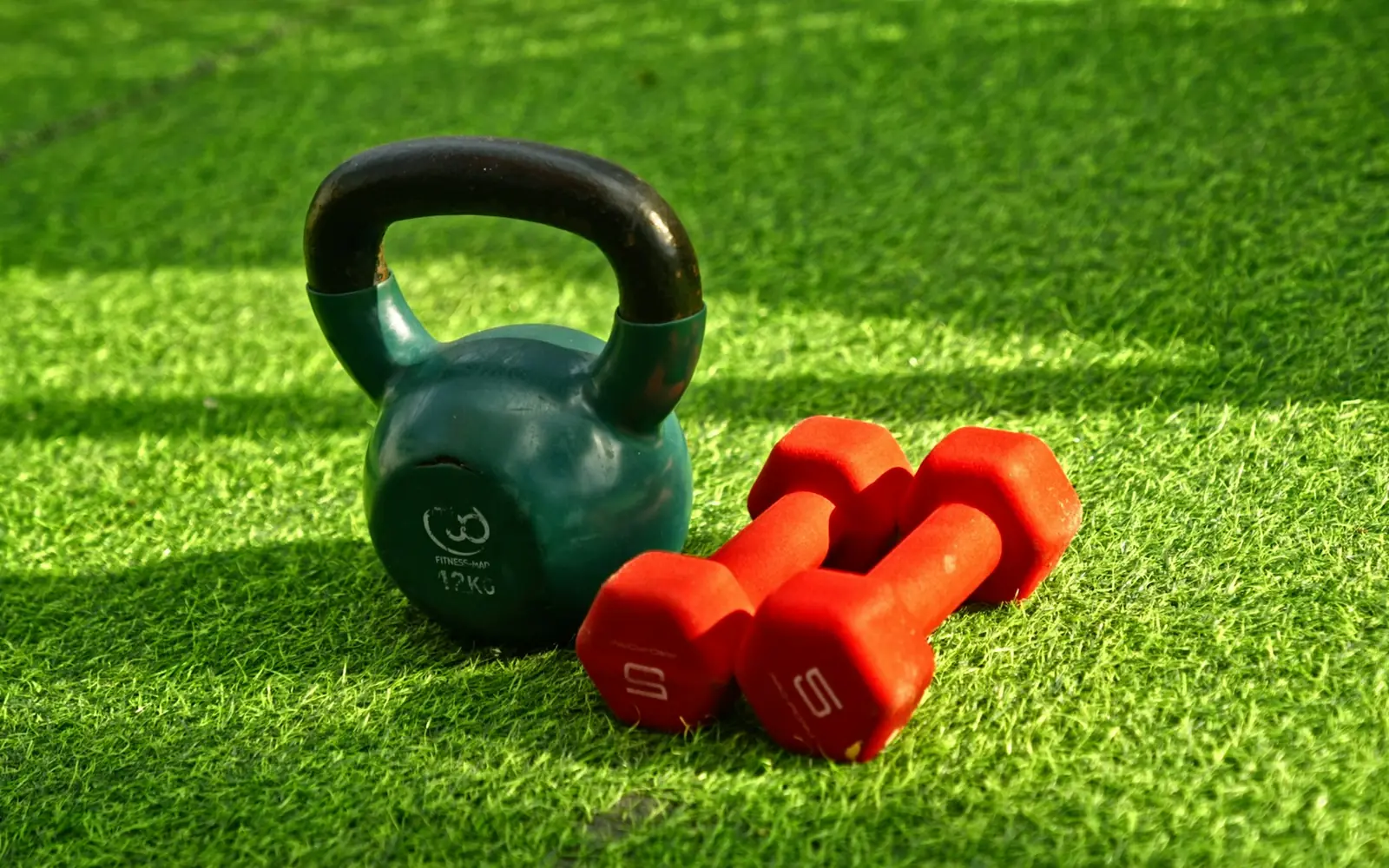
If you do not want a gym membership, you can do most of the work in your living room. A pair of adjustable dumbbells, a kettlebell and some resistance bands cover squats, deadlifts, lunges and glute work. A mat is enough for the core. As always, pick equipment that suits your level and do not chase loads you cannot control.
Mistakes to avoid
The first is starting too hard: three sets at maximum load in week one will leave you stiff for days. The second is neglecting mobility, so spend ten minutes after the session on stretching for cyclists. The third is forgetting that your sport is the bike: the gym should support your riding volume, not replace it. If time is short in a recovery week, drop a gym session rather than the easy ride. To plan rides with other cyclists you can use Velunite group rides, which keeps your week balanced even in winter.
As an Amazon Associate, Velunite earns from qualifying purchases. Some links in this article are affiliate links: if you buy through them Velunite may earn a small commission at no extra cost to you.
More articles
Latest from the Journal
- Boston 2027: the cutoff rises to 5:17, and downhill countsNovember 8, 2026
- Grand Tours 2026: 61 stages, and Italy wins only fourNovember 8, 2026
- Wings for Life 2027: you run against a car, not towards a finishNovember 7, 2026
- Pogačar at 42 resting bpm: who measures a champion's numbers?November 7, 2026