Winter bike touring in Italy: where to ride south and islands
Where to ride in Italy when the north is cold: the south, coasts and islands, how much daylight you really have, and how to plan stages, lodging and trains.
In 1 minute: save routes, download the GPX and join group rides.
Sign upWritten by the editorial team at Velunite
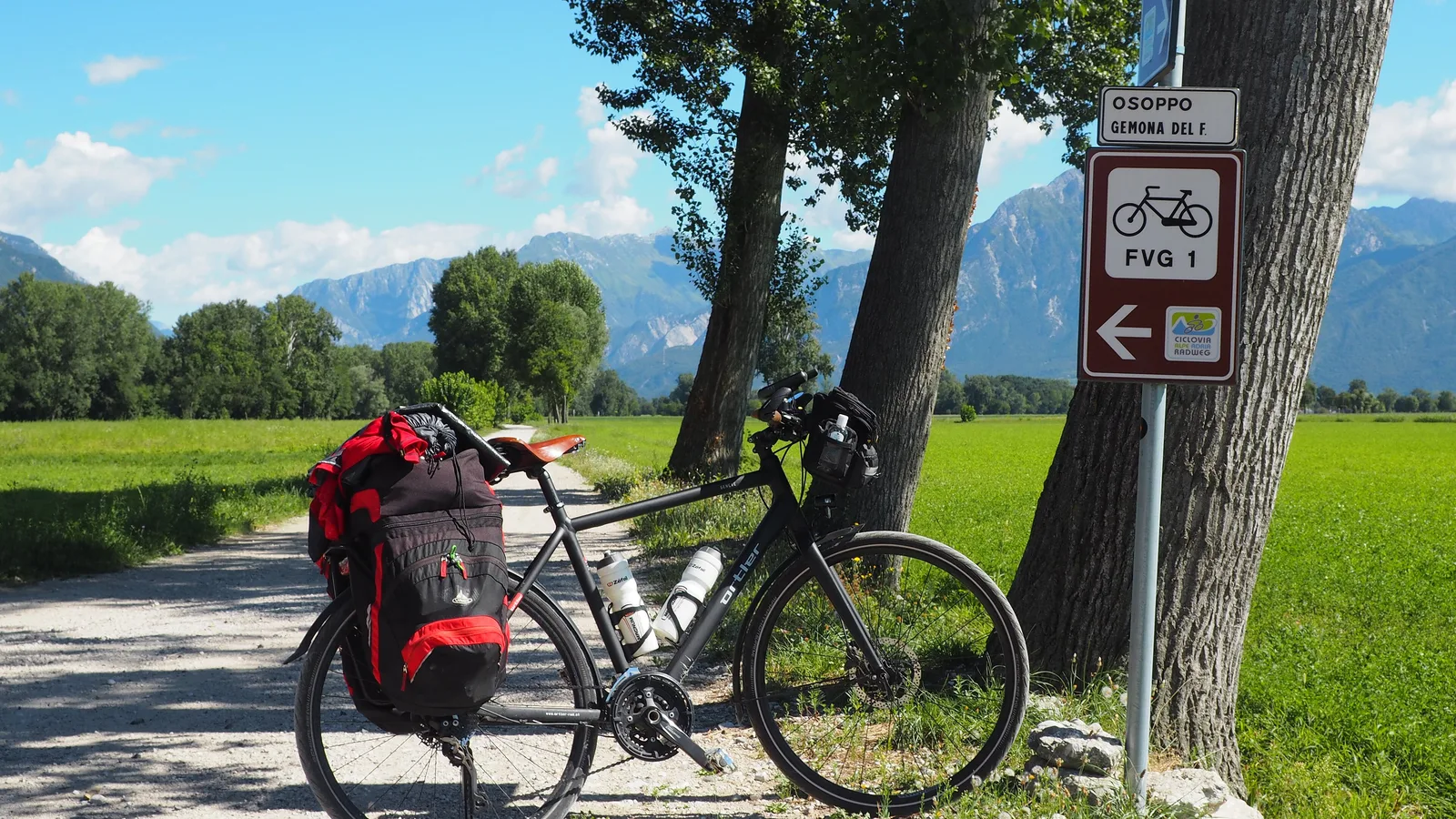
When northern Italy fills with fog in November and the mornings drop close to zero, many cyclists put the bike on the trainer and wait for spring. If you have a few days off, you can do otherwise: move a few hundred kilometres south or to the coast, where winter is gentler and riding is still a pleasure. This guide does not promise guaranteed sunshine, but it explains which areas make sense between December and February, how much daylight you really have, how to set up stages and what mistakes to avoid. If you stay at home, the alternatives are in the guide to indoor training on the trainer.
How much daylight do you have in winter?
It is the constraint that weighs more than the cold. Around the solstice the sun stays above the horizon for less than ten hours anywhere in Italy: a little more in Sicily, a little less in the Po Valley. Minus dawn and dusk, you realistically have a 7-8 hour window of comfortable riding, say between 8:30 and 16:30. If your usual summer stage is 100 km, plan 60-80 in winter and set a cut-off time to be back. Carry lights even by day: tips are in the guide to bike lights. A realistic example: start at 9:00, 65 km at an average of 22 km/h is about three hours of moving time, and with lunch and stops you finish around 14:30, with margin.
Where should you ride when it is cold?
The most sensible areas are those where daytime temperatures stay mild and roads are quiet out of season. In south-eastern Sicily, between Syracuse, Noto and Ragusa, the minor roads linking the baroque towns and the coast carry little traffic in winter. In Puglia you have the Acquedotto Pugliese cycle route, a long-distance itinerary on the Bicitalia network, and the Salento with flat, nearly empty roads. In southern Sardinia the scenery shifts between the Cagliari coast and the interior. In western Liguria there is the cycle path on the former railway between Ospedaletti and San Lorenzo al Mare, about twenty kilometres away from traffic. Add the Tuscan Maremma, where the coast is flat and the climate is often milder than inland. For an overview of the national network, FIAB's Bicitalia lists the official routes.
How do you set up stages and lodging?
Out of season many coastal places close: before building the trip, write or phone and confirm opening, breakfast and bike storage. A base camp of 3-4 nights with daily loops works better than a point-to-point tour, because it lowers the risk of ending up without a bed and lets you change plans with the weather. If you still want to move on, stages of 50-70 km with modest climbing keep your daylight margin. Check the forecast for the next 3 days on the Italian Air Force weather service or another source you trust, and look above all at the wind: on the coast it changes the day more than the temperature. To pick rides you can search Velunite's cycling routes in the area, check climbing and surface and save them for the outing.
How do you get there with a bike?
A regional train is often the best choice: many lines accept bikes on board with a dedicated ticket or for free, but rules differ between operators and trains; check before leaving and reserve a spot where required. By car you need a bike rack and a careful fixing. All options, with pros and cons, are in the guide on carrying a bike by car or train. If you fly, the bike has to be packed in a box or a hard case and the special baggage fee should be checked with the airline.
What should you pack?
In mild areas the risk is underestimating the cold of the morning and of descents: start with a base layer, a long-sleeve jersey and a windproof vest, and a light jacket folded in your pocket. Hands and feet are the weak spots: see the guide to overshoes and protection below 10 degrees; the general scheme is in the guide to layering on the bike. Add an inner tube and a pump or CO2 cartridge, a multitool, lights and a power bank. Food counts too: in the cold you drink less, but hydration still matters; the guide to autumn and winter cycling nutrition offers practical ideas.
What mistakes should you avoid?
The first is planning stages as in summer and ending up in the dark. The second is trusting a single forecast: compare two sources and keep a short plan B. The third is assuming cafés and restaurants are open in tourist towns in midwinter: carry spare food. The fourth is underestimating wet tarmac and leaves, which need longer braking distances; if it rains, the guide to riding in the rain helps. The fifth is setting off alone without telling anyone where you are: share your route with someone, or if you prefer company look for a group ride nearby.
What if you cannot travel?
You can ride in winter at home as well: the 2027 race calendar helps you set a goal and decide whether the winter base should be on the road, on the trainer or with some gym strength work, as explained in the guide to the gym for cyclists. A long weekend in the south, even once between December and February, can be enough to break the winter monotony. Southern cities, for example, appear in Velunite's list of cities.
Sources and notes: the routes and distances mentioned are indicative and must be checked on the official sites of the managing bodies and of Bicitalia before departure; daylight and temperatures depend on location and year. Velunite editorial team.
More articles
Latest from the Journal
- UTMB 2027: no more age-group passes, only the top 10 get inNovember 15, 2026
- Giro Women 2027: 9 stages, 1,132 km and an 11 km uphill time trialNovember 15, 2026
- Carbon-plate shoes: 40 mm by rule, and what it means for youNovember 14, 2026
- GPS on the riders: the mandate slips, but safety does notNovember 14, 2026